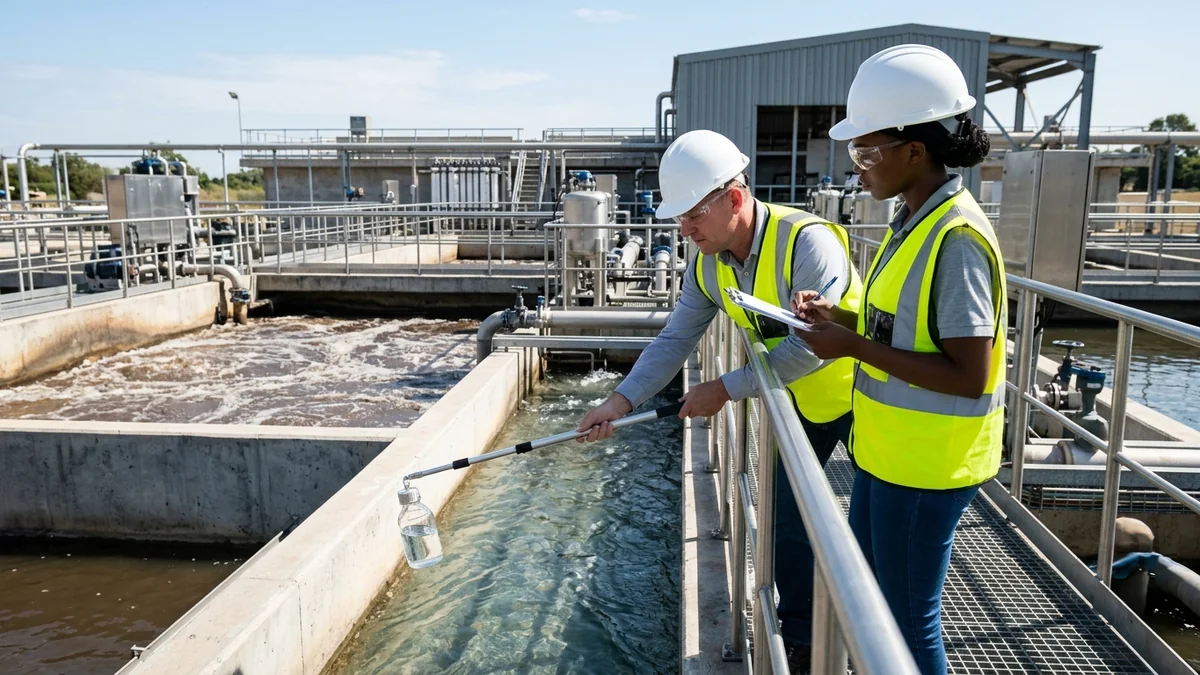
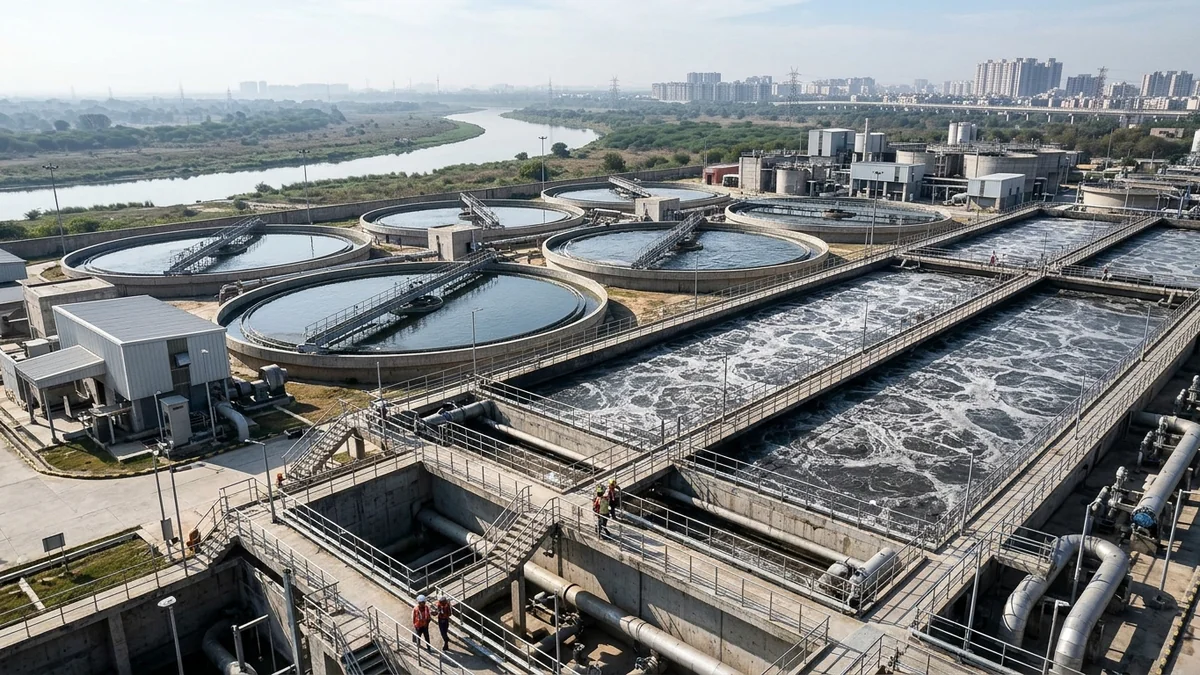
The Yamuna Monitoring Committee, constituted by the National Green Tribunal (NGT), has carried out a two-day inspection of nine sewage treatment plants (STPs) and common effluent treatment plants (CETPs) in Yamunanagar district, Haryana.
The Tribune reported the inspection on October 23. The committee will now prepare a detailed report for the tribunal. Specific findings have not been made public yet.
What the Committee Did
The inspection was led by tribunal representatives YK Garg and PKMK Dass. They were accompanied by:
- Pardeep Singh, Regional Officer, Haryana State Pollution Control Board
- Dinesh Gaba, Executive Engineer, Public Health Engineering Department
- Raquib Hussain, Sub-Divisional Officer, pollution control board
Locations named
The report names six of the nine sites:
- Jammu Colony
- Radaur
- Chhachhrauli
- Parwalo
- Patashgarh
- Manakpur
What was checked
- Functioning and treatment capacity of each facility
- Compliance with pollution control standards
- Treatment processes in use
- Biological Oxygen Demand (BOD) and Chemical Oxygen Demand (COD) as indicators of pollution
Directions Given
The committee asked the authorities to:
- Ensure strict compliance with prescribed standards before treated wastewater is discharged into the Yamuna
- Conduct regular laboratory testing and prepare reports on time
- Run all plants efficiently at full capacity so that untreated sewage and industrial effluent do not reach the river
What Is Not Yet Known
The report does not say whether any plant passed or failed. It gives no measured BOD or COD values and no deadline for the committee's report.
Until the findings are filed, nothing can be said about individual plants. Any claim of non-compliance at this stage would be speculation.
Why BOD and COD Matter
Both measures show how much organic pollution is in water. Regulators use them to judge whether a treatment plant is doing its job. This is general background, not a finding from the inspection.
- BOD is the oxygen that microbes need to break down organic matter in water. High BOD means the water can starve rivers of oxygen and harm aquatic life
- COD is the oxygen needed to chemically break down both organic and some inorganic matter. It is usually higher than BOD and is common in industrial effluent testing
- Why both: a plant can show acceptable BOD yet still discharge chemical load that shows up in COD, especially from industrial streams
What Is a CETP, and Why Is It Included?
A common effluent treatment plant treats wastewater from many small industrial units in one cluster. Small units that cannot afford their own plants send effluent to the shared facility.
Including CETPs in the inspection matters because industrial effluent can differ sharply from domestic sewage.
- Industrial effluent may carry chemicals, dyes and metals
- A CETP designed for one type of effluent can struggle if member units change what they discharge
- Performance depends on every connected unit sending effluent that meets the inlet norms
What Earlier Reports Said About Haryana's Yamuna Stretch
The Yamuna Monitoring Committee is not new. It has reported to the NGT on the Yamuna before, and Haryana has featured in those reports. The following are older findings and do not describe the current state of the plants.
December 2020: the committee's fifth report
- Of 24 STPs checked at random in eight districts, 16 did not meet standards
- None of 12 CETPs complied with norms
- In Jagadhri-Yamunanagar, 66 MLD of untreated industrial and domestic effluent was flowing into a drain, with no agency taking responsibility
- The committee criticised the state for not naming officials responsible for delays and deficiencies
February 2024: Haryana's own report to the NGT
- Haryana reported 463.2 MLD of untreated sewage going into the Yamuna
- Yamunanagar was among nine cities named as main contributors
- Karnal (about 155 MLD) and Panipat (about 151 MLD) were the largest
The Case Behind the Committee
The Yamuna Monitoring Committee reports to the NGT in the long-running Yamuna pollution case, Original Application No. 6 of 2012 (Manoj Mishra versus Union of India). Its reports are filed with the tribunal, and states such as Haryana file responses to them. Several of those responses are listed on the NGT website.
That process is why a site inspection like this one matters. The committee's observations feed directly into what the tribunal asks state agencies to do next.
Questions the Report Should Answer
When the committee's report is filed, these are the points that will show whether the inspection found real problems. They are questions to watch, not findings.
- How much sewage each plant receives compared with its design capacity
- Whether outlet BOD and COD values meet the discharge standards the plant is bound by
- Whether disinfection is working before discharge
- Whether the CETPs receive effluent from all the industrial units connected to them
- Whether laboratory testing is being done at the frequency required
Why the Upstream Stretch Matters
Yamunanagar sits on the Yamuna's upper reaches in Haryana, before the river reaches Delhi. What is discharged here travels downstream. Delhi's own monitoring in September 2026 showed faecal coliform at Asgarpur, near the Haryana border, at 38,000 MPN/100 ml, the highest in the Delhi Pollution Control Committee's dataset. This does not prove a link to Yamunanagar. It does show why quality at the state border matters for Delhi's plants and for the river.
How Plants Stay in Compliance
These are general practices, not findings from this inspection.
Daily operations
- Run plants at design capacity, not far below it
- Keep aeration, clarifiers and disinfection units in working order
- Log inlet and outlet flow so that treated volume matches what the plant should receive
Testing and records
- Test outlet samples at regular intervals for BOD, COD, suspended solids and faecal coliform
- Keep calibrated instruments and sampling records ready for inspection
- Report results on time, as the committee has asked
Maintenance
A structured operation and maintenance programme with trained operators and planned servicing keeps a plant meeting norms long after commissioning. Housing societies and institutions that run their own sewage treatment plant face the same basic rules.
What to Watch Next
- When the committee files its detailed report with the NGT
- Whether the report names specific plants and measured BOD and COD values
- Whether the tribunal issues new directions or penalties to Haryana agencies
- Any follow-up inspections in other Haryana districts along the Yamuna