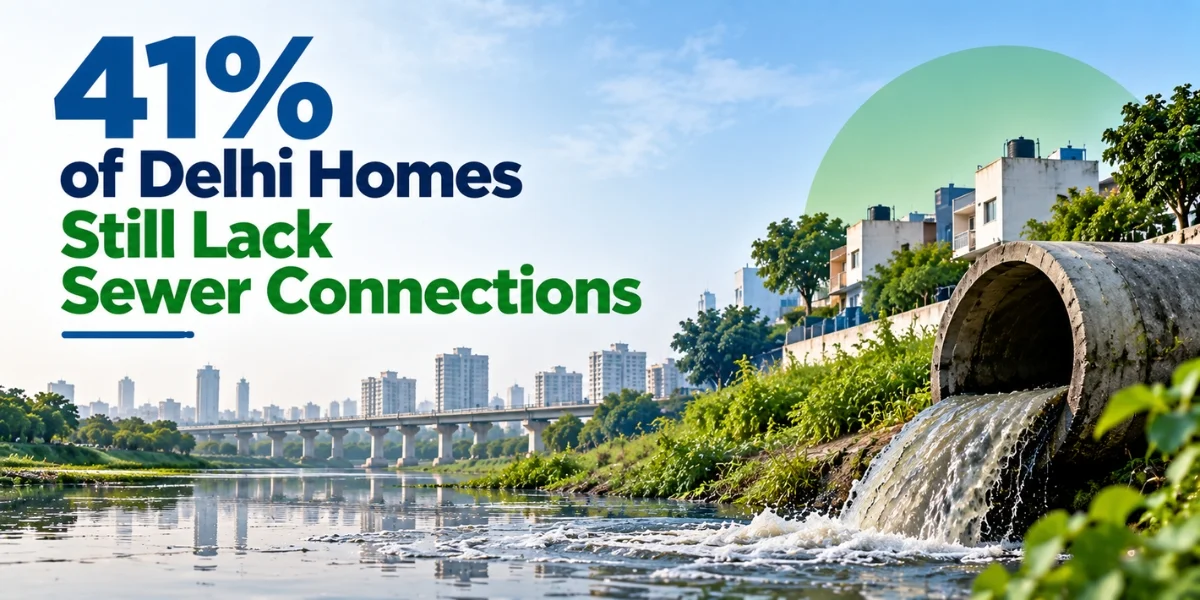
Nearly four in 10 households in Delhi remain unconnected to the city's sewer network, according to a Delhi Jal Board (DJB) report cited in reporting published September 24, 2026. More than 1.65 million households, or 41.3 percent of the city's estimated four million households, currently have no formal sewer connection.
Where the Gap Is Concentrated
The shortfall is most significant in unauthorised colonies and slum clusters, where the absence of formal sewage infrastructure leaves residents dependent on septic tanks, open drains or other informal disposal arrangements. DJB has set a target of connecting all four million households to the sewer network by 2028.
What Is Currently Underway
Sewer network construction is reported to be underway in 276 colonies, with connections being extended to around 544,680 households across 647 unauthorised colonies. For areas that still lack an adequate sewer network, DJB is deploying septage-cleaning machines to collect waste from septic tanks and transport it to treatment facilities, and has authorised 137 private vendors to collect and dispose of septage at STPs and sewage pumping stations.
Why This Matters for the Yamuna
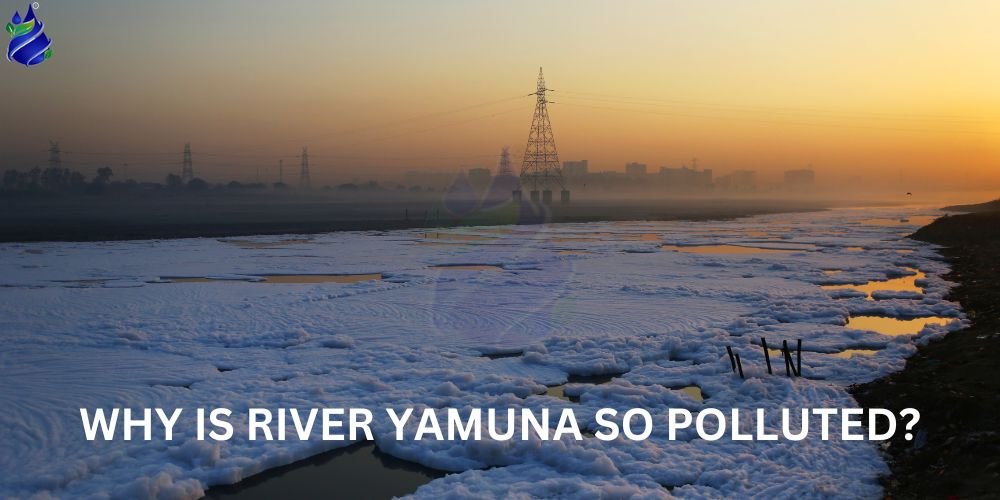
Unconnected households are a structural driver of untreated sewage reaching the Yamuna, since wastewater from these areas typically flows through open drains rather than into the sewer network and on to a treatment plant. This connectivity gap is separate from, but closely linked to, Delhi's sewage treatment capacity shortfall, since even well-functioning sewage treatment plants cannot treat wastewater that never reaches them in the first place.
Key Highlights
- More than 1.65 million Delhi households, 41.3% of the city's total, lack a sewer connection.
- The gap is concentrated in unauthorised colonies and slum clusters.
- DJB aims to connect all households to the sewer network by 2028.
- Network construction is underway in 276 colonies, with 544,680 households being connected across 647 unauthorised colonies.
- 137 private vendors have been authorised to collect and dispose of septage at STPs and pumping stations in still-unconnected areas.
Sources & Further Reading
This article is based on reporting from Business Standard, September 24, 2026, citing a Delhi Jal Board report.