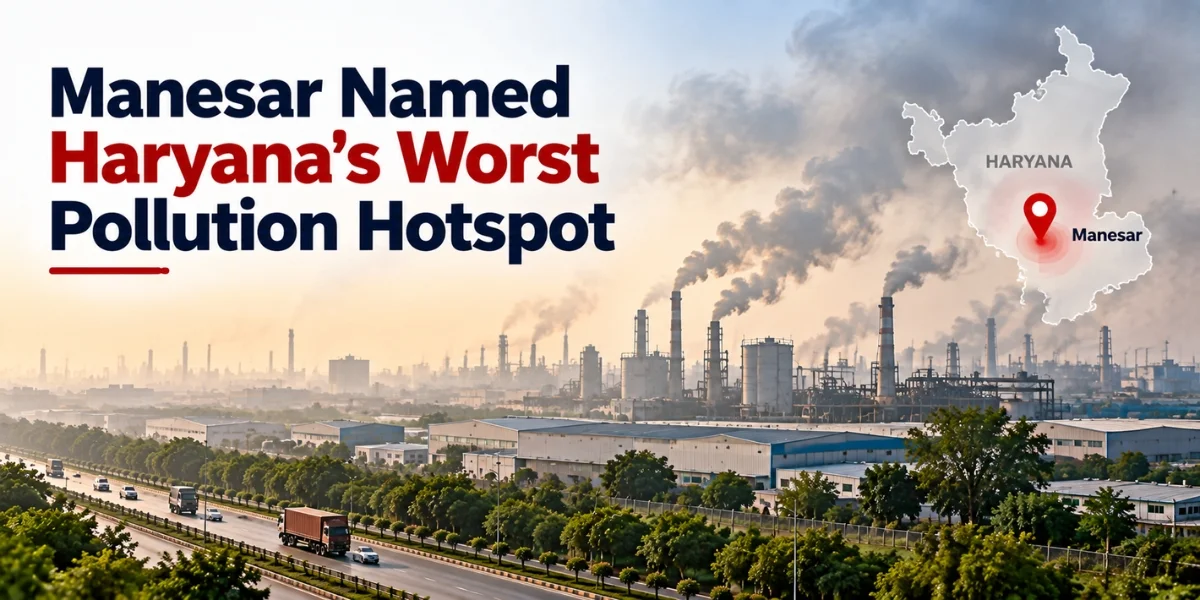
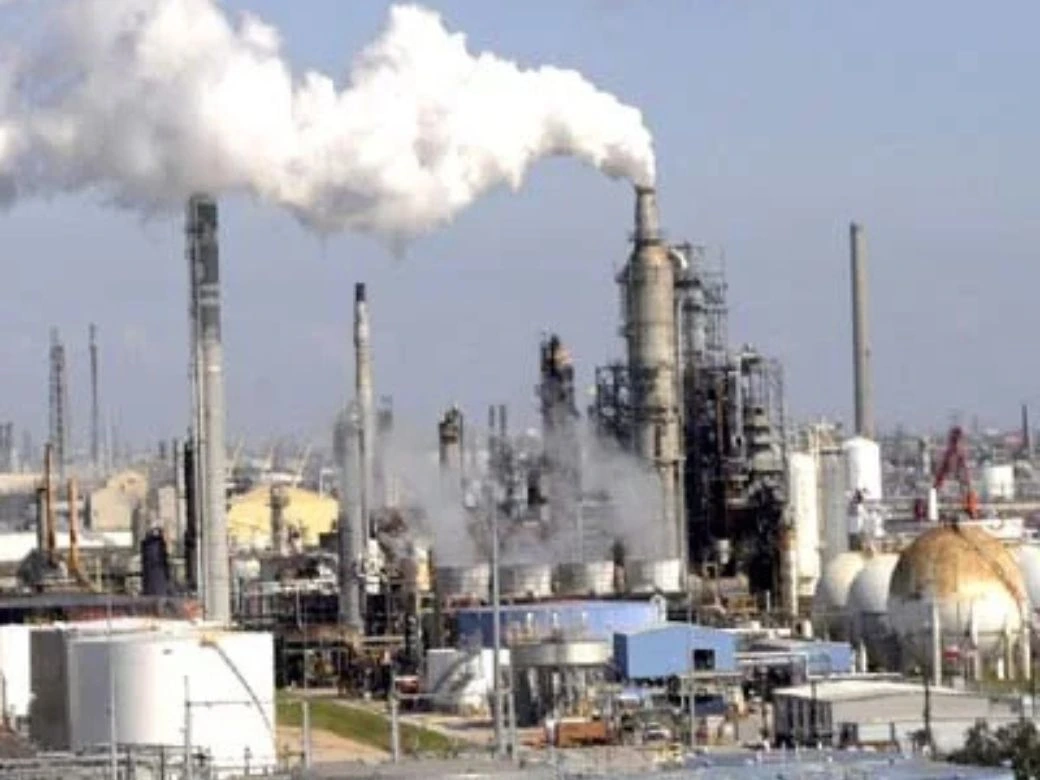
Manesar Industrial Area has emerged as Haryana's worst air pollution hotspot, according to a statewide survey by the Haryana State Pollution Control Board (HSPCB) that found 2,912 industrial units across 14 districts actively contributing to air pollution, with nearly 470 factories yet to install mandatory pollution-control equipment. The findings, submitted to the National Green Tribunal and central pollution authorities, carry particular significance for Gurugram, where air quality is already among the most stressed in the country.
What the Survey Found
The HSPCB survey identified Manesar, part of the wider Gurugram industrial belt, as the state's most significant pollution hotspot based on the concentration of non-compliant units. Authorities set June 30, 2026, as the deadline for completing similar inspections across all NCR districts in Haryana, indicating the survey was part of a broader, region-wide compliance exercise rather than a Gurugram-specific action alone.
The survey also flagged industries operating in non-conforming areas, zones not designated for industrial activity, in and around Gurugram and Manesar, where rapid urban expansion has increasingly blurred the boundary between residential and industrial land use. Five such clusters, comprising an estimated 56 industrial units, were identified and inspected between January and April 2026. Authorities shut down 36 units during that period, with the remaining 20 closed in May.
Why Gurugram's Air Quality Makes This Significant
Gurugram's PM2.5 levels routinely exceed 150 µg/m3 during winter months, well above the World Health Organization's safe limit, according to the same reporting. Industrial emissions are one of several major contributors to this seasonal spike, alongside vehicular traffic, construction dust and diesel generator use, making enforcement against non-compliant industrial units a meaningful, if partial, lever for improving air quality in the district.
Diesel generator sets in particular have been a recurring enforcement focus in Gurugram. Under CAQM norms, generators in a specified capacity range must run on dual-fuel or retrofitted systems, with usage restricted to limited daily hours during active GRAP restrictions, yet compliance has historically lagged, with only a small share of registered DG sets converted to cleaner fuel in past enforcement cycles.
How This Fits Into Wider NCR Enforcement
The Manesar findings sit alongside an active, ongoing enforcement effort across the broader NCR region. CAQM's Enforcement Task Force, reviewing activity for the two-week period ending September 7, 2026, reported 98 industrial-sector inspections and 45 diesel-generator-set inspections region-wide, alongside a September 3, 2026 special drive in neighbouring Nuh, Haryana, where eight Flying Squad teams inspected 35 premises in coordination with HSPCB and district administration.
For industrial units in Gurugram specifically, this combination of a state-level compliance survey and an active regional enforcement task force means non-compliance carries a higher near-term risk of inspection and closure than in earlier years, when enforcement was less consistently coordinated across agencies.
What This Means for Industrial Operators
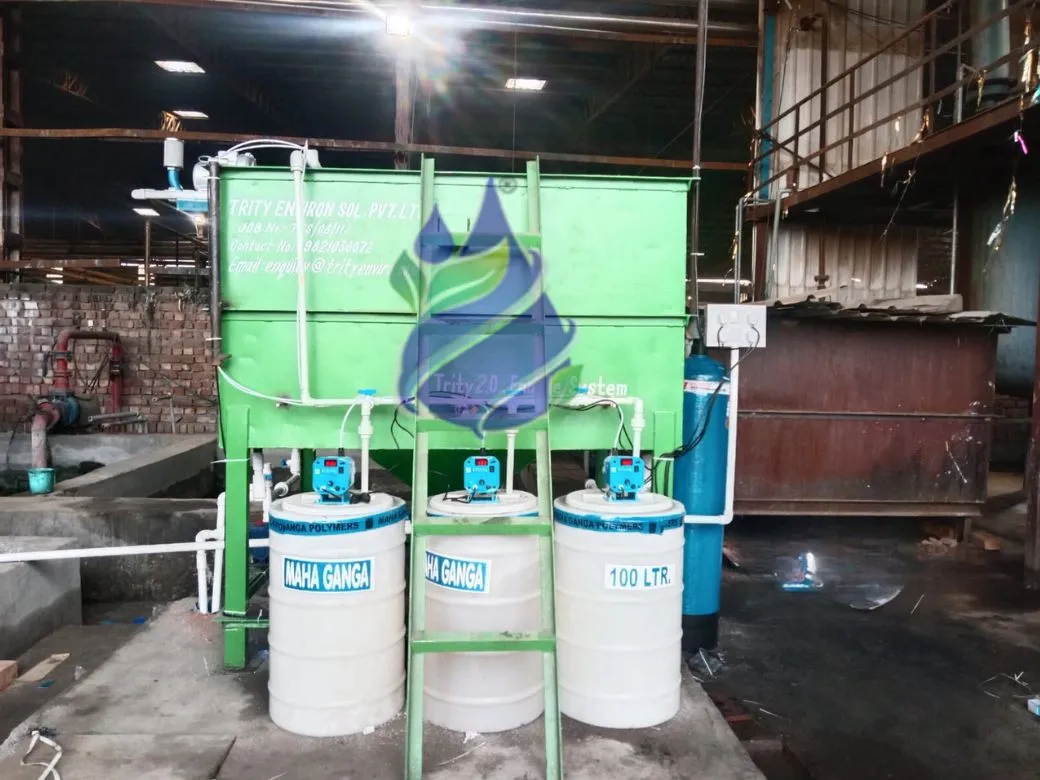
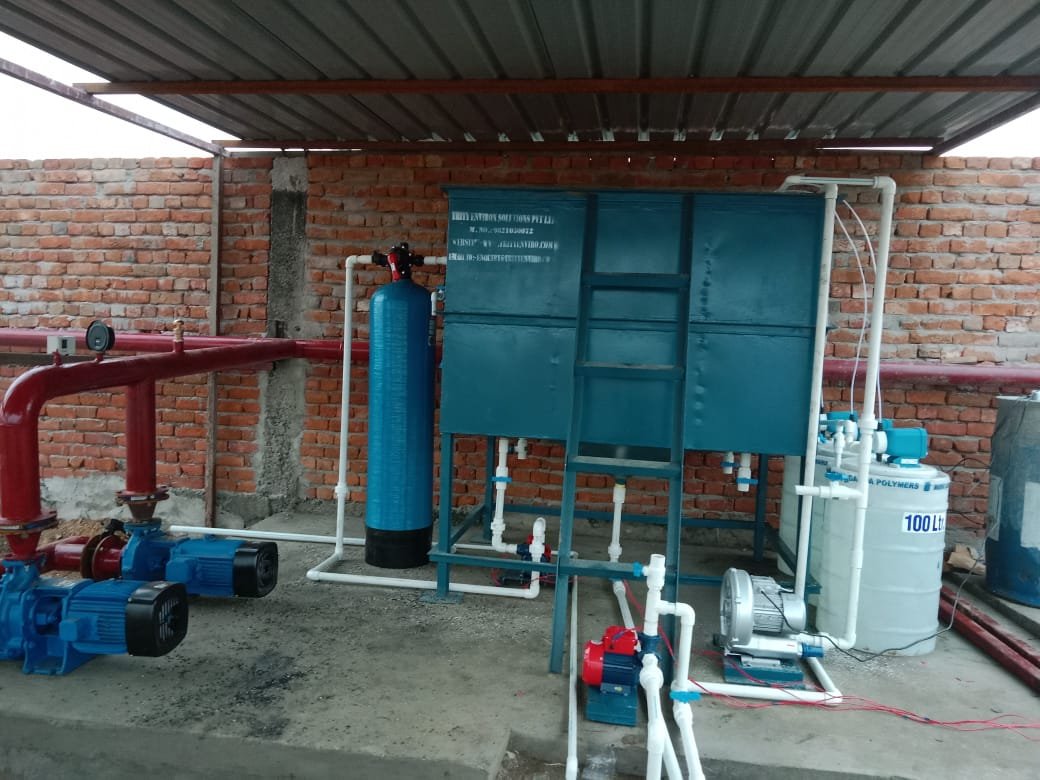
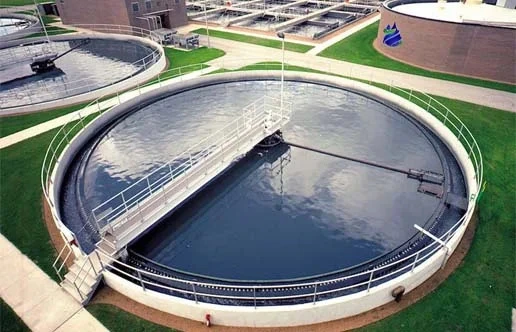
For units still lacking mandatory pollution-control equipment, whether emission-control devices for DG sets, dust-suppression systems, or other required controls, installing and properly maintaining this equipment is the direct path to avoiding closure action under the current enforcement climate. Reliable, well-maintained pollution control infrastructure, covering both air emissions and any associated wastewater streams, is increasingly what separates units that continue operating from those flagged for closure in these surveys.
Key Highlights
- An HSPCB survey found Manesar to be Haryana's worst air pollution hotspot, part of a 14-district, 2,912-unit statewide review.
- Nearly 470 surveyed industrial units had not installed mandatory pollution-control equipment.
- Five non-conforming industrial clusters near Gurugram and Manesar, comprising 56 units, were inspected and fully closed by May 2026.
- Gurugram's winter PM2.5 levels routinely exceed 150 µg/m3, well above WHO safe limits.
- CAQM's ongoing NCR-wide Enforcement Task Force activity, including a September 2026 Nuh special drive, adds a further layer of active enforcement alongside the state survey.
Sources & Further Reading
This article is based on reporting from The Tribune, June 2026, on the HSPCB statewide industrial pollution survey, and Asianet Newsable's coverage of CAQM's September 2026 Enforcement Task Force meeting.