ISO 9001:2015 & QCI Approved
Central Ground Water Authority
Trity Enviro Trity Enviro provides complete documentation and approval support for Central Ground Water Authority compliance, covering extraction limits, well construction norms, and aquifer protection rules.provides complete documentation and approval support for Central Ground Water Authority compliance.
CGWA Is a Regulator, Not a One-Time Paperwork Step
The Central Ground Water Authority (CGWA) was constituted in January 1997 under sub-section (3) of Section 3 of the Environment (Protection) Act, 1986, following a direction from the Supreme Court of India in the M.C. Mehta vs Union of India case. Its mandate is to regulate and control the development and management of groundwater across the country, and it currently regulates directly in 20 States and Union Territories, while 14 states run their own parallel groundwater regulation acts. Trity Environ Solution works with industries, infrastructure developers, and housing societies across UP and NCR who need more than a one-time NOC application, they need someone who understands what CGWA expects on an ongoing basis, year after year, not just at the point of setting up.
This is where a lot of confusion sets in. Most businesses know they need a No Objection Certificate (NOC) to extract groundwater. Far fewer realise that CGWA's authority extends well beyond that single approval: it notifies areas as Over-Exploited or Critical, mandates recharge structures, requires ongoing metering and water audits, and has the power to impose Environmental Compensation on anyone who violates their NOC conditions, not just anyone who extracts without one.
CGWA vs CGWB: Two Different Bodies, Same Ministry
These two names get used interchangeably, but they do fundamentally different jobs.
| Central Ground Water Board (CGWB) | Central Ground Water Authority (CGWA) | |
|---|---|---|
| Nature | Scientific and technical body | Statutory regulatory authority |
| What it does | Assesses and maps groundwater resources, publishes the Dynamic Ground Water Resource Assessment | Issues NOCs, notifies critical/over-exploited areas, enforces compliance |
| Legal basis | Not constituted under a specific regulatory act | Constituted under Section 3(3) of the Environment (Protection) Act, 1986 |
| Who it acts against | Nobody, it produces data | Industries, infrastructure projects, and other entities violating groundwater norms |
CGWB feeds the science, CGWA acts on it. Your NOC application, your notified-area obligations, and any enforcement action against your facility all come from CGWA, using CGWB's assessment data as the basis.
What CGWA Actually Regulates
- Issuing NOCs to industries, infrastructure projects, mining operations, and bulk water suppliers extracting groundwater in notified or otherwise regulated areas
- Notifying areas as Critical or Over-Exploited, which triggers restrictions on new borewell installation, mandatory recharge requirements, water audits, and metering
- Imposing Environmental Compensation on entities extracting groundwater illegally, or violating the conditions attached to an existing NOC, which is a distinct and often overlooked risk for facilities that already hold an NOC but have drifted out of compliance with its conditions
- Coordinating with State Ground Water Authorities where they exist, and approving state-level action plans
- Publishing the Master Plan for Artificial Recharge to Ground Water, the framework that state and district recharge obligations are built around
The NCR Angle: Why This Matters More If You're in Ghaziabad, Noida, Faridabad, or Gurgaon
CGWA's own notified-area history makes this concrete. Directions have specifically been issued to Group Housing Societies, Institutes, Hotels, Industries, and Farm Houses in the notified areas of Delhi, Faridabad, Gurgaon, and Ghaziabad, and other parts of NCT Delhi, wherever the groundwater table sits below 8 metres from the surface, mandating rainwater harvesting as a compliance condition, not a suggestion. Nationally, CGWA has notified 162 Over-Exploited areas for regulation of groundwater development, with installation of any new abstraction structure in these zones subject to direct regulation.
If your facility sits anywhere in this belt, the practical implication is that your obligations under CGWA are almost certainly ongoing and area-specific, not a document you file once and forget.
Ongoing Compliance Obligations Beyond the Initial NOC
- Recharge structures: rainwater harvesting or artificial recharge systems, sized and maintained to CGWA's specifications, not built once and left unmaintained
- Digital flow metering: installed at every abstraction point, with regular readings uploaded to CGWA's online systems
- Periodic water audits: documenting actual extraction against sanctioned volumes, especially for large-volume users
- Groundwater quality monitoring: from NABL-accredited laboratories, submitted on the schedule your NOC specifies
- Renewal before expiry: NOCs run 2 to 5 years depending on category, and CGWA treats an expired NOC with continuing extraction the same as unauthorised extraction
Environmental Compensation and Enforcement Risk
A facility that already holds a valid NOC is not automatically safe from CGWA action. Environmental Compensation applies specifically to violation of NOC conditions, which most commonly happens when a recharge structure falls into disrepair, metering data isn't submitted on schedule, or actual extraction quietly exceeds the sanctioned volume as production scales up. CGWA has also directed states to report enforcement action against unauthorised extraction by industries, commercial establishments, and large housing complexes, which means compliance verification is becoming more systematic, not less, across the states CGWA regulates directly.
Why Trity Environ Solution for CGWA Compliance
Trity Environ Solution's manufacturing work in STP, ETP, and RO plants puts us in a natural position to support the other half of a facility's water compliance picture: what you're allowed to draw, not just what you discharge. We assist with recharge structure design and sizing against your site's actual obligation, metering system setup and reporting support, coordination for the NOC application itself where it's still pending, and ongoing compliance monitoring so a facility that's already compliant stays that way as production volumes or site conditions change.
Frequently Asked Questions
Is CGWA the same as CGWB?
No. CGWB is a scientific body that assesses and maps groundwater resources. CGWA is the statutory regulator that issues NOCs, notifies critical areas, and enforces compliance using CGWB's data.
Does CGWA regulate every state directly?
CGWA regulates directly in 20 States and Union Territories. 14 states run their own parallel groundwater regulation acts, so the exact authority you deal with can depend on your state.
Can CGWA take action against a facility that already has an NOC?
Yes. Environmental Compensation applies to violations of NOC conditions, not just extraction without one. A lapsed recharge structure, missed metering submissions, or extraction beyond sanctioned volumes can all trigger enforcement even with a valid NOC on file.
What triggers an area being notified as Over-Exploited or Critical?
CGWB's Dynamic Ground Water Resource Assessment data determines an area's Stage of Extraction. Once an area is notified based on this data, new abstraction structures in that zone become subject to direct CGWA regulation.
Is rainwater harvesting actually mandatory, or just recommended?
In notified areas, it is a mandatory condition, not a recommendation. CGWA has specifically directed housing societies, hotels, institutes, and industries in notified NCR areas including Ghaziabad, Faridabad, Gurgaon, and parts of Delhi to install rainwater harvesting wherever the water table is below 8 metres.
How is this different from your NOC from CGWA service?
The NOC service covers getting a fresh No Objection Certificate approved. This covers the broader, ongoing regulatory relationship with CGWA, including notified-area obligations, recharge structure maintenance, metering, and compliance monitoring for facilities that already hold an NOC.
Scope Highlights
Why Choose Trity Enviro Solutions?
Industry-certified environmental engineers delivering compliant, high-efficiency turnkey systems across India.
100% SPCB/CPCB Compliance
Complete regulatory clearance & legal liaison support.
Certified Engineers
Over a decade of industrial wastewater expertise.
Turnkey Execution
End-to-end design, fabrication, setup & commissioning.
Pan-India AMC & Service
24/7 technical hotline, scheduled visits & spare parts.
Frequently Asked Questions
Q1. What is a MBBR Media?
Moving bed biofilm reactor (MBBR) is a type of wastewater treatment process that was first invented by Prof. Hallvard Ødegaard at Norwegian University of Science and Technology in the late 1980s. For more detail call us on 8802624956
Q2. What is a digester tank?
The wet anaerobic digestion process is applied to liquid waste streams that are conveyable by liquid pumping. Sometimes wet systems are called Low Solids AD (LSAD). The Wet AD process can be done in reactors of two main configurations, continuously stirred tank reactors (CSTR) and plug flow reactors.
Q3. Which air pollutant is produced in anaerobic decomposition of organic matter?
Methane is the largest natural source of hydrocarbons. It's produced by the anaerobic decomposition of organic matter in bodies of water. -Trees and plants produce most of the remaining natural VOC's called terpenes. Volatile Organic Compounds - VOCs -Petroleum is the key source of man-made VOC pollution.
Q4. What is a sewage treatment plant?
The Sewage Treatment Plant process is similar to the way that a Septic Tank works but mechanical components provide a process to help break down solids to produce a cleaner, more environmentally friendly effluent.
Q5. What is the tertiary treatment of sewage?
Tertiary treatment is the final cleaning process that improves wastewater quality before it is reused, recycled or discharged to the environment. The treatment removes remaining inorganic compounds, and substances, such as the nitrogen and phosphorus.
Related Service Solutions
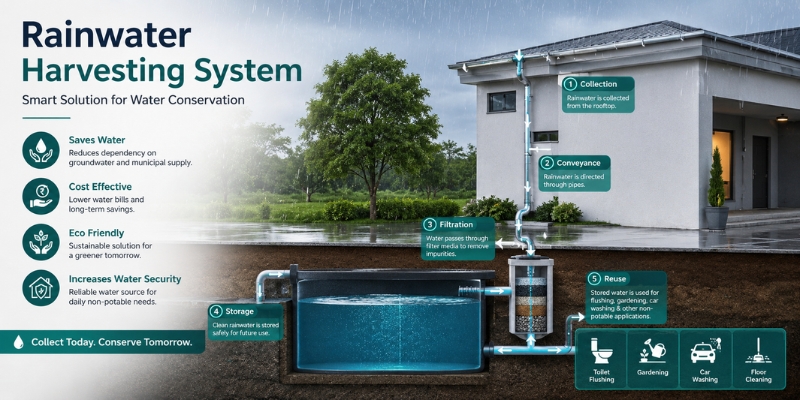
Rainwater Harvesting System

Technical Assistance on Web
Consent to Establishment
Related Industry Insights
Bulk Waste Generator Compliance Under India's SWM Rules 2026: What Businesses Need to Set Up
A practical checklist for bulk waste generators under SWM Rules 2026: registration, four-stream segregation, on-site processing, EBWGR certificates and records.
Read Article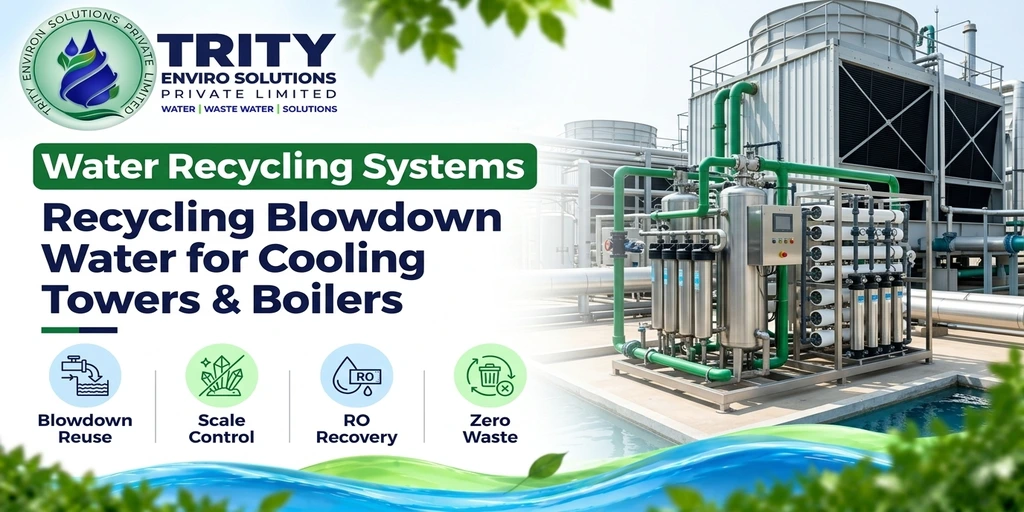
How to Design a Water Recycling System for Cooling Towers and Industrial Process Water
Design a water recycling system for cooling towers and process water: water balance, cycles of concentration, treatment train and payback, with an example.
Read Article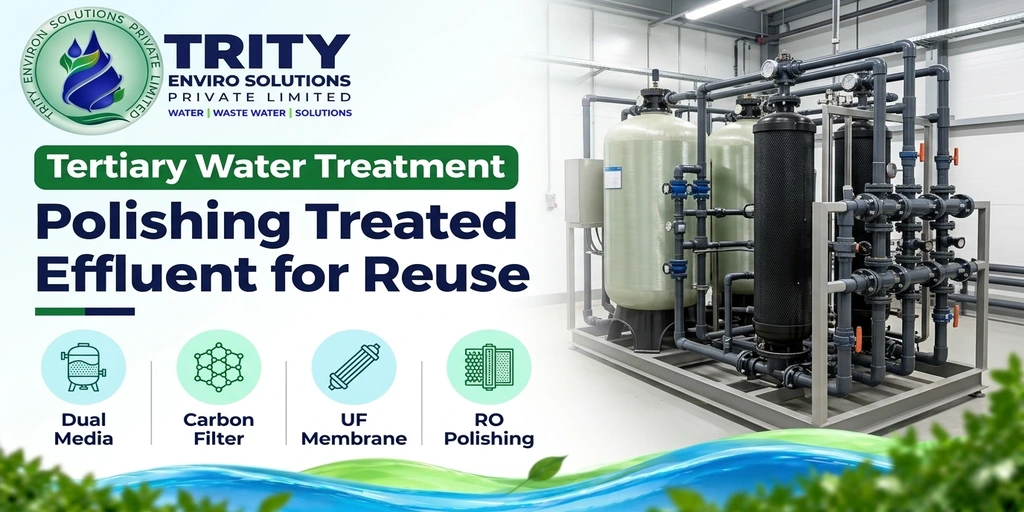
Tertiary Water Treatment for Industrial Reuse: When Filtration Alone Is Not Enough
Is filtration enough to reuse treated wastewater? Learn when you need UF, RO, softening or disinfection, and how to match tertiary treatment to each reuse.
Read ArticleFeatured Turnkey Installations

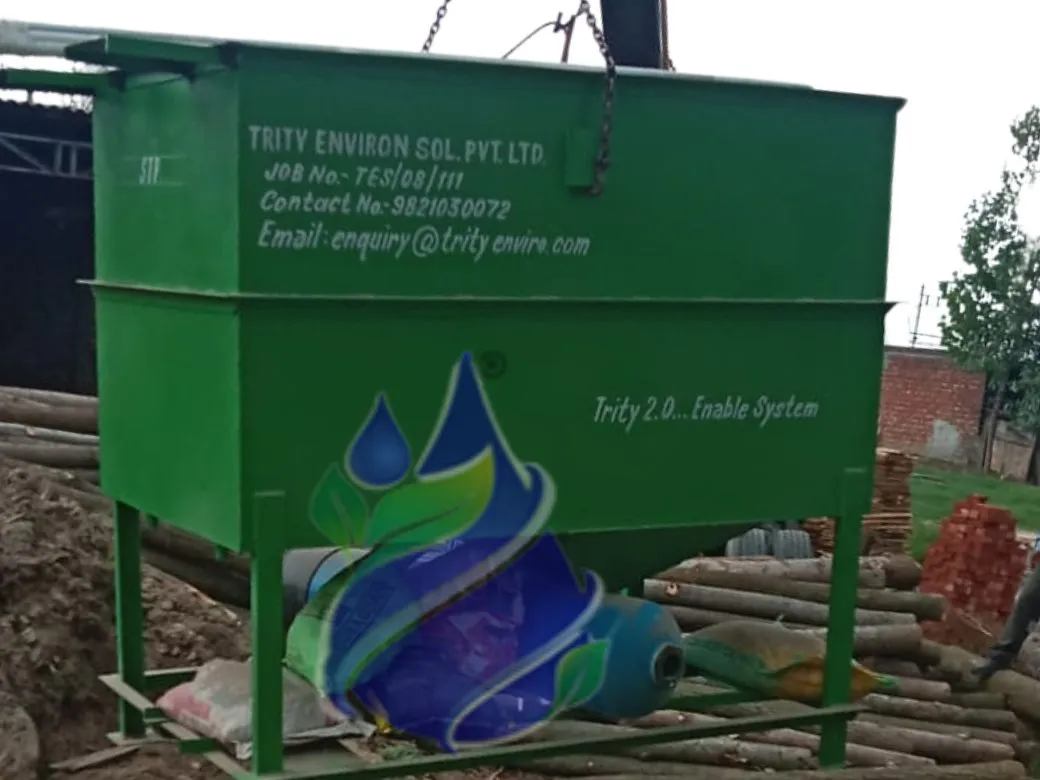
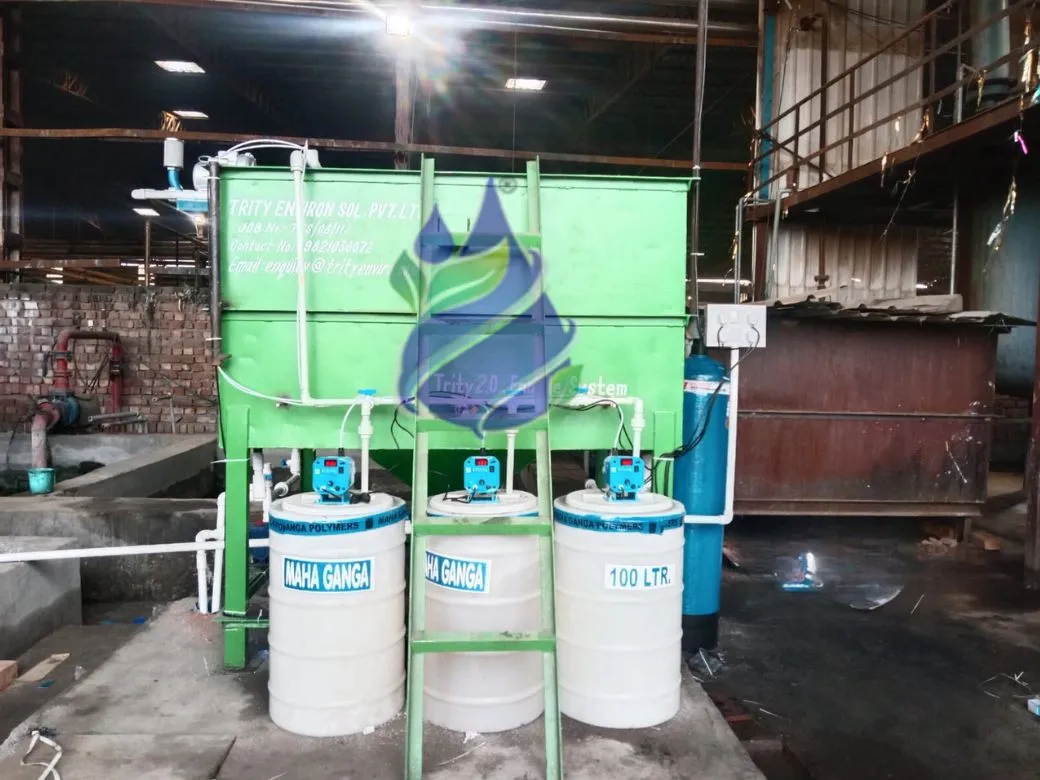



Need Expert Support for Your Water Treatment Project?
From regulatory compliance to turnkey engineering and O&M, our certified environmental engineers are ready to assist.