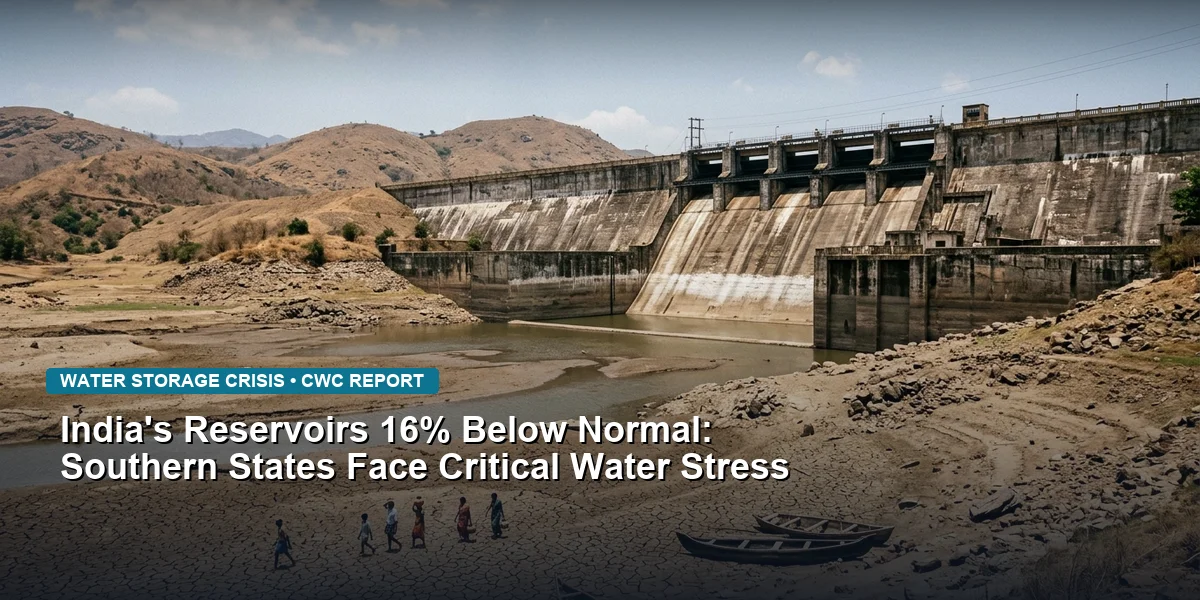
India's major reservoirs ended the post-monsoon period well short of where they stood a year ago. The Central Water Commission (CWC) bulletin released on October 15, 2026 puts storage at 68.58% of usable capacity, which leaves almost a third of combined capacity unfilled.
The shortfall is not spread evenly. Southern and western states carry most of the stress, and several are already restricting supply.
What the Central Water Commission Data Shows
The CWC publishes its reservoir storage bulletin every Thursday. The October 15 edition, reported by Down To Earth on October 19, covers 178 major reservoirs across the country.
National storage at a glance
- Current storage: 126.717 billion cubic metres (BCM), or 68.58% of usable capacity
- Unfilled capacity: 31.42% of the combined capacity
- Usable capacity of the 178 reservoirs: 184.762 BCM, about 71.67% of India's total usable reservoir capacity of 257.812 BCM
- Versus last year: 41.193 BCM lower, a fall of 24.53%
- Versus the 10-year normal: 24.930 BCM below, a gap of 16.44%
How many reservoirs are running low
- 42 reservoirs hold only 50 to 80% of their normal storage
- Of these, 11 sit at 51 to 60%, 14 at 61 to 70% and 17 at 71 to 80%
- 12 of the 20 hydropower-linked reservoirs are at or below normal
Where the Pressure Is Highest
State-wise readings in the bulletin are expressed as a share of normal storage for the date. The lowest figures cluster in the south and west.
Southern states
- Tamil Nadu: Aliyar is reported at 0% of normal, and Mettur at 32.49%
- Andhra Pradesh: Somasila at 22.05% and Srisailam at 33.64%
- Kerala: Idukki at 10.62% and Periyar at 46.43%
- Karnataka: Ghataprabha at 22.56%, Tungabhadra at 22.54% and Sholayar at 23.62%
- Telangana: named among the states with severe shortages, though the report gives no reservoir-level figures
Maharashtra
- Jaikwadi at 15.55%, Ujani at 10.62%, Manjra at 12.45% and Lower Terna at 28.24%
River basins
The basin-level picture follows the same pattern:
- Highly deficient: Pennar (72.32% below normal) and Cauvery (60.50% below normal)
- Deficient: Sabarmati (38.03% below) and Krishna (32.59% below)
- Above normal: Narmada (7.81%), Mahanadi (2.95%) and Swarnarekha (30.74%)
- Near normal: Ganga, Tapti, Godavari, Brahmaputra and Brahmani-Baitarani
- Also deficient: Indus, Mahi, Kutch-Saurashtra and Luni
Maharashtra Shows What Tight Storage Looks Like on the Ground
Maharashtra offers the clearest example of how low storage turns into local rules. Down To Earth reported on October 13 that the state declared 265 of its 358 talukas drought-affected in September, about 74% of the total, after a weak Southwest Monsoon.
Restrictions already in force
- Municipal corporations, municipalities and gram panchayats were told to cut water supply by at least 10% from October 16
- Pune Municipal Corporation will suspend supply every Thursday from October 15 to stretch reserves until August 2027
- The Khadakwasla system held 38.78 TMC on October 13, against about 95% storage a year earlier
- In Nagpur, the district disaster management authority banned new borewells and the deepening of existing ones until further orders, with exemptions for government agencies
- In Marathwada, a buffer of at least 10% of live storage in major reservoirs is reserved for drinking water
Reuse is already written into the orders
The Marathwada directions go further than supply cuts. Industries there must reuse 30% of the water they consume, and sewage treatment plants must run at full capacity. Pune's guidelines also encourage greywater reuse and bar the use of drinking water for construction.
The Wastewater Opportunity
A separate Down To Earth analysis published on October 8 argued that Maharashtra's crisis shows why wastewater reuse has to move from policy to practice. The numbers it cites explain why.
- The state generates about 9,073 million litres of wastewater a day (an April 2026 amicus note to the National Green Tribunal)
- About 57% of sewage is treated
- Only 17% of wastewater is reused (CSE, Waste to Worth, 2024)
The policy framework already exists. The Maharashtra State Water Policy, 2019 requires a minimum 30% reuse in urban local bodies. A circular water economy policy approved by the cabinet in October 2025 mandates reuse across 424 urban local bodies, with a Rs 5 billion budget focused on large water users. A Safe Reuse and Management of Treated Wastewater Policy followed in 2025.
The gap between policy and practice is the point. Treated wastewater is meant for thermal power plants, industry, urban non-potable uses and irrigation, but those uses only scale when treatment plants actually deliver water of reusable quality.
How to Read the "Normal" Benchmark
The bulletin compares current storage with two yardsticks, and they tell different stories.
- Versus last year: storage is 24.53% lower, which reflects how full reservoirs were after a strong monsoon in 2025
- Versus the 10-year average: storage is 16.44% lower, which is the better guide to whether this year is unusually dry
The distinction matters for planning. A reservoir can be well below last year and still close to its long-term average, but when both gaps are large, as they are for the Cauvery, Pennar and parts of Maharashtra, local managers have less room to absorb a second weak season.
What This Means for Industries and Housing Societies
Reservoir stress rarely stays at the state level. It reaches industrial parks, townships and institutions through supply cuts, tanker costs and tighter groundwater rules. Large water users are exposed first.
Practical steps that reduce dependence on fresh water
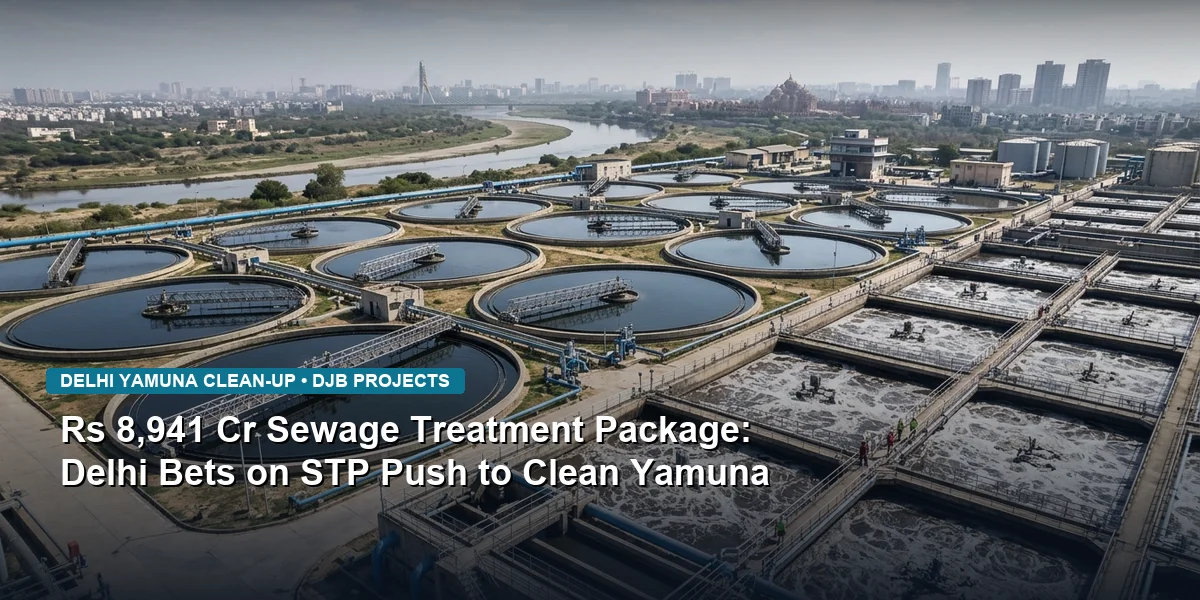
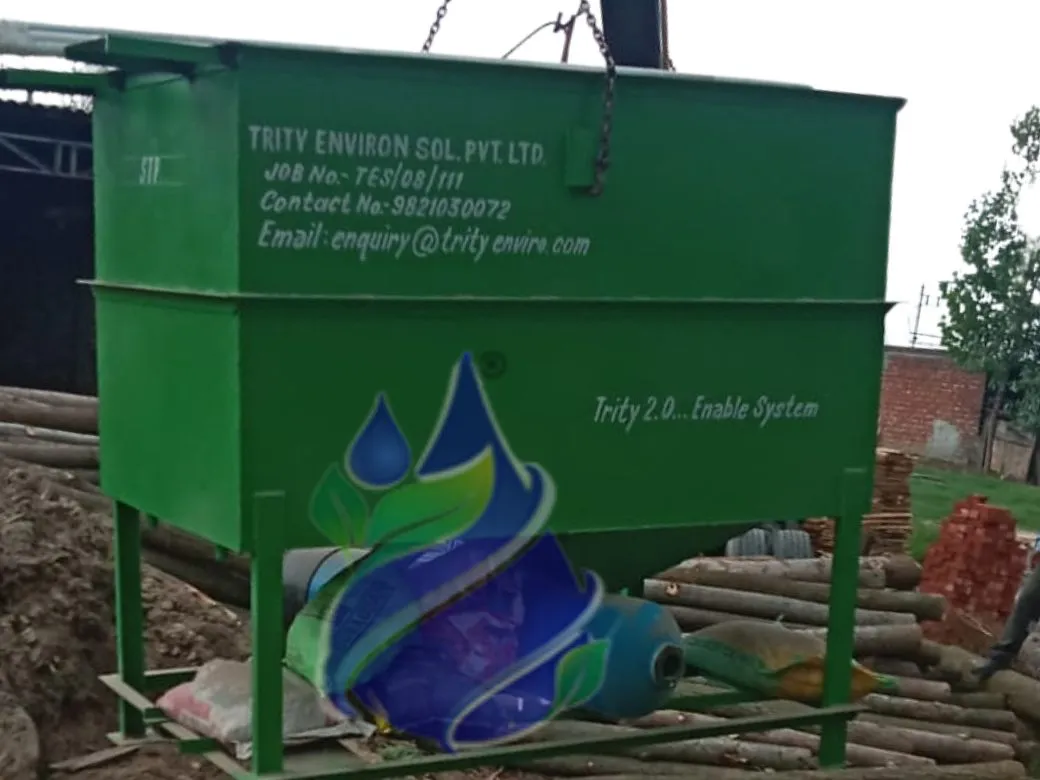
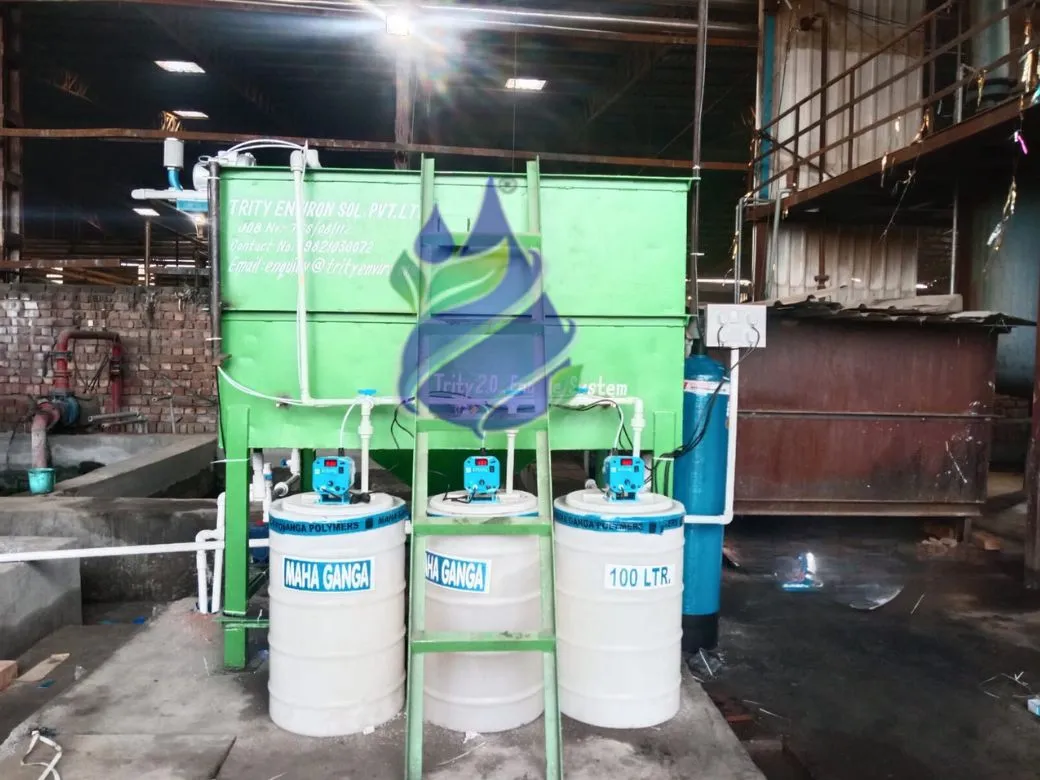
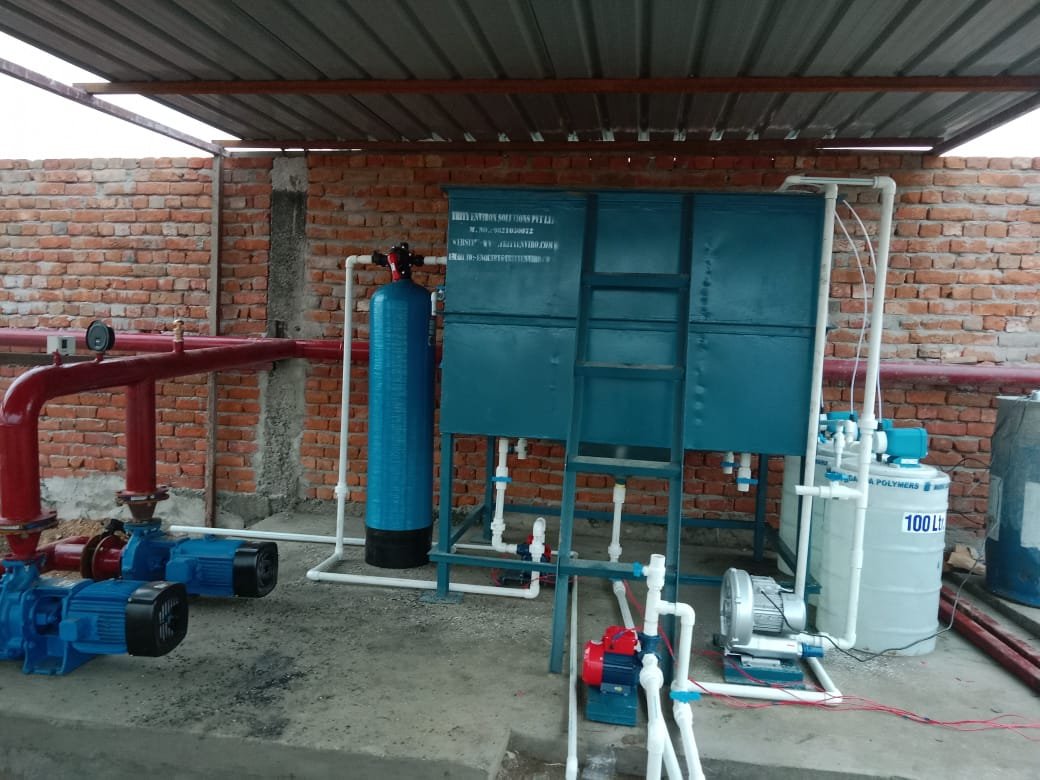
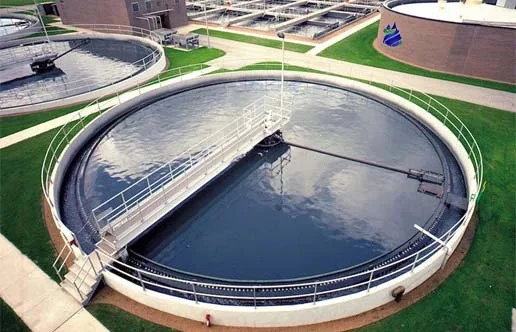
- Reuse treated sewage for flushing, cooling and landscaping. A well-run sewage treatment plant can turn a discharge liability into a second water source
- Treat process effluent to reuse quality. An effluent treatment plant sized for recovery, not just disposal, lowers freshwater intake
- Consider zero liquid discharge where regulation or scarcity demands it. Zero liquid discharge systems recover most process water and cut reliance on both borewells and tankers
- Keep existing plants performing. A structured operation and maintenance programme keeps treatment plants at design capacity, which is exactly what the Marathwada order requires
Why plant performance matters as much as plant capacity
Many treatment plants run below their rated capacity or fail outlet parameters because of poor upkeep. A plant that cannot meet reuse standards forces users back to fresh water. Regular monitoring of BOD, COD and suspended solids at the outlet is what makes reuse safe and dependable.
What to Watch Next
The CWC bulletin is weekly, so the trend over the coming Thursdays will show whether storage holds or keeps falling. The southern basins, especially the Cauvery and Pennar, are the ones to watch. For industries and urban local bodies, the practical question is no longer whether to plan for reuse, but how quickly existing treatment capacity can be made reuse-ready.