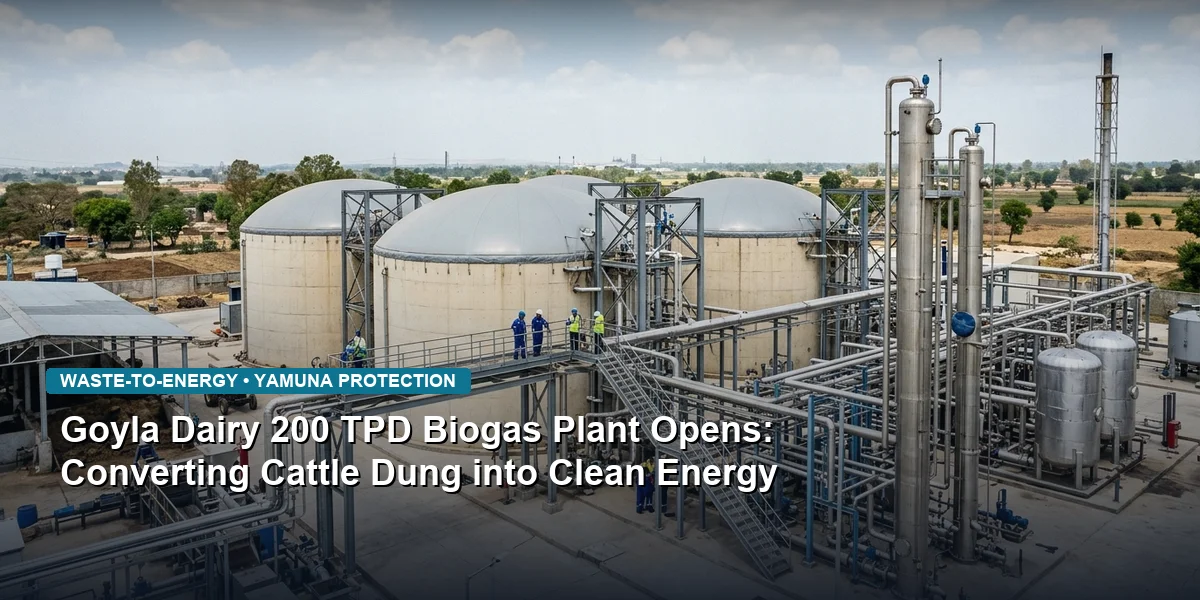
Delhi has opened another plant aimed at one of the Yamuna's less discussed pollution sources. On Monday, October 19, Chief Minister Rekha Gupta inaugurated a Rs 16 crore biogas plant at Goyla Dairy in Najafgarh, built and run by the Municipal Corporation of Delhi (MCD).
The plant processes cow dung that would otherwise end up in drains, turns it into fuel and fertiliser, and pays dairy operators for the waste.
What the Plant Does
The Goyla plant is designed around volume. Around 200 tonnes of cow dung are generated daily in the area, and the plant has the same processing capacity.
Key specifications
- Developer: Municipal Corporation of Delhi
- Location: Goyla Dairy, Najafgarh
- Cost: Rs 16 crore
- Capacity: 200 metric tonnes of cow dung per day
- Raw biogas output: about 14,000 cubic metres a day
- Purified compressed biogas (CBG): about 5.6 tonnes a day, supplied to Indraprastha Gas Limited (IGL) through a pipeline
- By-product: leftover slurry converted into organic fertiliser
Why Dairy Waste Matters for the Yamuna
Dairy colonies produce large volumes of dung and wash water every day. Where there is no organised collection, much of it can reach stormwater drains and then the river. Dung adds organic load, which raises BOD, and contributes nutrients and pathogens.
The government's approach here is to treat the waste at its source. The plant is paired with regular dung collection from dairy operators, so the material is removed before it gets into the drains.
The incentive built into the model
- The designated agency buys dung from dairy operators at 67 paise per kg
- This gives dairy owners income and makes dumping less attractive
- Organic fertiliser from the slurry returns value to farmers
Part of a Wider Programme
Government figures reported at the inauguration show the plant is not a one-off.
- Three biogas plants have been operating for the past 18 months, and six more are under way across the capital
- The Nangli Sakrawati plant processed 55,000 tonnes of cow dung in one year, generating Rs 3.5 crore in payments to farmers
- Rs 50 crore has been allocated for drains and drainage improvements in Delhi's dairy colonies
An earlier plant at Nangli Dairy was inaugurated in September 2025. Reporting then described a Rs 16 crore, 200 tonnes per day facility on 2.72 acres with three digesters, supplying compressed biogas to IGL and producing compost for farmers. In July 2025, Union Home Minister Amit Shah had also asked Delhi to work with the National Dairy Development Board on waste from dairies and cow shelters.
What the Leaders Said
Chief Minister Rekha Gupta stressed tackling pollution at its source rather than focusing only on cleaning the river. She urged dairy operators to cooperate with the collection system and not dump dung into drains.
Cabinet Minister Ashish Sood criticised earlier governments for relocating dairies without adequate waste management. He said Delhi now wants "concrete action and results instead of excuses and delays."
Putting the Capacity in Perspective
A few simple calculations help show the scale. They are arithmetic on the reported figures, not additional reported data.
- At 200 tonnes a day, the plant could handle about 73,000 tonnes of dung over a full year
- For comparison, the Nangli Sakrawati plant is reported to have processed 55,000 tonnes in a year
- Reported output of about 5.6 tonnes of purified CBG from 200 tonnes of dung works out to roughly 2.8% of the input weight, with the rest leaving as slurry, water and other residues
The comparison also shows why steady feed matters. The 55,000 tonne figure averages about 150 tonnes a day, below a 200 tonne design capacity, although the report does not say how long that plant ran at full load. Either way, a plant delivers its design benefit only if dairies supply dung consistently.
How Anaerobic Digestion Works, in Brief
Biogas plants rely on anaerobic digestion, in which microbes break down organic matter in the absence of oxygen.
- Dung is fed into sealed digesters
- Microbes produce biogas, mostly methane and carbon dioxide
- The gas is cleaned and compressed into CBG, which can replace fossil gas
- The remaining digestate can be used as fertiliser after handling
This is general background on the technology, not a description of the Goyla plant's internal design, which the report does not detail.
What Still Has to Go Right
A plant at the end of the pipe helps only if the pipe is full and the discharge is controlled.
Collection discipline
- Dairies must hand over dung through the collection system, not wash it into drains
- Collection has to be regular, because dung left standing reaches drains quickly in rain
The water side of dairy colonies
Dung is only part of the load. Wash water, urine and floor runoff still carry organic matter and ammonia into drains. Dairy colonies need drainage that separates stormwater from wastewater, and some form of treatment before discharge. A compact wastewater treatment plant is one way to handle wash water from a cluster of dairies before it leaves the site, and an effluent treatment plant suits larger, more concentrated flows.
Operation over years
Digesters need steady feed, temperature control and regular maintenance. Gas upgrading units need servicing, and slurry needs a reliable outlet. As with any treatment asset, performance over years depends on consistent operation and maintenance.
Why Source-Level Treatment Helps Water Quality
Organic waste that enters a river is broken down by microbes that consume dissolved oxygen, which is what a high BOD reading measures. The more dung and wash water reach the drains, the more oxygen is drawn down, and the harder it becomes for fish and other aquatic life to survive. Removing a large share of that load before it enters the drain is cheaper and more effective than trying to clean the water downstream, and it also reduces the burden on sewage plants that were never designed to handle concentrated dairy waste.
Context: The Yamuna's Wider Challenge
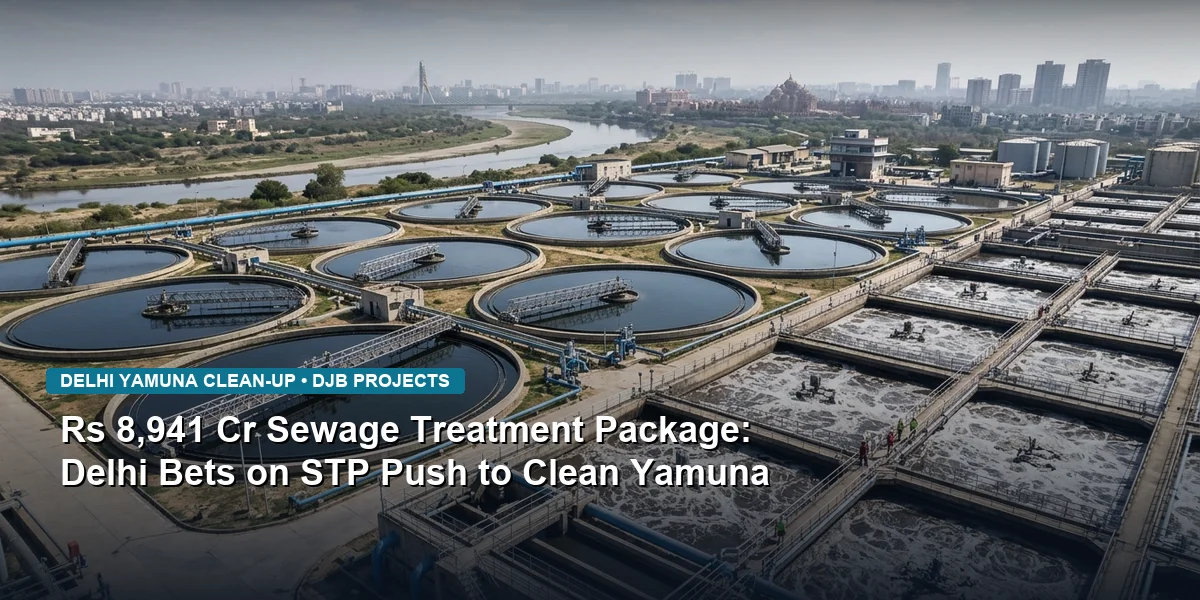
Dairy waste is one of several sources. Sewage from households and unserved colonies remains the largest. Delhi has also lined up a large sewage infrastructure package, with 43 Jal Board projects scheduled for October 22. Source-level measures such as the Goyla plant work alongside that package, not in place of it.
What to Watch Next
- Whether the six plants under way come online on schedule
- How much dung the Goyla plant actually processes against its 200 tonne capacity once it is running fully
- Whether drainage works in dairy colonies, backed by the Rs 50 crore allocation, keep wash water out of the Yamuna system