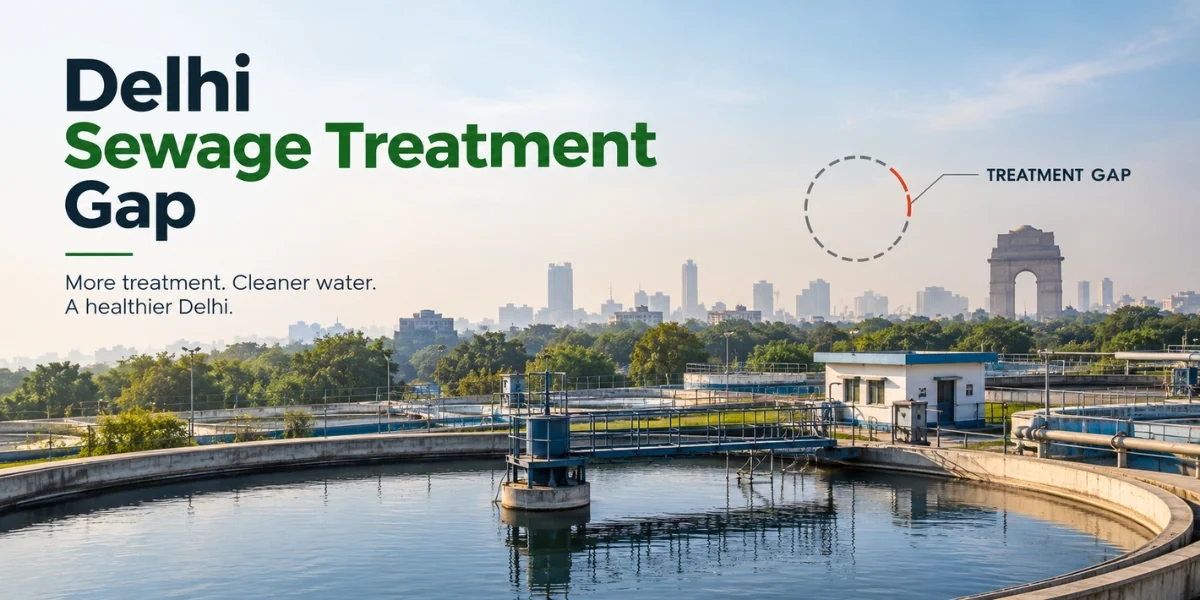
Delhi's sewage treatment infrastructure has long trailed the volume of sewage the city actually generates, a gap that Delhi Jal Board (DJB) officials have put at roughly 249 MGD (million gallons a day) when the current government took charge, against sewage generation of nearly 1,000 MGD. The Board has since moved to close this shortfall through a mix of plant upgrades and new decentralised facilities, most recently formalised at its 179th meeting in late July 2026.
How Large Is the Gap, and How Has It Changed?
According to Water Minister and DJB Chairman Parvesh Sahib Singh, Delhi's installed sewage treatment capacity stood at 749 MGD when the present government assumed office, against daily generation of close to 1,000 MGD, a gap in the region of 249 MGD. Through the rehabilitation and upgradation of existing sewage treatment plants (STPs), the Board says it has since raised installed capacity to 814 MGD, narrowing the shortfall to roughly 186 MGD.
The gap matters because sewage that exceeds available treatment capacity, or that bypasses functioning plants due to sewer connectivity issues, typically ends up reaching the Yamuna and connected drains without adequate treatment.
What DJB Has Approved to Close the Gap
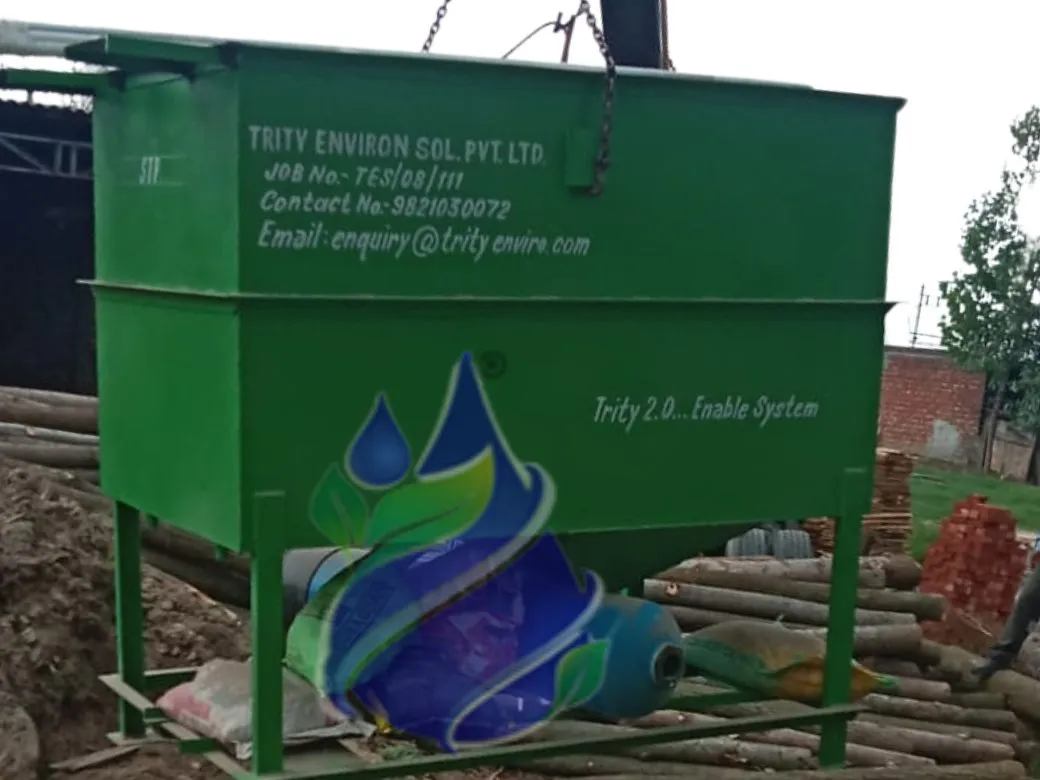
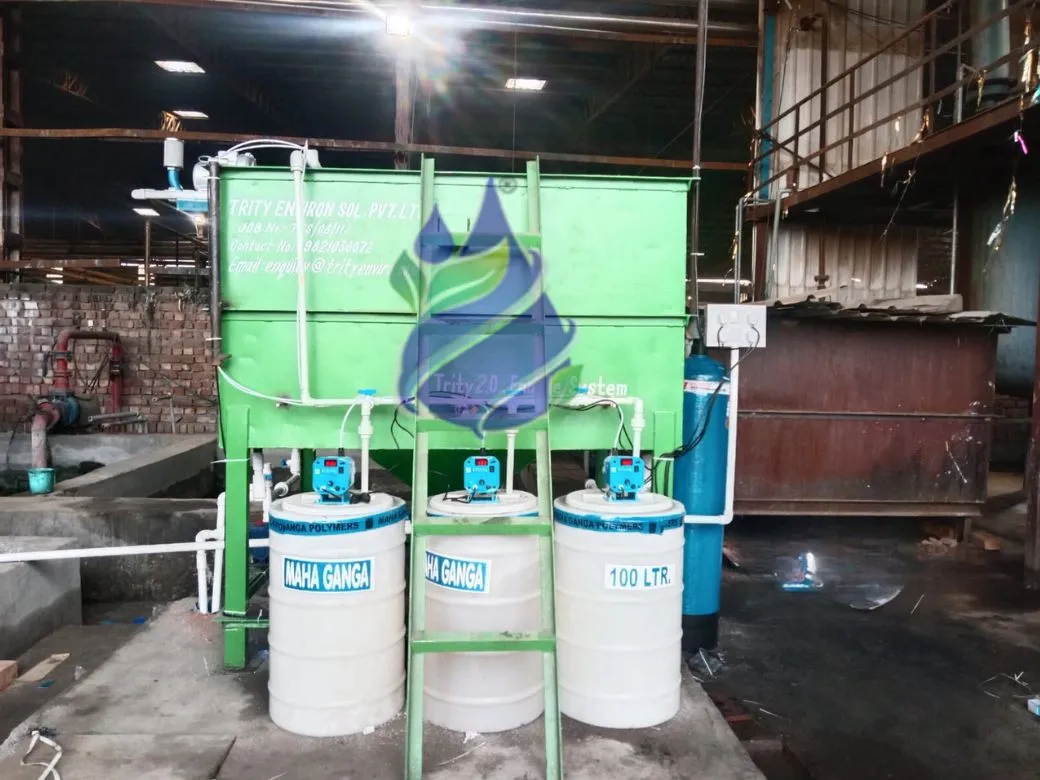
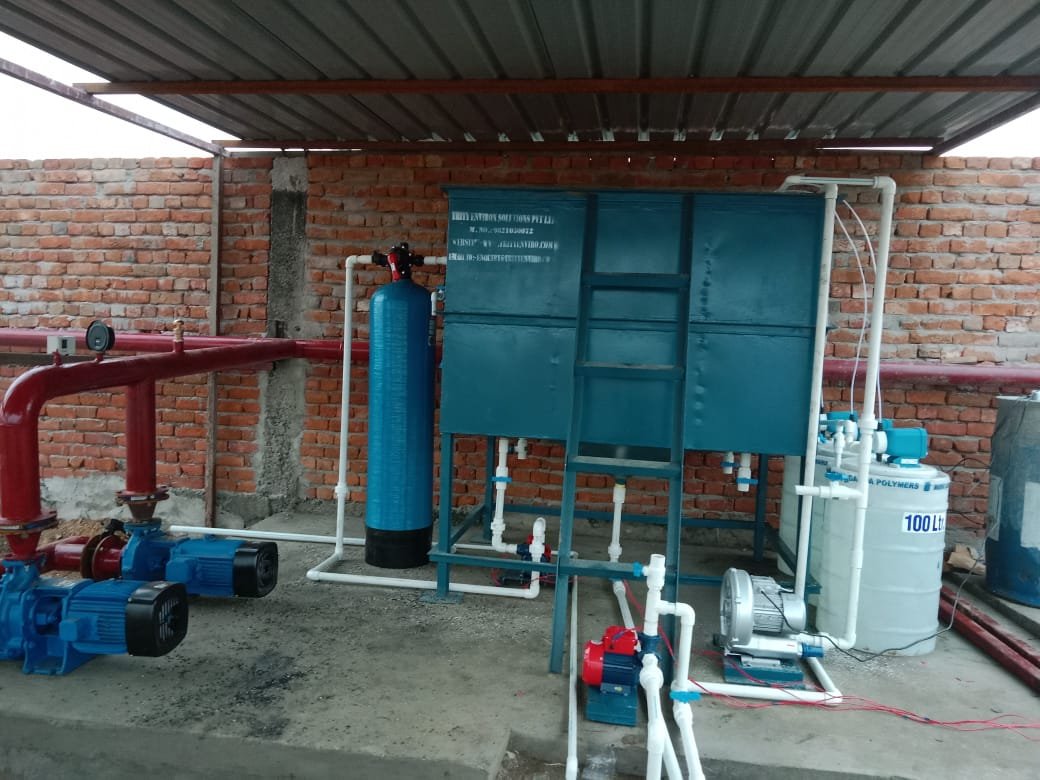
At its 179th meeting, DJB approved 15 newly awarded decentralised sewage treatment plants (DSTPs), taking the total number of DSTPs under implementation to 28. Once complete, officials say these decentralised plants will add further treatment capacity, with DJB targeting a total installed capacity that would, for the first time, exceed the city's current daily sewage generation.
Alongside new treatment capacity, the Board approved laying approximately 989 km of new sewer pipelines across 244 colonies and 57 villages, intended to bring an estimated 8 lakh currently unconnected households onto the sewer network. Existing STPs are also being upgraded, and a new sewage treatment plant is being developed alongside sludge management facilities at several existing sites.
Why Sewer Connectivity Matters as Much as Plant Capacity
Adding treatment capacity alone does not close the gap if a significant share of the city's households remain unconnected to the sewer network. DJB's own data shows hundreds of thousands of households across dozens of colonies and villages still lack sewer connections, meaning their wastewater currently bypasses treatment plants and reaches drains directly, regardless of how much installed capacity exists elsewhere in the city.
This is why the current phase of work pairs new decentralised treatment plants, sited closer to the areas that generate the sewage, with a parallel sewer network expansion, rather than relying on new capacity at centralised plants alone.
What This Means for Yamuna Rejuvenation Efforts
Closing Delhi's sewage treatment gap is one of the central planks of the city's broader effort to reduce untreated sewage entering the Yamuna, though it is not the only factor. Treatment plant performance, ongoing maintenance, and continued expansion of sewer connectivity in still-unserved colonies will determine how much of the new capacity translates into an actual reduction in untreated discharge, rather than the gap simply narrowing on paper.
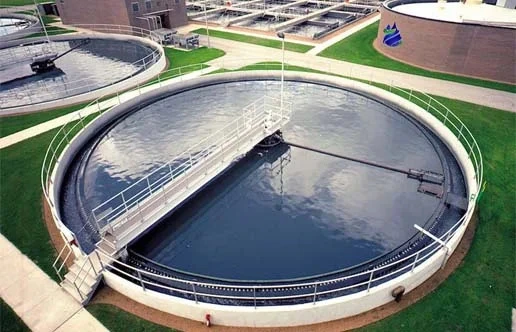
For a technical primer on how a sewage treatment plant processes wastewater before discharge, and how decentralised systems compare with centralised ones, see our related coverage on wastewater treatment infrastructure.
Key Highlights
- Delhi's sewage treatment capacity stood at 749 MGD against roughly 1,000 MGD of generation, a gap in the region of 249 MGD, according to DJB.
- Upgrades have since raised installed capacity to 814 MGD, narrowing the shortfall to around 186 MGD.
- DJB's 179th meeting approved 15 new decentralised STPs, taking the total under implementation to 28.
- Around 989 km of new sewer pipelines are planned across 244 colonies and 57 villages to connect roughly 8 lakh households.
- Officials aim for total capacity to exceed daily sewage generation for the first time once the new plants are complete.
Sources & Further Reading
This article is based on reporting from Millennium Post and the Daily Pioneer on DJB's 179th meeting (July 2026).