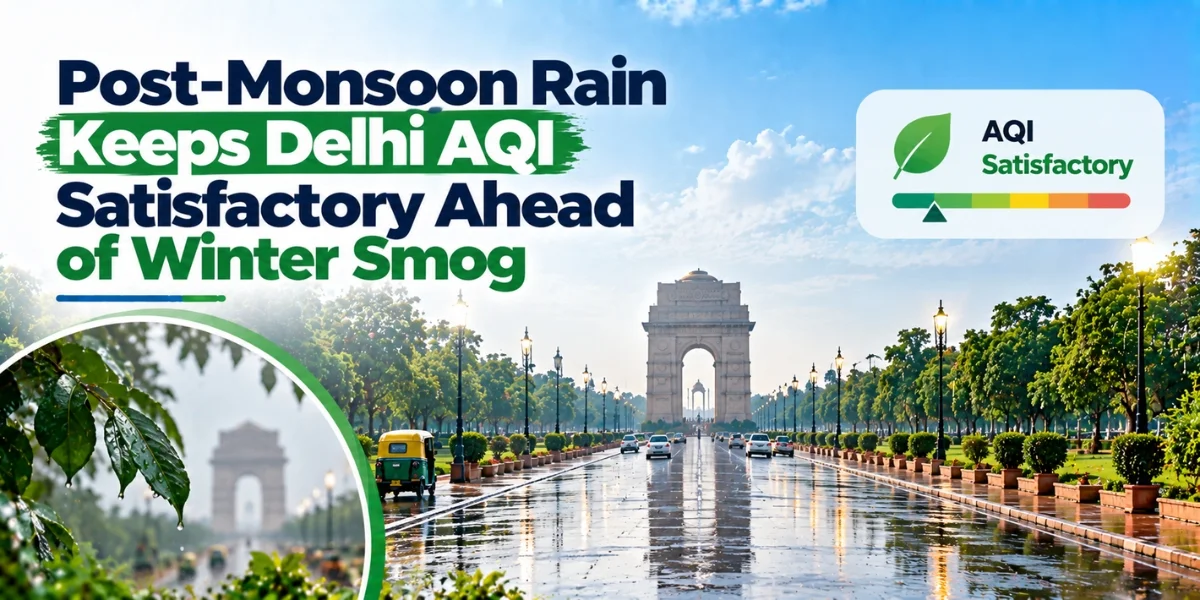
Delhi-NCR woke up to genuinely pleasant weather on Monday, September 28, cloudy skies, a cool breeze, and a minimum temperature at the Delhi Ridge of just 16.8 degrees Celsius, the lowest reading recorded in the plains that day. The rain that brought this relief also did something else worth noting: it kept Delhi's Air Quality Index sitting comfortably in the "satisfactory" category, right as the city enters the seasonal window when things usually start going the other way.
An Early, Slightly Unusual Monsoon Exit
The southwest monsoon actually retreated from Delhi on September 23, two days earlier than its usual schedule, and weather officials have been careful to note that the recent cooler spells don't signal winter's arrival, just typical post-monsoon variability. A depression over Madhya Pradesh and Chhattisgarh, combined with a weak western disturbance, brought a fresh round of showers over the following weekend, with the IMD issuing a yellow alert for rain and gusty winds up to 30 km/h across Delhi on Saturday, September 26.
Delhi's AQI has been bouncing around in a fairly narrow, reassuring band through this stretch, 78 on September 25, 70 the previous Saturday, generally staying under the 100-mark that separates "satisfactory" from "moderate." Compare that to the same window in past years, when Delhi has regularly seen AQI readings climb into "poor" or worse territory even before the formal winter pollution season begins, and the current numbers look genuinely good, for now.
Why "For Now" Is Doing a Lot of Work in That Sentence
Rain and wind are doing the heavy lifting here, not a structural improvement in emissions. Weather officials have explicitly flagged that the fresh spell of rain may only delay, not prevent, the usual build-up of smog as Delhi-NCR heads into its winter pollution season, when lower wind speeds and temperature inversions trap pollutants close to the ground regardless of how clean the air looked in late September. This is the same seasonal mechanism behind CAQM's Graded Response Action Plan (GRAP), which scales up restrictions automatically as AQI climbs through its four defined stages once winter conditions set in.
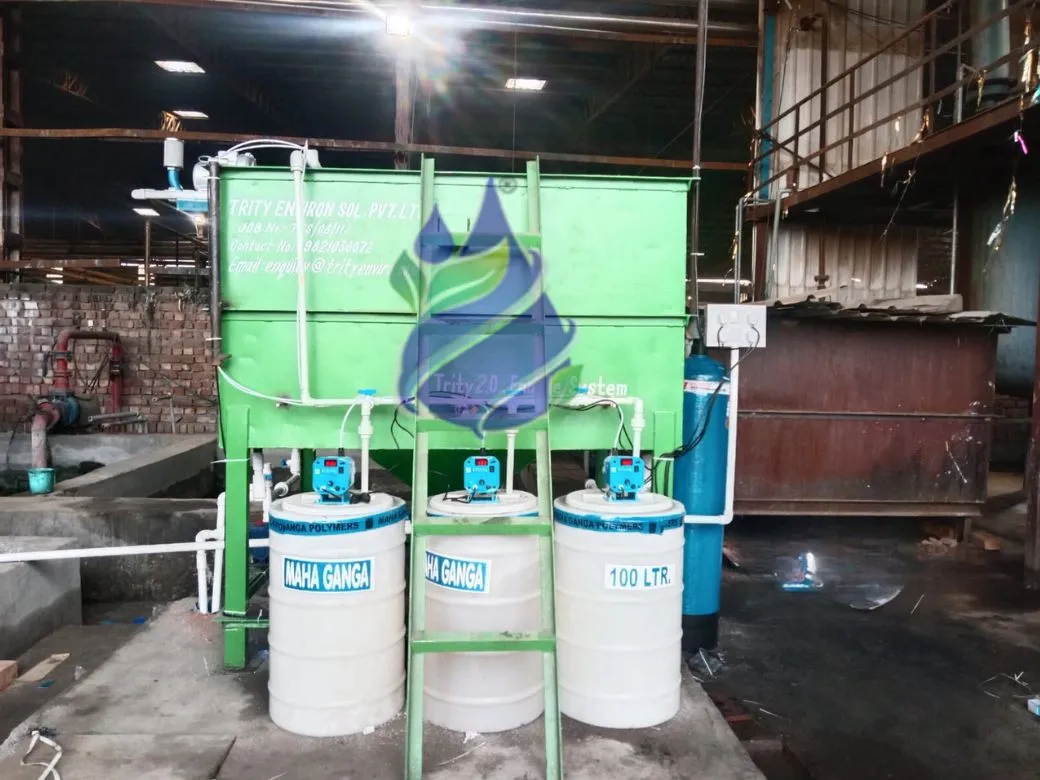
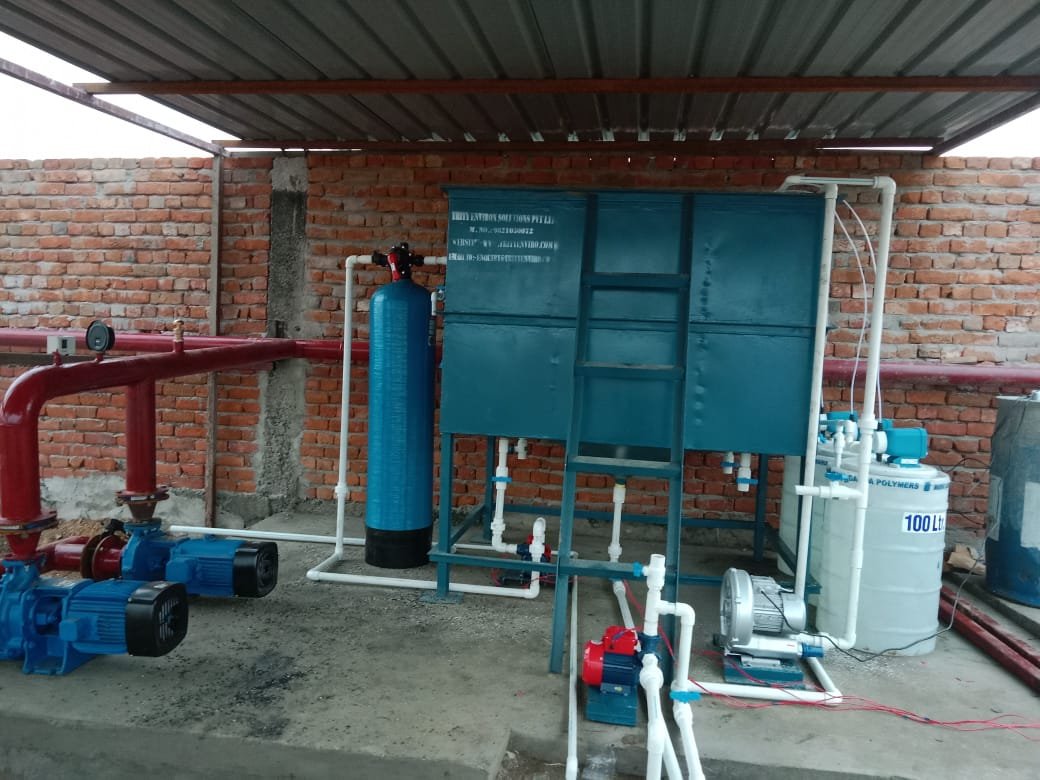
That's also exactly why the region's winter preparedness work matters more than any single week's AQI reading. Delhi has already deployed 78 sub-divisional and 256 ward-level enforcement teams for the September 2026 to March 2027 window, targeting construction dust, biomass burning and industrial emissions well before the weather turns against the city. For industries operating in the region, this stretch of good air quality is really a planning window, not a green light to delay compliance: functioning pollution control equipment installed and calibrated now is what actually holds up once GRAP restrictions tighten in a few weeks.
Key Highlights
- Delhi-NCR recorded cool, cloudy conditions on September 28, with the Delhi Ridge logging the lowest plains temperature of the day at 16.8°C.
- The southwest monsoon withdrew from Delhi on September 23, two days ahead of its usual schedule.
- Delhi's AQI has stayed in the "satisfactory" range (roughly 70-78) through the final week of September.
- An IMD yellow alert brought rain and gusty winds to Delhi-NCR on September 26 as a depression moved in from central India.
- Officials caution that current good air quality reflects rain and wind, not reduced emissions, with winter conditions expected to bring the usual seasonal deterioration.
Sources & Further Reading
This article draws on reporting from The Hawk (IANS), published September 28, 2026, and News24 on the IMD's September 26 rain alert and monsoon withdrawal timeline.