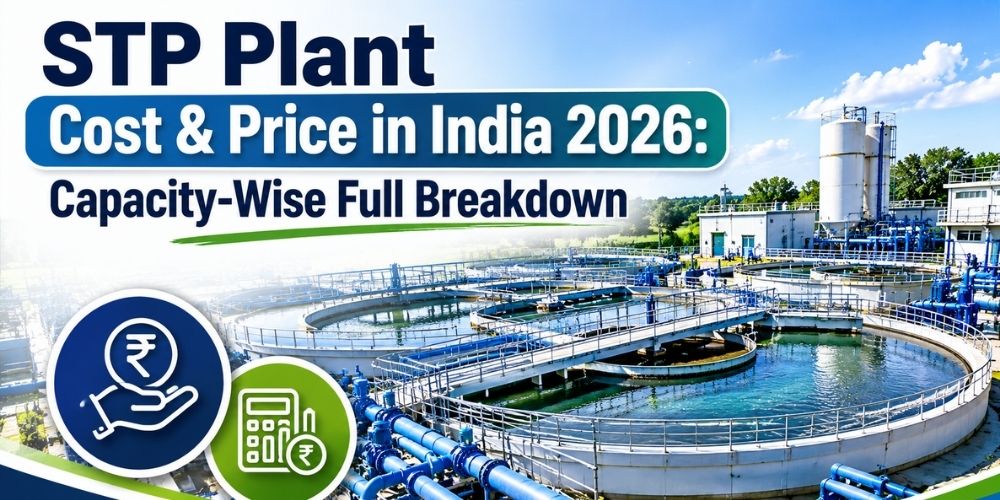
STP Plant Cost & Price in India 2026: Capacity-Wise Full Breakdown
Get realistic STP plant price in India 2026. Capacity-wise cost breakdown from 50 KLD to 1000 KLD, technology comparison, hidden costs & free quotation.

 ISO 9001:2015 & QCI Approved
India generates about 72,368 million litres of sewage a day, yet only around 28% is actually treated. A well-run STP is one of the biggest environmental gains a city can make, but a badly run one creates problems of its own.
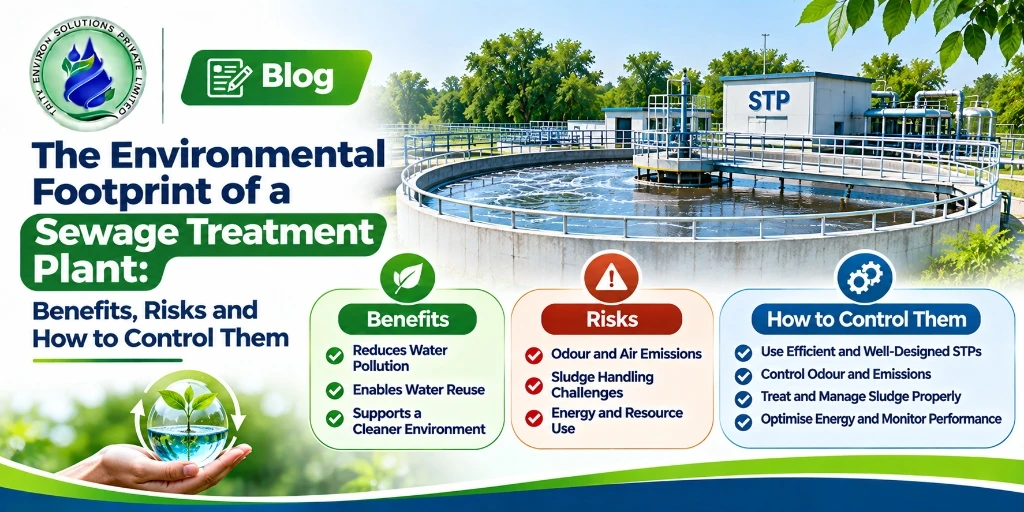
A sewage treatment plant has a net positive environmental impact when it is designed and operated properly. It removes organic matter, nutrients and pathogens from sewage before discharge, protecting rivers, groundwater and public health.
It also has its own footprint. Treatment uses energy, generates sludge, can release methane, nitrous oxide and odour, and discharges effluent that may still carry micropollutants.
The useful question is not whether STPs are good or bad. It is how large each effect is and what controls reduce it. The sections below set out both sides with data.
Untreated sewage is the largest single source of water pollution in India. Treatment removes:
Treated water is a resource, not just a discharge:
Biological treatment is also a source of emissions:
Our guide on wastewater treatment and climate change explains these figures in more detail.
Aeration is the largest energy consumer in most plants, commonly 40-75% of total electricity. If the grid is coal-heavy, this adds an indirect carbon cost on top of direct emissions.
Poorly managed plants smell. Hydrogen sulphide and other volatile compounds escape from open inlet works, septic tanks and sludge handling:
Every STP produces sludge that must be handled safely:
Standard secondary treatment does not remove everything:
The scale of the gap explains why the benefits matter so much:
The data shows two problems: too little capacity, and capacity that is not performing. A plant that exists but runs badly delivers the footprint without the benefit.
Most of the footprint is decided at the design stage:
Good design fails without good operation:
No technology is best everywhere. Each trades off space, sludge, energy and effluent quality:
| Impact Area | Typical Risk | Practical Control |
|---|---|---|
| Greenhouse gases | Methane, nitrous oxide | Biogas capture, aeration control |
| Energy | Aeration load | VFD blowers, DO control |
| Odour | Hydrogen sulphide | Covered tanks, odour treatment |
| Sludge | Pathogens, metals | Stabilisation, dewatering, safe disposal |
| Effluent | Micropollutants | Tertiary treatment where sensitive |
Trity Environ Solutions is an experienced sewage treatment plant manufacturer in Ghaziabad, designing STPs for Delhi NCR and clients across India with the full footprint in mind: energy, sludge, odour and effluent quality, not just a discharge number.
As a trusted STP manufacturer and supplier, Trity Enviro selects among extended aeration, FAB, SAFF, MBBR and MBR based on your site, and supports every plant through operation and maintenance so the footprint stays small after commissioning. We are ISO 9001:2015 certified, QCI approved, and deliver CPCB-compliant engineering nationwide.
Speak directly with our senior environmental engineers for technical guidance, sizing calculations, or a tailored project proposal.
Call +91-9821030072 or email enquiry@trityenviro.com
Get realistic STP plant price in India 2026. Capacity-wise cost breakdown from 50 KLD to 1000 KLD, technology comparison, hidden costs & free quotation.

Explore wastewater reuse strategies for arid regions to reduce freshwater dependency, boost agriculture, and enhance sustainability through innovative technologies.
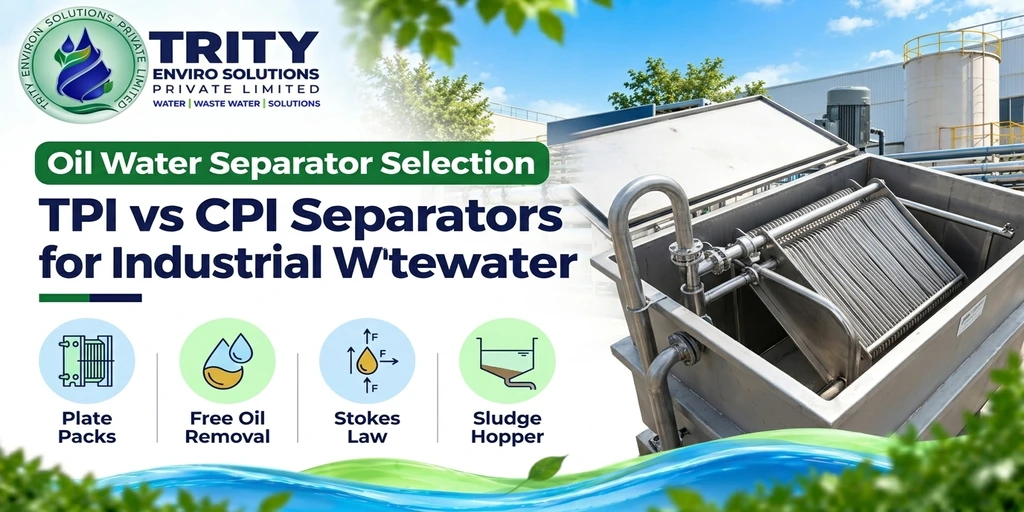
Choose between TPI and CPI oil water separators. Learn how plate packs work, how to size by droplet size and flow, and what outlet oil level to expect.











Discuss your requirements with our engineering team and get practical guidance for your project.

