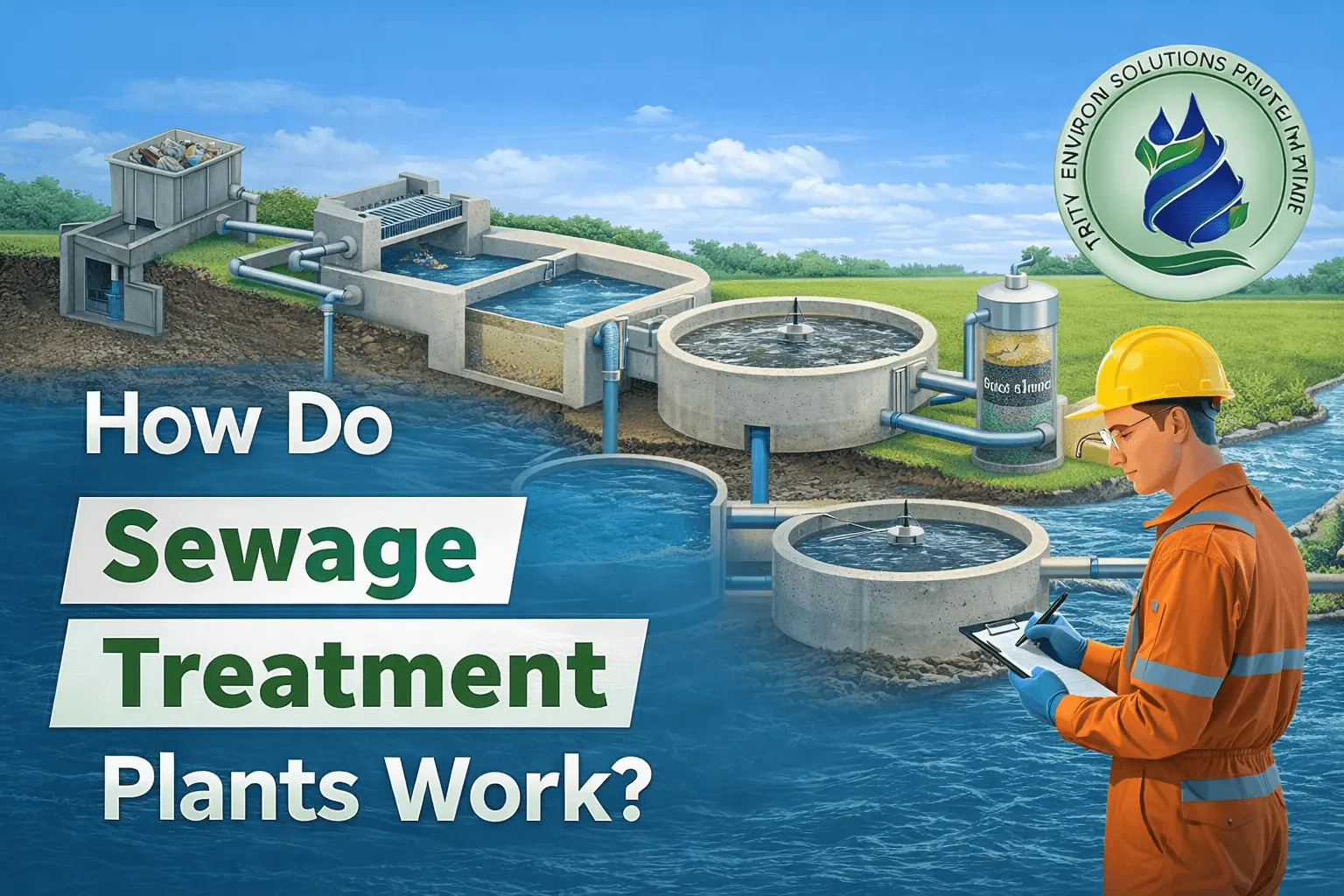
How Sewage Treatment Plants Clean Wastewater: Process Explained
Learn how sewage treatment plants clean wastewater through screening, sedimentation, aeration, and filtration processes before releasing safe treated water.

 ISO 9001:2015 & QCI Approved
A single untreated discharge point can quietly reshape an entire river ecosystem, feeding algal blooms, starving fish of oxygen, and shifting species composition for miles downstream. This guide explains exactly how wastewater treatment protects, or fails to protect, local ecosystem health.
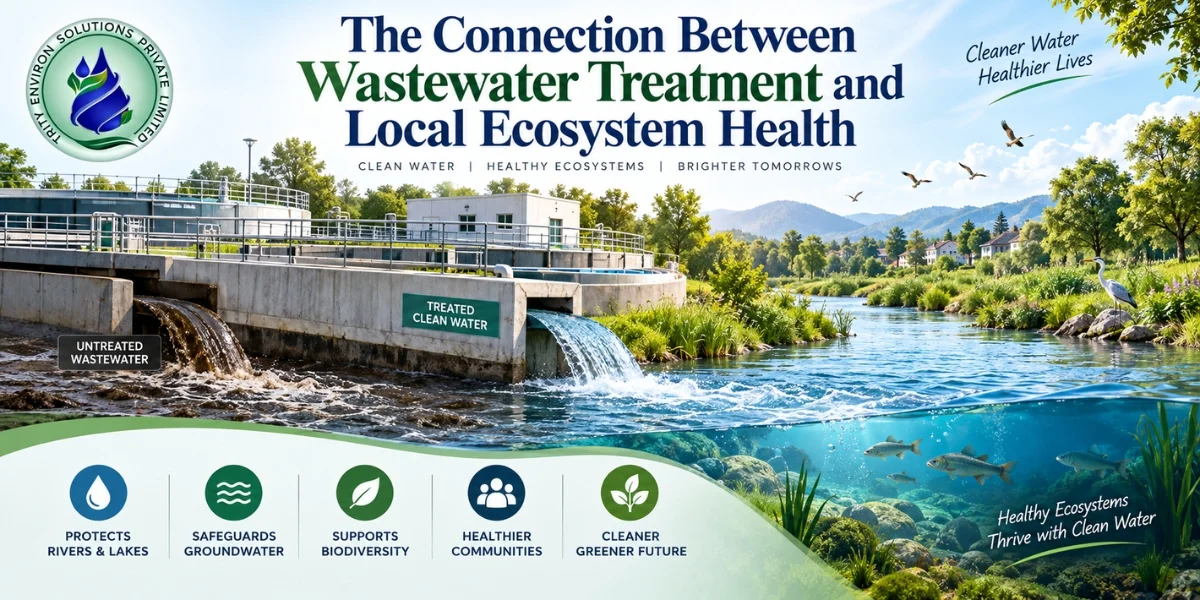
Clean water is not just a human necessity, it is the foundation every freshwater ecosystem depends on to function. Lakes, rivers, and wetlands host rich biodiversity and provide essential ecosystem services, but decades of uncontrolled sewage disposal worldwide have placed sustained pressure on the health of these systems. The connection between wastewater treatment and local ecosystem health is not abstract or indirect, it operates through a well-documented biological chain, starting with the nutrients and pollutants that untreated or poorly treated wastewater introduces into a water body, and ending with measurable changes in species diversity, water clarity, and the overall function of that ecosystem.
The most widespread ecological consequence of raw or poorly treated wastewater is eutrophication, a process where excessive nutrients trigger a destructive cascade through an entire aquatic system. Domestic sewage is rich in phosphorus and nitrogen, primarily from detergents, human waste, and food residues, which are precisely the nutrients that limit plant and algae growth in natural water bodies. When wastewater introduces these nutrients in large quantities, the natural balance breaks down rapidly.
The sudden influx of nitrogen and phosphorus acts as a massive fertilizer dose in receiving water bodies, triggering rapid and uncontrolled growth of algae and cyanobacteria, commonly visible as thick green scums or mats across lakes and slow-moving rivers. These algal blooms block sunlight from penetrating the water column, preventing submerged aquatic plants from photosynthesizing and gradually killing off the vegetation that provides habitat and oxygen for other aquatic life.
The deeper damage happens when the algal bloom inevitably dies. Massive quantities of dead algae sink to the bottom, where aerobic bacteria decompose the organic matter, consuming enormous amounts of dissolved oxygen in the process. Dissolved oxygen levels in the water column drop sharply, sometimes reaching near-zero hypoxic conditions, leading directly to mass fish kills, the loss of benthic organisms like snails and crustaceans, and conditions where only the most tolerant, low-oxygen species can survive.
The loss of fish and bottom-dwelling species does not stop there. It ripples upward through the food chain, affecting predatory fish, wading birds, amphibians, and semi-aquatic mammals that depend on the water body for food. Over time, a diverse and resilient ecosystem collapses into a severely simplified, degraded state dominated by a few pollution-tolerant organisms.
Beyond dissolved nutrients, untreated wastewater carries significant loads of suspended solids and particulate matter. When discharged into calm water bodies, these solids settle onto the bed, smothering fish spawning grounds, burying aquatic insect habitats, and clouding the water column. Reduced water clarity limits light penetration, further suppressing submerged plant growth and impairing the vision of predatory species that rely on sight to hunt.
When untreated or poorly treated wastewater is discharged into unlined ponds, drains, or dry riverbeds, it does not simply stay on the surface. Dissolved contaminants, especially nitrates, heavy metals, and persistent chemical compounds, seep downward through soil layers and gradually contaminate underlying groundwater aquifers. In many parts of India where nearby communities rely on borewells for drinking water and domestic use, this infiltration turns an ecological issue into a direct public health hazard that is exceptionally slow and expensive to remediate once established.
Domestic sewage introduces massive quantities of enteric pathogens, including bacteria (like E. coli and Salmonella), viruses, and parasitic protozoa, into natural water systems. This influx disrupts the native microbial communities that maintain natural nutrient cycling and water purification processes, while creating persistent health risks for humans and wildlife using the water body downstream.
Modern wastewater treatment, when properly engineered and operated, systematically dismantles the destructive chain described above at every stage:
Advanced treatment configurations like SBR and MBBR systems incorporate dedicated anoxic and anaerobic stages that specifically remove total nitrogen and phosphorus, eliminating the primary fuel for algal blooms before effluent ever reaches receiving waters.
Multi-stage clarification and biological aeration reduce Biochemical Oxygen Demand (BOD) and Chemical Oxygen Demand (COD) by 90-98%, ensuring discharged water does not strip receiving water bodies of dissolved oxygen.
Tertiary treatment with UV disinfection, ozonation, or chlorination neutralizes pathogenic microorganisms, protecting both downstream human populations and native wildlife communities.
| Parameter | Untreated / Degraded State | Post-Treatment Recovery State |
|---|---|---|
| Dissolved Oxygen (DO) | < 2 mg/L (Hypoxic / Dead zones) | > 5-6 mg/L (Supports healthy fish & aquatic life) |
| Biochemical Oxygen Demand (BOD) | 150 - 350 mg/L | < 10 mg/L (CPCB compliant) |
| Total Nitrogen & Phosphorus | Excessive (Fuels algal blooms) | Reduced by 80-90% via BNR stages |
| Water Clarity & Light Penetration | Turbid, opaque green scum | Clear, submerged plants photosynthesize |
| Aquatic Biodiversity | Only tolerant worms / sludge fauna | Diverse fish, benthic invertebrates, waterfowl return |
Trity Environ Solutions is a trusted sewage treatment plant manufacturer and effluent treatment plant manufacturer in India, designing systems that ensure full CPCB/SPCB compliance and tangible environmental restoration. Our engineering team delivers custom MBBR, SBR, and MBR systems backed by pan-India Annual Maintenance Contract and operation and maintenance support. We are ISO 9001:2015 certified, QCI approved, and deliver sustainable water engineering nationwide.
Learn how sewage treatment plants clean wastewater through screening, sedimentation, aeration, and filtration processes before releasing safe treated water.
Discover how Trity Environ Solutions can help you conserve water and promote sustainability with our advanced sewage treatment plants. Contact us for expert consultation and seamless installation!
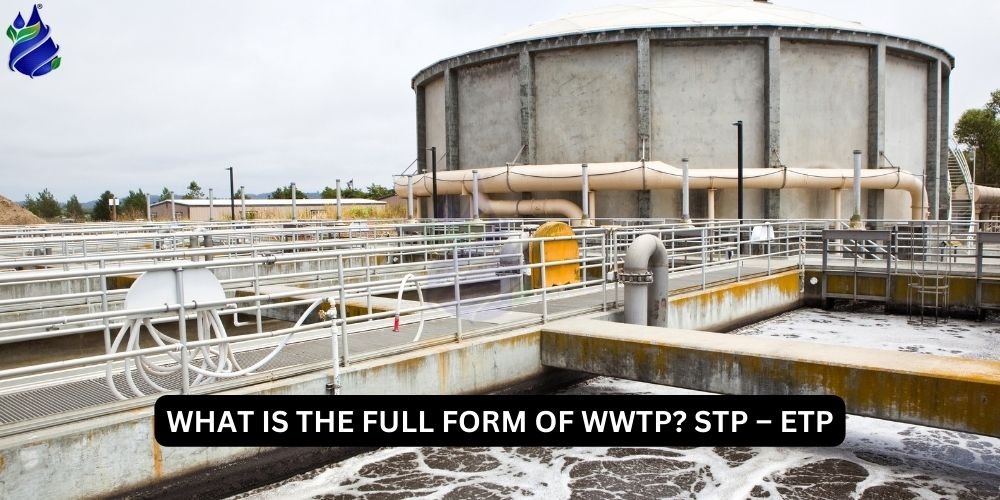
WWTP stands for Wastewater Treatment Plant. Learn the meaning of WWTP, its functions, treatment process, and importance in wastewater management.




Discuss your requirements with our engineering team and get practical guidance for your project.