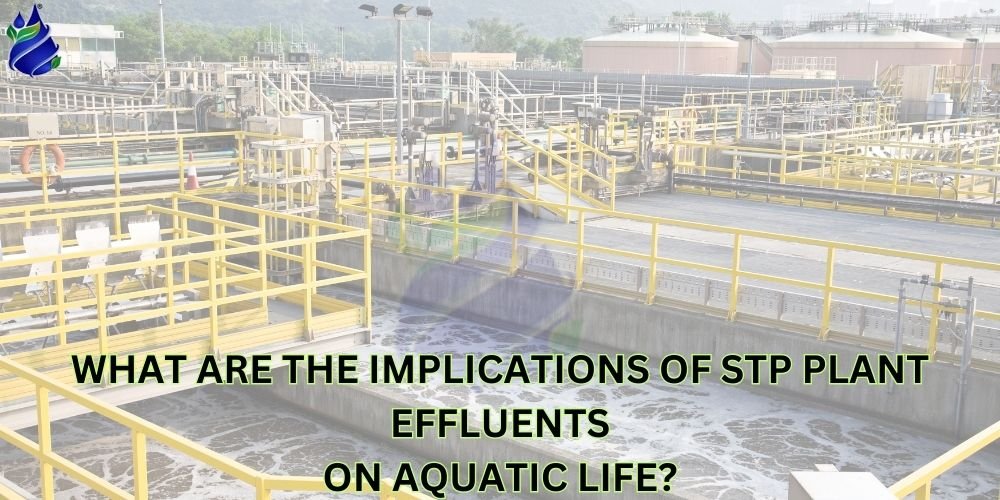
What Are the Implications of STP Plant Effluents on Aquatic Life?
How STP effluent affects aquatic life through endocrine disruption, with real fish studies showing sex ratio and reproductive impacts.

 ISO 9001:2015 & QCI Approved
Aeration blowers alone can eat up 60-80% of a treatment plant's total energy bill. The good news: the fixes for this are well-proven, and some pay for themselves within 6 months.

Municipalities and industries running treatment plants often focus cost-cutting efforts on chemicals or labour. But the single biggest recurring cost is almost always electricity, and it's also the one with the most proven, well-documented savings potential.
Understanding exactly where that energy goes is the first step to cutting it meaningfully.
Aeration blowers are consistently the largest single energy consumer in any biological treatment plant:
The reason aeration dominates so heavily comes down to the underlying physics: dissolving enough oxygen into a large volume of wastewater to sustain the biological population responsible for treatment is an inherently energy-intensive process, regardless of which specific blower technology a plant uses.
Pumps for influent, recirculation, and effluent transfer typically account for 15-20% of total energy consumption, the second-largest category after aeration.
The remaining energy load is spread across:
Variable Frequency Drives (VFDs) match motor speed to actual real-time demand instead of running at a fixed speed regardless of load. The physics behind this is favourable: power required is roughly proportional to the cube of speed, so even a small speed reduction yields a large power saving.
Documented results:
Beyond the direct energy saving, VFDs also remove the mechanical control valve that traditional throttling systems depend on, a component with historically high maintenance demand. Eliminating it reduces both the maintenance burden and the risk of a stuck or failed valve disrupting the entire aeration process.
Dissolved oxygen (DO) levels in the aeration basin directly drive blower energy demand. A well-established rule of thumb:
This means simply tightening DO control and calibration, without any capital investment, can deliver meaningful savings. Many plants running on outdated calibration schedules are quietly overspending on aeration for years without any single event flagging the problem, since a slowly drifting probe degrades efficiency gradually rather than triggering an obvious alarm.
A structured energy audit identifies exactly where a specific plant is losing efficiency, rather than guessing. A proper audit typically covers:
A Malaysian industrial WWTP energy audit found old fixed-speed pumps and blowers were major energy drains. After retrofitting VFDs:
Separately, industry specialists note that blower-focused efficiency programs can reduce total ETP/STP energy consumption by as much as 60% when multiple measures are combined. What makes this case study particularly relevant for Indian facilities is that the underlying problem, fixed-speed equipment sized for peak load but running mostly at partial demand, describes the vast majority of treatment plants built before VFD technology became standard practice, meaning similar savings are realistically available wherever that same equipment profile exists today.
Energy efficiency improvements deliver value beyond the direct power savings:
Facilities serious about capturing these benefits should approach it as a structured programme rather than a one-time equipment swap:
| Facility Type | Primary Opportunity | Typical Savings |
|---|---|---|
| Municipal STPs with older blowers | VFD retrofit on aeration | Up to 50% on blower energy |
| Industrial ETPs with variable flow | VFD on influent pumps | Around 30% on pumping energy |
| Plants with manual DO control | Automated DO optimization | ~6% per 0.5 mg/L DO reduction |
| Any plant without a recent audit | Structured energy audit | Identifies plant-specific savings roadmap |
Trity Environ Solutions designs sewage treatment plants and effluent treatment plants with energy-efficient blower and pump selection built into the design from day one. As an experienced wastewater treatment plant manufacturer, our engineering team also helps existing facility owners identify VFD retrofit and DO optimization opportunities on plants already in operation.
Every installation is backed by pan-India Annual Maintenance Contract and operation and maintenance support, keeping energy performance consistent over the plant's operating life. We are ISO 9001:2015 certified, QCI approved, and deliver CPCB-compliant engineering nationwide.
Get in touch with our engineering team for an energy assessment and optimization roadmap.
How STP effluent affects aquatic life through endocrine disruption, with real fish studies showing sex ratio and reproductive impacts.

Explore Biological Nutrient Removal (BNR) systems — a green, cost-effective solution for removing nitrogen and phosphorus from wastewater using natural processes.
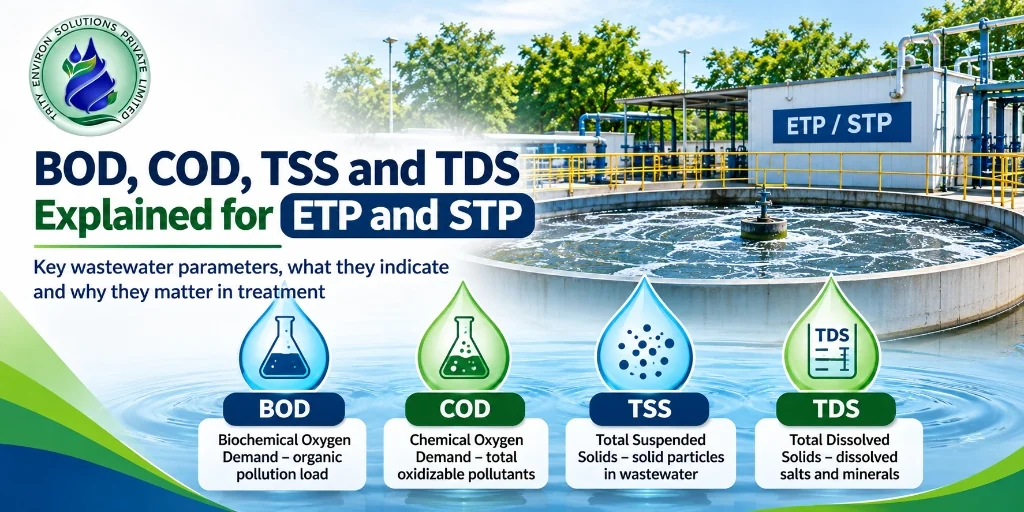
Trity Enviro explains BOD, COD, TSS, TDS and pH: what each test measures, typical values, CPCB limits and how to read your ETP or STP lab report.











Discuss your requirements with our engineering team and get practical guidance for your project.

