
Smart Water Management: How Wastewater Treatment Supports Circular Economies
Smart water management optimizes wastewater reuse, reduces costs, and supports sustainable growth, helping industries lower environmental impact and conserve resources.

 ISO 9001:2015 & QCI Approved
Learn what retention time in wastewater treatment means, how HRT and SRT are calculated, ideal values for STP and ETP, and how wrong retention time affects plant performance.
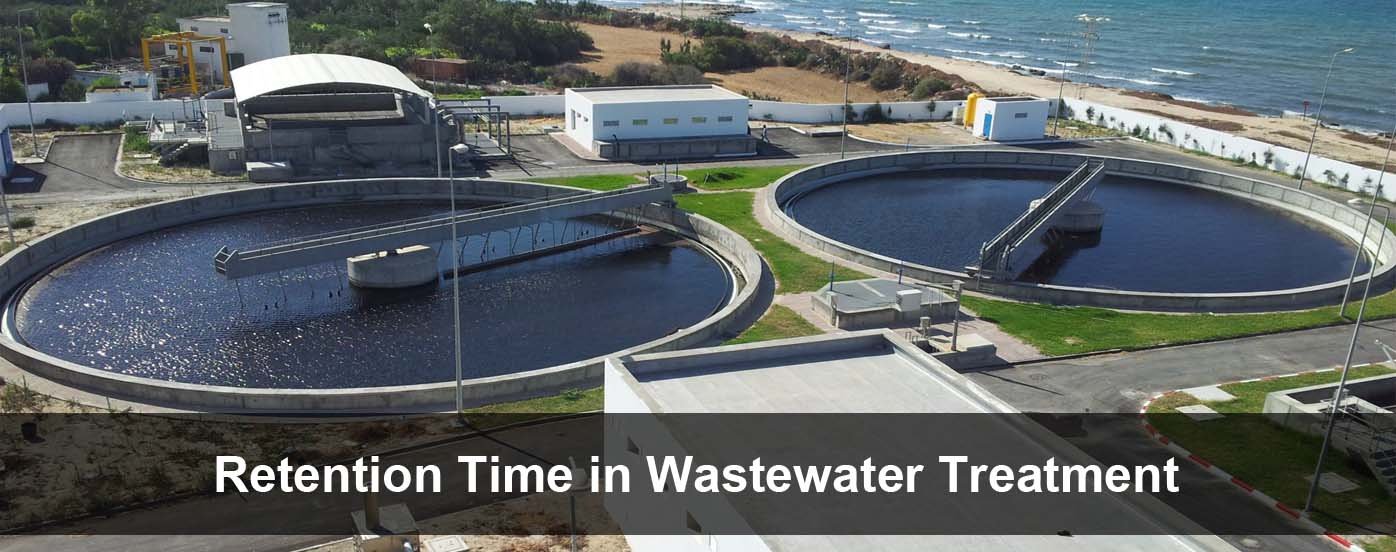
Retention time in wastewater treatment is the duration for which wastewater or sludge remains inside a treatment unit. It directly controls biological activity, pollutant removal, and effluent quality. Hydraulic Retention Time (HRT) measures liquid residence time, while Sludge Retention Time (SRT) measures microbial residence time. Both must be correctly designed for a plant to perform reliably.
When a wastewater treatment plant underperforms, engineers almost always trace the root cause back to one parameter: retention time. Too short, and microorganisms cannot degrade pollutants. Too long, and you waste capital, energy, and land. Every tank in your sewage treatment plant or effluent treatment plant has a design retention time, and deviating from it has consequences that show up in your effluent quality and compliance reports.
This guide covers every dimension of retention time in wastewater treatment, from fundamental definitions and formulas to tank-wise values, industry-specific requirements, common design mistakes, and troubleshooting approaches.
Retention time is the average duration a volume of liquid or a mass of solids spends inside a treatment unit before exiting. It is not a single number but a family of related parameters, each governing a different part of the treatment process.
In simple terms: if you fill a tank with wastewater and track how long it takes to pass through, that duration is the retention time. The longer the retention time, the more opportunity there is for treatment reactions to occur, up to a practical optimum beyond which returns diminish and problems begin.
Three distinct terms are used in practice, and confusing them leads to design errors:
HRT describes how long the liquid phase stays inside a reactor or tank. It is the ratio of tank volume to the volumetric flow rate entering the tank. HRT governs physical and biological treatment in aeration tanks, clarifiers, UASB reactors, and most other liquid-phase units.
Hydraulic Retention Time (HRT) is the average time wastewater spends inside a treatment tank. It is calculated by dividing tank volume (m3) by the influent flow rate (m3/hour or m3/day). HRT is expressed in hours or days and determines how effectively biological processes can treat organic pollutants.
SRT, also called Mean Cell Residence Time (MCRT) or sludge age, measures how long the microbial biomass remains in the system before being wasted or lost in the effluent. SRT is the critical design parameter for biological systems because it determines which microbial populations survive and thrive. Nitrifying bacteria, for instance, require a minimum SRT of 8 to 12 days at 20 degrees Celsius to establish in the system.
Sludge Retention Time (SRT) is the average time biomass spends in a biological treatment system before being discharged as waste sludge. It equals total mass of suspended solids in the system divided by mass of solids leaving per day. SRT controls microbial population, nitrification, and sludge production.
Detention time is often used interchangeably with HRT in the context of settling tanks and equalization tanks. Technically, it refers to the nominal residence time calculated from tank volume and flow, without accounting for dead zones or short-circuiting. In practice, the actual effective detention time in a clarifier may be 60 to 80 percent of the calculated nominal value due to hydraulic inefficiencies.
HRT = V / Q

Where:
HRT = Hydraulic Retention Time (hours or days)
V   = Effective Volume of the Tank (m3)
Q   = Influent Flow Rate (m3/hour or m3/day)
Worked Numerical Example:
A residential housing society STP has an aeration tank with an effective volume of 240 m3. The design flow rate is 1,200 m3/day.
Q = 1,200 m3/day = 50 m3/hour

HRT = 240 m3 / 50 m3/hour
HRT = 4.8 hours
Engineering Interpretation: An HRT of 4.8 hours in an extended aeration activated sludge system is on the lower end. For a typical domestic STP with BOD around 200 to 250 mg/L, this may be adequate if MLSS is maintained at 3,000 to 4,000 mg/L. However, if the influent BOD rises during peak loading, this retention time could become insufficient and lead to carry-over of unoxidized organic matter into the secondary clarifier.
| Treatment Unit | Typical HRT | Key Design Note |
|---|---|---|
| Equalization Tank | 4 to 8 hours | Higher for industries with batch discharge |
| Oil and Grease Trap | 0.5 to 1 hour | Must allow float and settle separation |
| Primary Clarifier | 1.5 to 2.5 hours | Surface overflow rate controls as much as HRT |
| Aeration Tank (Extended Aeration) | 18 to 24 hours | Most common in domestic STP India |
| Aeration Tank (Conventional ASP) | 6 to 8 hours | Higher BOD loads require the lower end |
| Secondary Clarifier | 2 to 4 hours | SOR and SLR are co-design parameters |
| MBBR Reactor | 2 to 6 hours | HRT shorter because biofilm carries load |
| SBR (per cycle) | 4 to 6 hours per cycle | Includes fill, react, settle, decant |
| MBR | 3 to 8 hours | Membrane handles solids independently |
| UASB Reactor | 4 to 8 hours | Up-flow velocity must stay within 0.5 to 1.0 m/h |
| Anaerobic Digester | 15 to 30 days | SRT equals HRT in completely mixed systems |
| Sludge Holding Tank | 6 to 12 hours | Before dewatering |
| Chlorine Contact Tank | 0.5 to 1.5 hours | Minimum 30 minutes at Ct value |
SRT = (Volume of Reactor x MLSS) / (Q_w x X_w + Q_e x X_e)

Where:
MLSS = Mixed Liquor Suspended Solids (mg/L)
Q_w  = Waste sludge flow rate (m3/day)
X_w  = Suspended solids in waste sludge (mg/L)
Q_e  = Effluent flow rate (m3/day)
X_e  = Suspended solids in effluent (mg/L)
In well-operated systems, X_e is low, so the denominator is dominated by waste sludge. SRT for BOD removal typically needs 3 to 5 days. For nitrification, it rises to 10 to 15 days. For combined nitrification and denitrification in a single-sludge system, SRT often needs to be 15 to 25 days.
The equalization tank buffers flow and concentration variations before they reach downstream biological units. For industries with highly variable discharge patterns such as textile dyeing, dairy, or food processing, the equalization tank HRT should be designed for 6 to 8 hours minimum. A batch-discharge pharmaceutical plant may need 8 to 12 hours of equalization to prevent shock loading on the biological reactor.
MBBR media carries the biofilm that performs biological treatment, which means the system can operate at shorter HRT compared to conventional activated sludge. The biofilm holds a high biomass concentration on the carrier surface, effectively decoupling HRT from SRT. A well-designed MBBR can achieve 85 to 90 percent BOD removal at HRT as low as 2 to 4 hours, making it a preferred choice when space is limited.
The Sequencing Batch Reactor operates in a time-based cycle rather than continuous flow. HRT in an SBR is calculated from total volume and the number of cycles per day. Typical domestic STP cycle times range from 4 to 6 hours per cycle, with 3 to 4 cycles per day.
UASB reactors treat high-strength wastewater from dairy, distillery, and paper industries. HRT in UASB systems typically ranges from 4 to 8 hours for soluble substrates, but the actual SRT inside the granular sludge bed is 30 to 50 days, which drives the high treatment efficiency. The anaerobic digester for sludge stabilisation operates at HRT of 15 to 30 days.
Zero Liquid Discharge plants incorporate multiple treatment stages, each with its own HRT requirement. The biological pre-treatment stage must achieve sufficient organic reduction before membrane filtration to protect RO membranes from accelerated fouling.
Flow Rate Variation: Influent flow in domestic STP peaks in the morning and evening, reaching 2.5 to 3 times the average daily flow. If the aeration tank is sized for average flow, peak conditions will reduce HRT sharply and carry partially treated wastewater into the clarifier.
Dead Zones: Poor inlet configuration or insufficient mixing creates dead zones where wastewater bypasses treatment. Dead zones can consume 20 to 40 percent of tank volume, reducing effective HRT without any visible change in tank dimensions.
Short Circuiting: When wastewater finds a hydraulic path from inlet to outlet without fully mixing, actual contact time falls far below calculated HRT. Tracer studies using Rhodamine WT dye or lithium chloride can confirm short-circuiting in operating plants.
Temperature: Biological reaction rates drop significantly below 15 degrees Celsius. During winter operations in North India, effective biological HRT may need to increase by 30 to 50 percent to maintain equivalent treatment efficiency.
MLSS and Organic Loading: Higher MLSS allows shorter HRT for the same treatment result, but very high MLSS above 5,000 mg/L creates oxygen transfer limitations. Higher influent BOD or COD reduces treatment efficiency per unit HRT unless tank volume is increased correspondingly.
| Industry | Process | Recommended HRT | Special Consideration |
|---|---|---|---|
| Textile and Dyeing | ETP Aeration | 12 to 24 hours | High colour and refractory COD |
| Pharmaceutical | ETP Biological Stage | 24 to 48 hours | Toxic inhibition risk; long SRT needed |
| Dairy | UASB + Aerobic | UASB 4 to 6 hrs + Aerobic 8 to 12 hrs | High BOD and fat content |
| Food Processing | ETP Aeration | 12 to 18 hours | Variable loading; equalize first |
| Beverage | UASB + Aerobic | UASB 6 to 8 hrs | High sugar; fast acidification risk |
| Paper and Pulp | ASP or MBBR | 18 to 36 hours | High TSS and colour load |
| Hospitals | STP | 18 to 24 hours | Pathogen destruction; disinfection critical |
| Hotels and Resorts | STP | 16 to 20 hours | Variable flow; SBR or MBBR preferred |
| Housing Societies | Domestic STP | 18 to 24 hours (ext. aeration) | Space constraints common |
| Chemical Plants | ETP | 24 to 72 hours | Toxic compounds; pilot testing required |
Insufficient retention time is the most common cause of STP and ETP failure in India. The biological population cannot oxidize the incoming organic load within the available time. BOD and COD in the effluent remain elevated. TSS rises as biological floc has not matured. The secondary clarifier receives an excess of colloidal material, producing turbid overflow. Over time, nitrifying bacteria wash out entirely since their growth rate is slower than the dilution rate imposed by short HRT. This results in direct CPCB or State Pollution Control Board non-compliance and persistent odour from anaerobic zones in the aeration tank.
Excessive retention time increases tank size, capital cost, and aeration energy consumption. In aerobic systems, endogenous decay dominates at very long SRT, increasing pin floc and reducing settleability. In UASB reactors, very low hydraulic loading at full tank volume can cause sludge bed destabilisation.
Retention time is not a parameter that can be adjusted after a plant is built. It must be correctly established at the design stage based on actual flow data, influent characterisation, temperature profiles, and treatment objectives. This is where engineering depth matters.
Trity Environ Solutions designs sewage treatment plants and effluent treatment plants with site-specific HRT and SRT calculations for every unit process. The team carries out influent sampling and analysis before fixing design parameters rather than relying on assumed values. For projects with variable discharge, equalization tanks are sized conservatively to protect downstream biological units.
For compact urban projects, MBBR systems allow shorter HRT without sacrificing effluent quality. Where space permits, Sequencing Batch Reactors provide excellent control over both HRT and SRT within a single tank.
Industrial clients with high-strength effluents from pharmaceuticals, chemicals, or food processing receive ETP designs with extended HRT and adequate SRT for nitrification. Sludge management is covered through filter press systems and decanter centrifuges.
Post-commissioning, Operation and Maintenance and AMC services ensure MLSS is maintained, sludge wasting is carried out on schedule, and retention times stay within design bands. Oil skimmers and tube settler media in clarifiers are maintained to preserve effective settling zone HRT.
For industries moving toward Zero Liquid Discharge, the team integrates biological retention time requirements with membrane and evaporation system design. To discuss your plant design requirements, contact Trity Environ Solutions.
Retention time is the average duration that wastewater or sludge remains inside a treatment unit. It determines how long microorganisms or chemical reactions have to process the incoming pollutant load. The two main forms are Hydraulic Retention Time for the liquid phase and Sludge Retention Time for the biological mass.
HRT is the average time the liquid phase of wastewater spends inside a reactor or tank. It equals tank volume divided by volumetric flow rate. For an aeration tank of 300 m3 receiving 1,500 m3 per day, HRT is 4.8 hours. HRT is expressed in hours for most biological units and in minutes for disinfection contact tanks.
HRT = V / Q, where V is the effective tank volume in m3 and Q is the influent flow rate in m3 per hour or m3 per day. The result is in hours when V is m3 and Q is m3/hour. Always use effective volume after deducting freeboard and sludge storage volume.
HRT measures how long the liquid stays in the system. SRT measures how long the biological solids stay in the system. In a simple aeration tank with no sludge recycle, HRT equals SRT. In activated sludge systems with sludge return, SRT is much higher than HRT because sludge is returned to the aeration tank while the liquid exits. A system can have HRT of 6 hours but SRT of 15 days.
Low HRT leads to incomplete BOD and COD removal, elevated TSS in effluent, washout of slow-growing nitrifying bacteria, sludge bulking, and regulatory non-compliance. In biological systems, washout occurs when HRT falls below the minimum cell doubling time of the microorganisms responsible for treatment.
Excessive HRT increases tank size and capital cost, raises aeration energy consumption, can lead to excessive endogenous respiration and pin floc in activated sludge systems, and in some cases causes nutrient depletion that harms the microbial population. For UASB reactors, very low hydraulic loading can lead to sludge bed washout.
SRT is the average age of the biological solids in a wastewater treatment system. It equals the total mass of suspended solids in the system divided by the daily rate of solids leaving through waste sludge and effluent. SRT controls which microbial species dominate the system. BOD removal needs SRT of 3 to 5 days. Nitrification needs SRT of 8 to 15 days at 20 degrees Celsius.
Detention time generally refers to the nominal residence time in settling tanks, calculated from volume and flow without correcting for hydraulic inefficiencies. It is often used interchangeably with HRT in the context of clarifiers and equalization tanks. Actual effective detention time in a real clarifier may be 65 to 80 percent of nominal due to short circuiting.
Peak flow events, dead zones from poor baffling, short-circuiting due to bad inlet design, seasonal temperature variation, changes in influent quality, and inaccurate measurement of actual tank volume all affect the effective retention time experienced by wastewater in an operating plant.
Anaerobic digesters have the highest retention time, typically 15 to 30 days, because the anaerobic degradation of sludge is a slow process. Among process tanks, extended aeration systems have HRT of 18 to 36 hours. Chemical ETPs treating toxic industrial wastewater may require biological stage HRT of 2 to 4 days in extreme cases.
For domestic STP using extended aeration activated sludge, ideal HRT in the aeration tank is 18 to 24 hours. For MBBR-based STP, 3 to 6 hours in the MBBR reactor is adequate due to high biomass concentration on the media. SBR systems achieve equivalent treatment within each fill-and-react cycle of 4 to 6 hours.
ETP HRT depends heavily on effluent characteristics. Pharmaceutical ETPs often need biological HRT of 24 to 48 hours. Dairy ETPs using UASB followed by aerobic treatment need UASB HRT of 4 to 6 hours and aerobic HRT of 8 to 12 hours. Textile ETPs may require 12 to 24 hours aerobic HRT due to refractory COD content.
BOD removal increases with HRT up to an optimum point, beyond which additional HRT yields diminishing returns. In activated sludge systems, BOD removal efficiency typically reaches 85 to 95 percent at design HRT when MLSS is maintained within range. At HRT below 3 hours in conventional ASP, BOD removal falls sharply because the organic load exceeds biological oxidation capacity.
Similar to BOD, COD removal improves with HRT but the relationship is non-linear. Refractory COD fractions from industrial wastewater do not respond to extended biological HRT alone; they require advanced treatment such as ozonation, UV oxidation, or activated carbon adsorption after the biological stage. Biodegradable COD removal mirrors BOD response to HRT.
In existing plants, HRT can be improved by reducing peak inflow through better equalisation upstream, checking for hydraulic short-circuiting and adding baffles to correct it, operating multiple tanks in series where the plant layout permits, reducing uncontrolled flow paths like overflow bypass, and conducting daily MLSS monitoring to ensure the biological system is operating at design sludge concentration.
Retention time in wastewater treatment is not just a design input; it is the operational heartbeat of every treatment unit from the equalization tank to the final clarifier. HRT governs liquid treatment efficiency. SRT governs biological population dynamics. Getting either wrong undermines the entire treatment chain regardless of how well every other parameter is managed.
For Indian industries and infrastructure projects, where CPCB and State PCB compliance is increasingly enforced and water reuse is becoming a regulatory requirement, correctly designed and operationally maintained retention times are non-negotiable. Whether the system is an MBBR-based compact STP for a housing society, a UASB-based ETP for a dairy, or a full ZLD system for a textile plant, the engineering discipline around retention time determines whether the plant meets its design intent throughout its operational life.
Smart water management optimizes wastewater reuse, reduces costs, and supports sustainable growth, helping industries lower environmental impact and conserve resources.

Practical tips to improve wastewater treatment plant efficiency, from energy audits to sludge and process control, from an experienced STP manufacturer.

Empower communities with sustainable wastewater solutions. Learn how local participation boosts efficiency, education, and environmental care




Discuss your requirements with our engineering team and get practical guidance for your project.