ISO 9001:2015 & QCI Approved
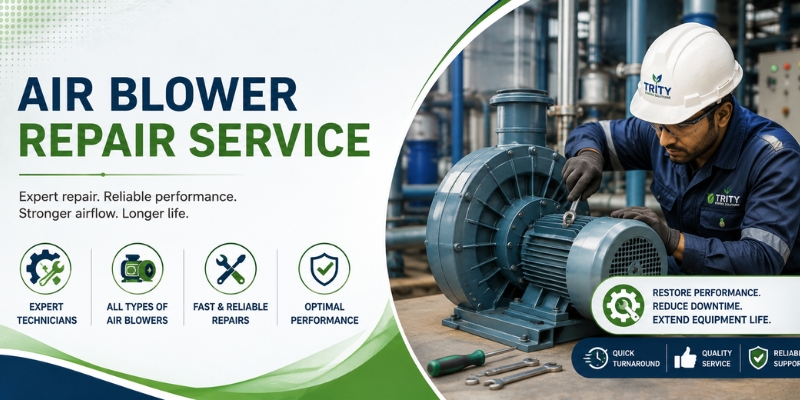
Air Blower Repair Service
Trity Enviro offers expert air blower repair, servicing, and preventive maintenance for STP and ETP plants across India, minimising aeration downtime and energy loss.
A Blower Problem Is Never Just a Blower Problem
The air blower is the one piece of equipment in an STP or ETP that, if it stops, the entire biological treatment process stops with it. Aeration blowers push a continuous supply of oxygen into the aeration tank, keeping the bacteria that break down organic waste alive and active. When a blower loses output, even partially, dissolved oxygen (DO) levels in the tank start dropping within hours, not days, and a plant that was meeting consent standards yesterday can start failing them by the next sampling round. Trity Environ Solution repairs and services air blowers precisely because we understand this chain of consequence, a blower issue that looks minor on the equipment side is rarely minor on the compliance side.
Common Blower Types We Work On
- Twin-lobe roots blowers: the standard choice for most building and mid-size STPs in India, valued for steady output regardless of pressure variation and straightforward maintenance
- Tri-lobe roots blowers: smoother airflow and quieter operation than twin-lobe, common where noise is a factor
- Centrifugal and turbo blowers: used on larger municipal STPs and industrial ETPs where energy cost is the primary concern, delivering meaningfully better efficiency than roots-type blowers at scale, though with a more specialised repair and servicing requirement
Most Indian plants run a duty and standby pair, one blower working while the other rests, so the plant doesn't stop the moment one unit needs servicing. How well that rotation is managed has as much impact on blower lifespan as the servicing itself.
Common Symptoms and What They Usually Mean
- Reduced airflow or falling DO readings: often a clogged inlet air filter, a worn or slipping drive belt, or timing gear wear on a roots-type unit
- Unusual noise or vibration: frequently bearing wear, loose mounting, or lobe-to-casing clearance drifting out of spec
- Overheating or high discharge temperature: can point to inadequate cooling, a failing bearing, or the blower running against higher back-pressure than it's rated for, sometimes because diffusers downstream are fouled
- Oil leaks or contamination: on lubricated gear-type blowers, a leaking seal doesn't just waste oil, contaminated air reaching the diffusers can foul them over time
- Belt slippage or misalignment: a common, easily missed cause of gradually declining output that gets blamed on the blower itself when the fix is a belt and alignment adjustment
What Happens When Blower Problems Get Ignored
A blower running below its rated output doesn't usually fail outright, it degrades quietly. DO levels drop, the biological culture in the aeration tank starts to stress, treatment efficiency falls, and by the time effluent quality visibly deteriorates, the plant may already be out of compliance with its consent conditions. Rebuilding a stressed biological culture after a prolonged low-DO period can take days to weeks, which is a far more expensive and disruptive fix than the blower repair that would have prevented it.
Our Repair and Servicing Process
- On-site diagnosis: airflow, pressure, temperature, and noise/vibration checks to isolate the actual fault rather than replacing parts on guesswork
- Duty/standby management: where a plant has a standby unit, we work on the faulty blower while the other keeps the plant running, avoiding a treatment shutdown
- Repair using genuine components: bearing replacement, belt and pulley alignment, gear timing correction, seal replacement, or filter servicing depending on the diagnosed fault
- Load testing after repair: confirming airflow and pressure are back to rated output before signing off, not just that the blower runs
- Preventive recommendations: flagging wear patterns that indicate a component will need attention soon, so the next visit is planned rather than another emergency callout
Why Trity Environ Solution for Blower Repair
We manufacture and install the STP and ETP systems these blowers serve, which means our technicians are diagnosing the blower in the context of the whole treatment system, not as an isolated mechanical unit. That context matters when a "blower problem" is actually a downstream diffuser fouling issue creating excess back-pressure, or an undersized blower that was never matched to the tank's actual air demand in the first place. We also offer blower servicing as part of our Annual Maintenance Contract packages, so wear gets caught on a scheduled visit instead of turning into an emergency repair call.
Frequently Asked Questions
How do I know if my blower needs repair or replacement?
If the fault is bearing wear, belt or alignment issues, seal leaks, or filter clogging, repair is usually the right call. Replacement becomes the better option when the motor windings have failed, the casing or lobes are damaged beyond tolerance, or repeated repairs on an old unit are starting to cost more than a new blower would.
Can the plant keep running while the blower is being repaired?
Yes, if you have a duty/standby pair, which most STPs are designed with. We work on the faulty unit while the standby covers aeration, so there's no treatment interruption. Single-blower installations without a standby are more exposed to downtime during repair.
How often should an air blower be serviced?
This depends on blower type, load, and running hours, but a scheduled inspection every few months catches most wear before it becomes a failure. Belt-driven units typically need more frequent checks than direct-drive units.
What's the most common cause of blower failure we see?
Filter neglect and belt/alignment drift are the two most common, both because they're easy to overlook until output has already dropped noticeably. Both are also the cheapest to catch early and the most expensive to ignore.
Scope Highlights
Why Choose Trity Enviro Solutions?
Industry-certified environmental engineers delivering compliant, high-efficiency turnkey systems across India.
100% SPCB/CPCB Compliance
Complete regulatory clearance & legal liaison support.
Certified Engineers
Over a decade of industrial wastewater expertise.
Turnkey Execution
End-to-end design, fabrication, setup & commissioning.
Pan-India AMC & Service
24/7 technical hotline, scheduled visits & spare parts.
Frequently Asked Questions
Q1. What is a MBBR Media?
Moving bed biofilm reactor (MBBR) is a type of wastewater treatment process that was first invented by Prof. Hallvard Ødegaard at Norwegian University of Science and Technology in the late 1980s. For more detail call us on 8802624956
Q2. What is a digester tank?
The wet anaerobic digestion process is applied to liquid waste streams that are conveyable by liquid pumping. Sometimes wet systems are called Low Solids AD (LSAD). The Wet AD process can be done in reactors of two main configurations, continuously stirred tank reactors (CSTR) and plug flow reactors.
Q3. Which air pollutant is produced in anaerobic decomposition of organic matter?
Methane is the largest natural source of hydrocarbons. It's produced by the anaerobic decomposition of organic matter in bodies of water. -Trees and plants produce most of the remaining natural VOC's called terpenes. Volatile Organic Compounds - VOCs -Petroleum is the key source of man-made VOC pollution.
Q4. What is a sewage treatment plant?
The Sewage Treatment Plant process is similar to the way that a Septic Tank works but mechanical components provide a process to help break down solids to produce a cleaner, more environmentally friendly effluent.
Q5. What is the tertiary treatment of sewage?
Tertiary treatment is the final cleaning process that improves wastewater quality before it is reused, recycled or discharged to the environment. The treatment removes remaining inorganic compounds, and substances, such as the nitrogen and phosphorus.
Related Service Solutions
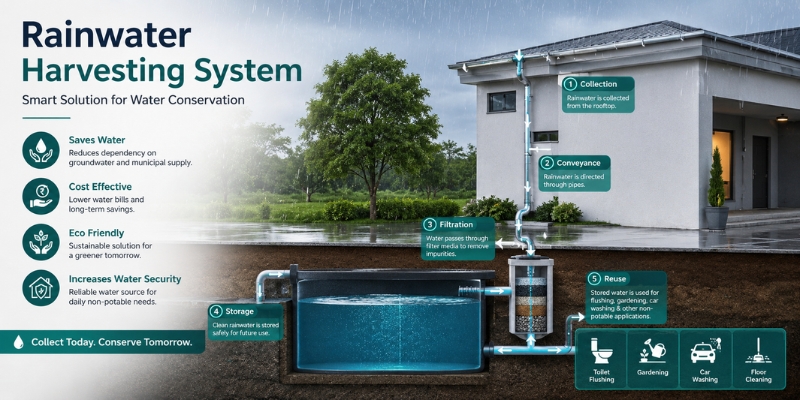
Rainwater Harvesting System

Technical Assistance on Web
Consent to Establishment
Related Industry Insights
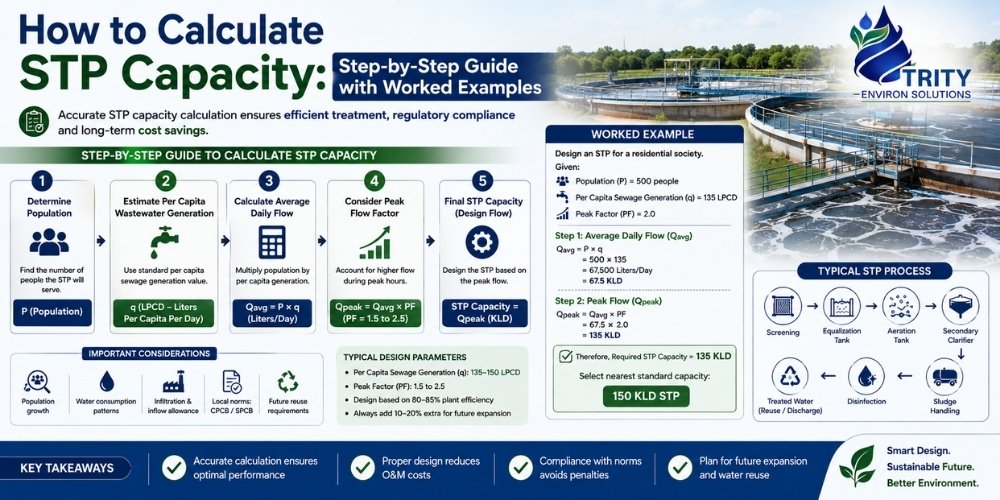
How to Calculate STP Capacity: Step-by-Step Guide with Worked Examples
Calculate STP capacity correctly with worked examples for residential, hotel, hospital, and industrial projects. CPHEEO-based formulas, peak factors, and tank sizing explained.
Read Article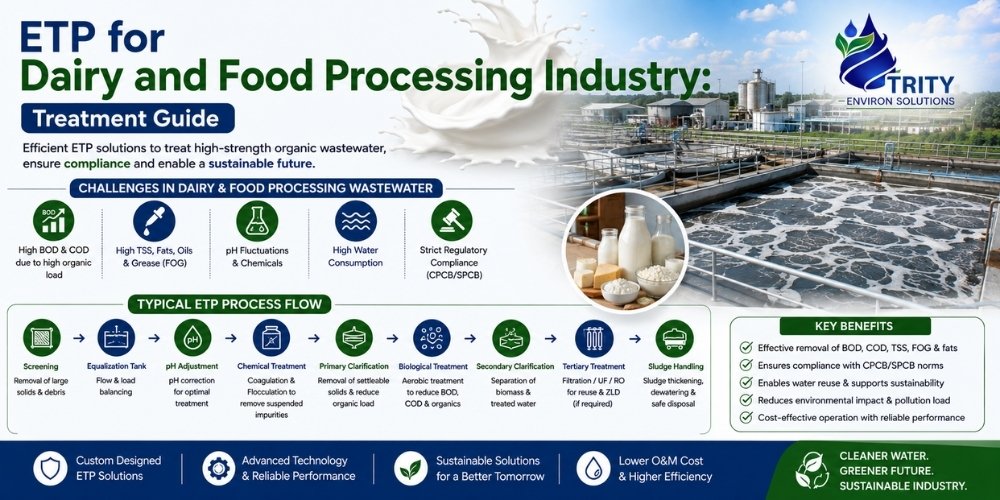
ETP for Dairy and Food Processing Industry: Treatment Guide
Dairy and food processing effluent carries high BOD, COD, and FOG that standard ETPs struggle with. See the treatment stages and technology choices that actually work.
Read Article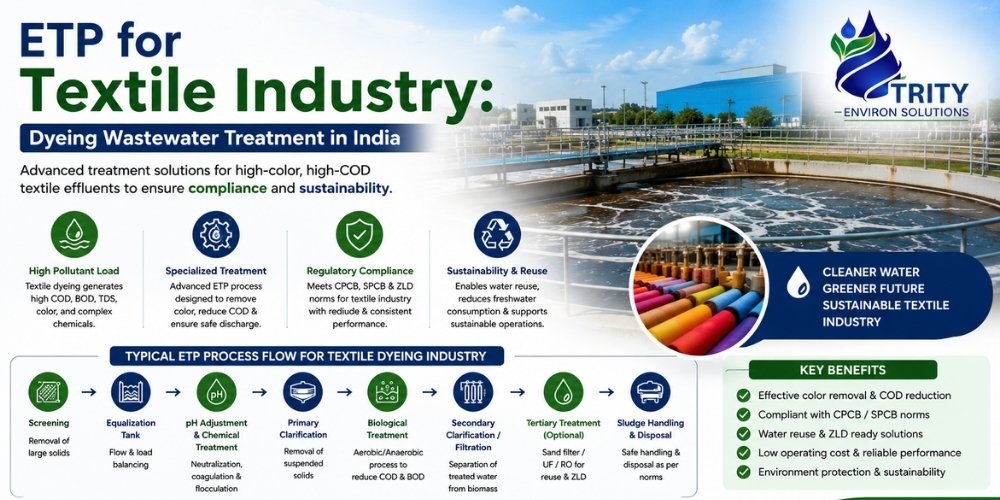
ETP for Textile Industry: Dyeing Wastewater Treatment in India
Textile effluent brings colour, high TDS, and variable pH that generic ETPs can't handle. See the treatment stages, technology choices, and compliance norms that actually work.
Read ArticleFeatured Turnkey Installations




Need Expert Support for Your Water Treatment Project?
From regulatory compliance to turnkey engineering and O&M, our certified environmental engineers are ready to assist.