What Automation Actually Means in an RO Plant
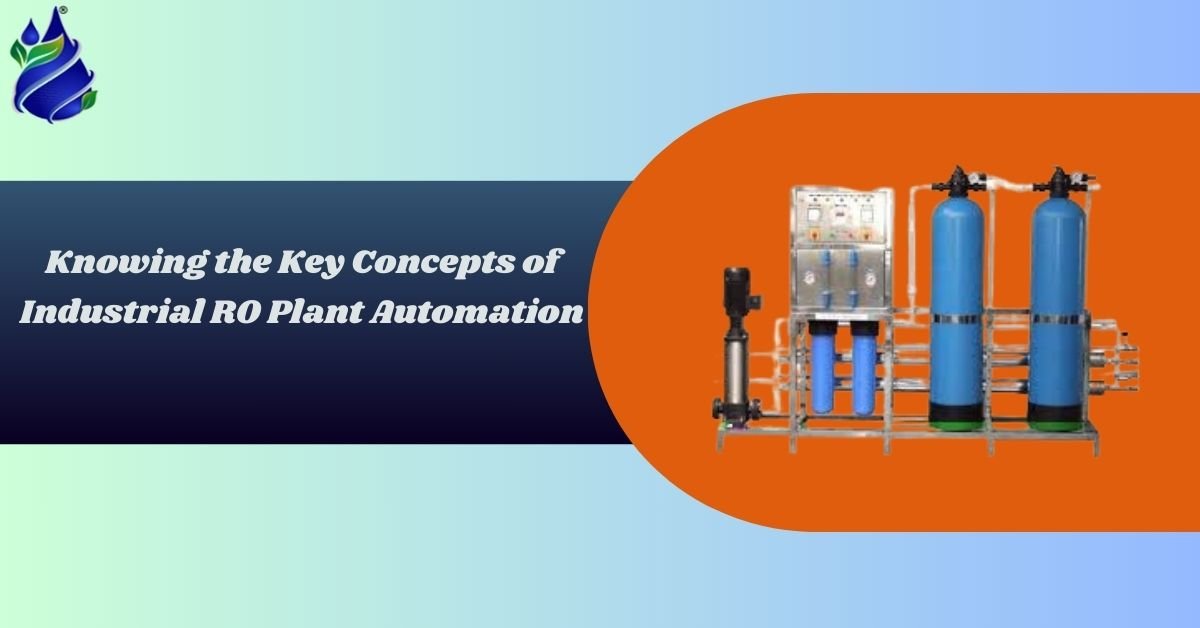
Automating an industrial RO plant means bringing monitoring and control of every critical process area into one coordinated system. Sensors measure, a controller decides, and pumps, valves and dosing units act, without waiting for an operator to notice a change.
The prime goals are practical: reliable membrane performance, controlled operating cost and consistent product quality. A manually run plant can reach those goals on a good day, but automation holds them on every day, including nights, weekends and shift changes.
Understanding the layers of an automated plant also makes it easier to judge a vendor's proposal, since "fully automatic" can mean very different things.
The Three Layers of an Automated RO Plant
Layer 1: Field Instruments
Instruments are the plant's senses. Without accurate measurements, no control logic can work properly:
- Flow meters (magnetic, vortex shedding or ultrasonic) measure feed, permeate and reject flow
- Pressure sensors and differential pressure transmitters track pump discharge, membrane pressure and filter loading
- Conductivity probes measure permeate quality and show salt rejection in real time
- pH and temperature sensors protect membranes and support dosing control
- Level sensors and transmitters manage feed, permeate and chemical tanks
Our guide on the role of advanced sensors in wastewater treatment explains how these sensing principles apply across treatment plants.
Layer 2: The Controller
The programmable logic controller (PLC) is the brain of the plant:
- It reads signals from every instrument and runs the control logic
- It issues commands to pumps, valves and dosing units
- A touchscreen HMI (human machine interface) lets operators view readings, change setpoints and acknowledge alarms
- Industrial plants commonly use Siemens or Allen-Bradley PLC hardware
The PLC makes decisions in milliseconds and applies them identically every time, which is exactly what manual operation cannot do.
Layer 3: Final Control Elements
These are the hands that carry out the PLC's decisions:
- Control valves, modulating or on/off, direct flow through the plant
- Variable frequency drives adjust pump speed to match demand instead of running at a fixed speed
- Chemical dosing pumps deliver antiscalant, acid, caustic and biocide in the right amounts
A VFD on the high-pressure pump is often the single most valuable control element, since pumping is the largest energy load in the plant.
What Gets Automated in Practice
Start-Up and Shutdown Sequences
The moments when a plant starts and stops are when membranes are most at risk:
- Automated sequences bring the pump up to pressure gradually rather than in a sudden jump
- Controlled shutdown and flushing sequences help limit scale and fouling when the plant stops
- Interlocks prevent the high-pressure pump from starting if feed pressure, level or dosing conditions are not met
Chemical Dosing
Dosing is where automation saves both chemical and membrane life:
- Antiscalant dosing can be linked to feed flow and TDS, so the dose follows actual conditions instead of a fixed setting
- pH correction responds to measured pH rather than operator judgement
- Overdosing is avoided, which cuts chemical cost, and underdosing is avoided, which protects the membrane from scale
Alarms and Protective Shutdowns
Good automation protects the plant when something goes wrong:
- Alarms for abnormal pressure, flow, conductivity or tank level
- Protective shutdown functions that stop the plant before damage occurs
- Alarm and event logs with remote notifications, so the right person is told immediately, even off site
SCADA, Remote Monitoring and Data Logging
A supervisory control and data acquisition (SCADA) system sits above the PLC and brings the whole plant into one view:
- Operators see live readings, trends and alarms for every process area
- Data logging records performance over time, so slow changes such as declining normalised permeate flow become visible early
- Cloud-based or secure remote access lets engineers monitor and adjust the plant from any location
- Trend data supports predictive maintenance, flagging fouling or pump wear before it causes downtime
More advanced plants add industrial IoT connectivity and even digital twins, which simulate plant conditions to test changes safely. Remote access needs proper cyber security, so access control should be part of the design, not an afterthought. Our guide on the importance of data in wastewater treatment systems explains how this data turns into better decisions.
Choosing the Right Automation Level
More automation is not always better. The right level depends on plant size, duty and available operators.
One manufacturer's published tiering gives a useful reference for how automation typically scales with capacity:
| Plant Capacity (indicative) |
Typical Automation Level |
| Around 10,000 GPD (about 38 KLD) |
PLC with HMI |
| Around 30,000 GPD (about 113 KLD) |
PLC, HMI and SCADA |
| Around 100,000 GPD (about 379 KLD) |
Full SCADA |
| 200,000 GPD and above (about 757 KLD+) |
Full SCADA with remote monitoring |
Treat these as indicative only. A smaller plant running critical process water may justify more automation than its size suggests, while a larger plant with an experienced operating team may need less.
Common Automation Mistakes
- Skipping sensor calibration. Regular calibration keeps instruments accurate, and a drifting conductivity or pressure sensor makes every automated decision wrong
- Automating without training operators. The team still needs to understand alarms, setpoints and manual override
- Ignoring the data. Trend logs only help if someone reviews them on a regular schedule
- Overlooking cyber security on remotely accessible systems
- Buying a high automation level for a plant whose pretreatment is poor. Automation cannot compensate for fouling caused by weak pretreatment
Industry Applications / Use Cases
| Plant Type |
Automation Priority |
Main Benefit |
| Hotel or hospital commercial RO |
PLC with HMI, alarms |
Reliable supply with minimal supervision |
| Manufacturing process water |
PLC, SCADA, data logging |
Consistent quality and traceable records |
| Multi-site operations |
Remote monitoring |
Central oversight of decentralised plants |
| Effluent recycling plants |
Full control with predictive maintenance |
Fouling control on variable feed |
Why Choose Trity Enviro
Trity Environ Solutions is an experienced industrial RO plant manufacturer in India, and our engineering team specifies instrumentation, PLC and SCADA levels to match your plant's real duty, not a catalogue upgrade. As a trusted RO plant manufacturer and supplier, we integrate dosing control, VFD-driven pumping and alarm logic into the design from the start. For reuse projects, our RO water recycling plant and commercial RO plant ranges can be built with the same automation approach, and our demineralized water plants extend it to ultra-pure applications.
Calibration checks, software support and membrane care are covered under our Annual Maintenance Contract. We are ISO 9001:2015 certified, QCI approved, and deliver CPCB-compliant engineering nationwide.
RO Plant Automation Explained: PLCs, Sensors, SCADA and What Each Actually Controls
Looking to test water quality, size an RO plant, or upgrade your industrial treatment setup? Speak with our senior water engineers today for comprehensive lab water analysis, custom plant sizing, and CPCB/SPCB compliance support.
Request a Free Site Assessment