Delhi had been quietly having a decent few months of air. That streak ended this weekend, and the city noticed immediately.
What the Numbers Show
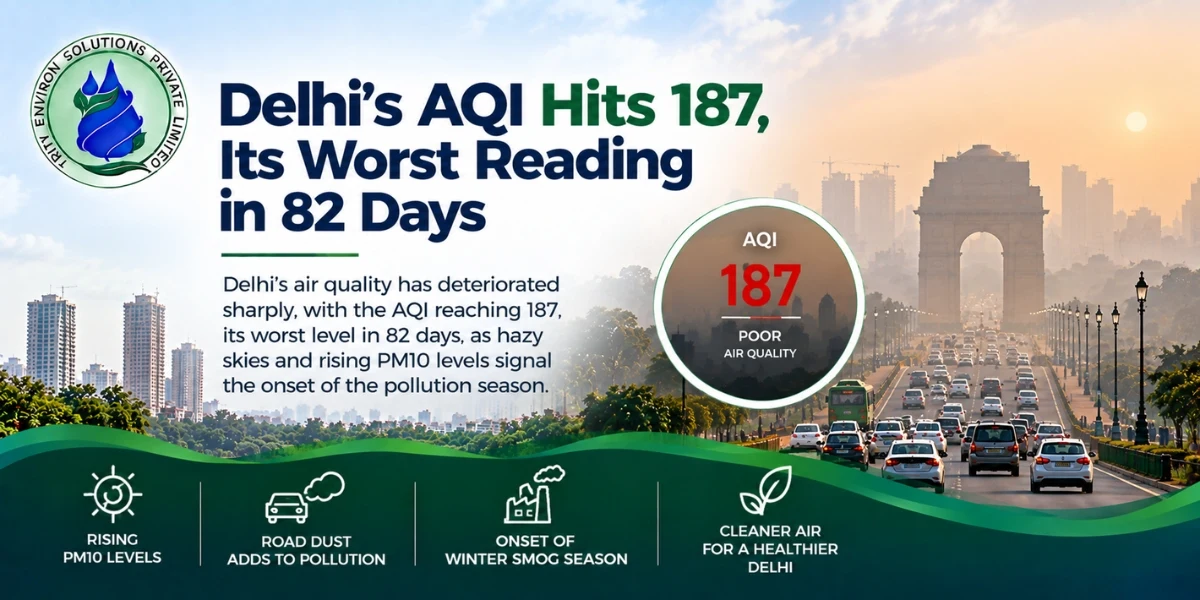
Delhi's Air Quality Index reached 187 on October 5, 2026, its worst reading in 82 days and the city's most polluted start to October since 2020. Of the 43 monitoring stations tracked across the city, 14 recorded poor air quality, with Mundka posting the highest reading at 273.
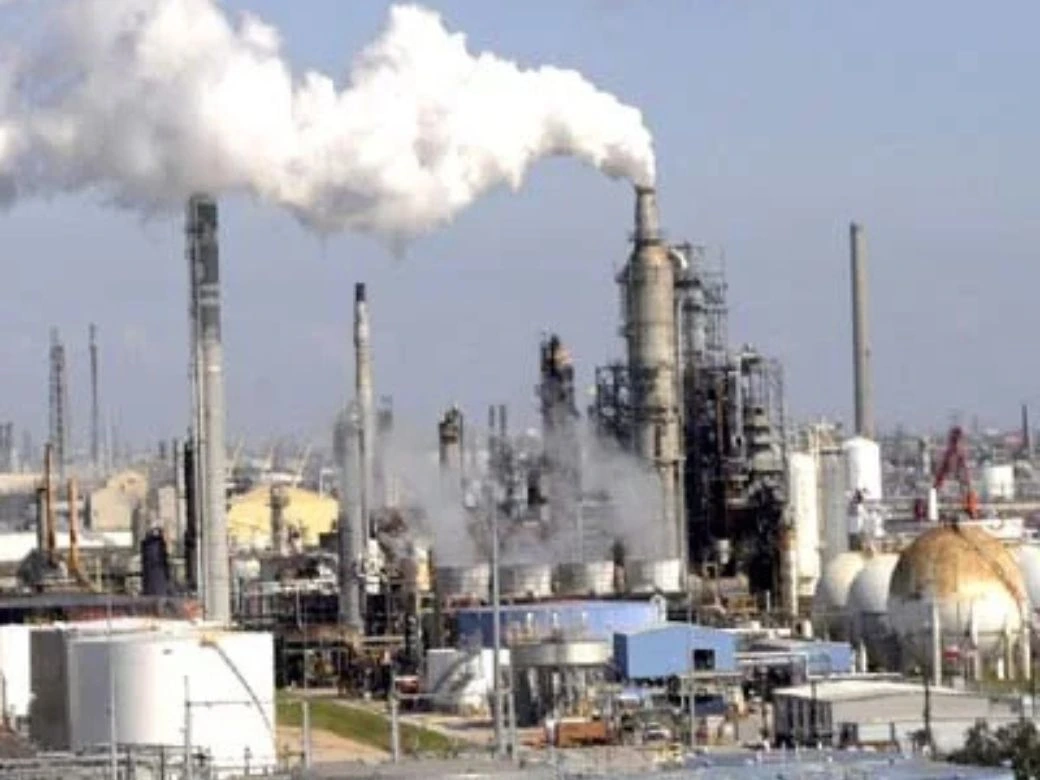
Officials and air quality experts identified PM10 particles from road dust and ongoing construction work as the primary driver, compounded by stagnant wind conditions that trapped local emissions closer to ground level instead of dispersing them.
Why This Reading Matters More Than the Number Alone
An AQI of 187 falls in the "moderate" category on India's air quality index, not yet the "poor" or "severe" readings Delhi becomes known for later in winter. What makes this particular spike notable is the timing: a worst-in-82-days reading this early in the season, with winter's usual contributors, stubble burning and temperature inversion, still weeks away from peaking, suggests the city's baseline pollution load from dust, construction, and local emissions is already running higher than in recent years at this point in the calendar.
Earlier rain had briefly improved conditions, but once that effect wore off, stagnant winds and ongoing local emissions pushed the index back up quickly, a pattern consistent with how Delhi's air typically behaves in the transition weeks between monsoon withdrawal and the onset of GRAP-triggered winter restrictions.
What Experts Are Recommending
Air quality experts cited alongside this reading pointed to the same two levers that come up every year around this time: stricter controls on construction and demolition dust, and broader emission cuts across sectors rather than one-off seasonal measures. This lands just days after Delhi's AI-powered command centre began tracking construction and dust violations across more than 700 sites citywide, giving the city a new enforcement tool at almost the exact moment this data suggests it is needed.
The Pattern Delhi Keeps Repeating
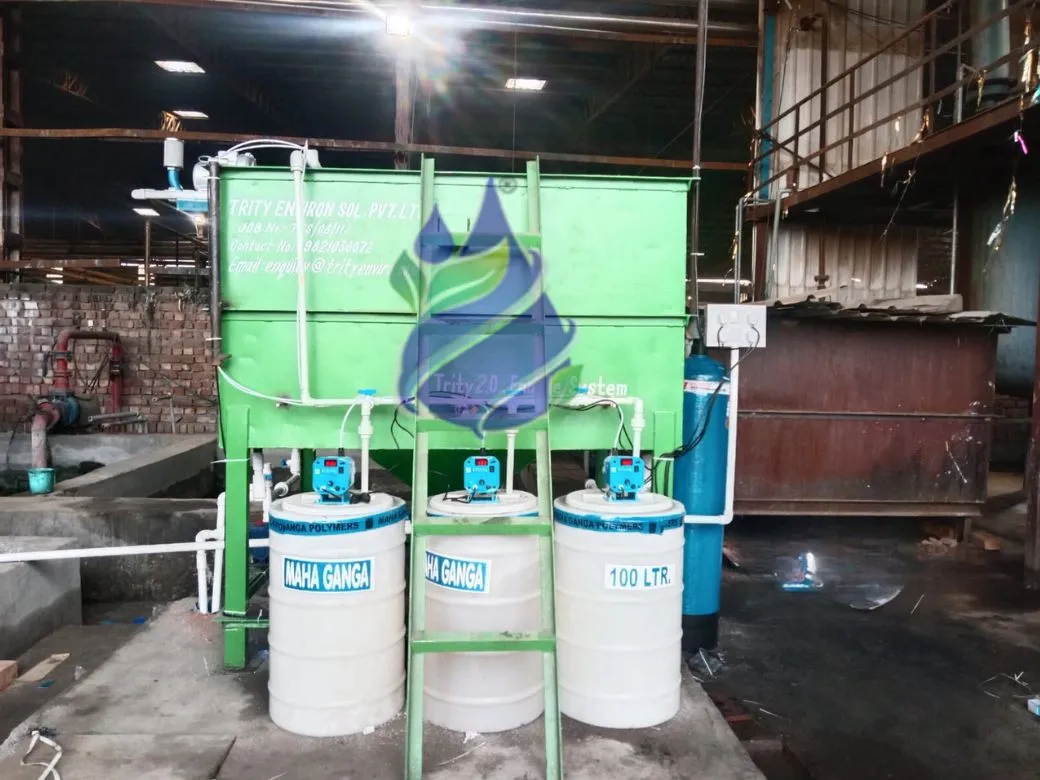
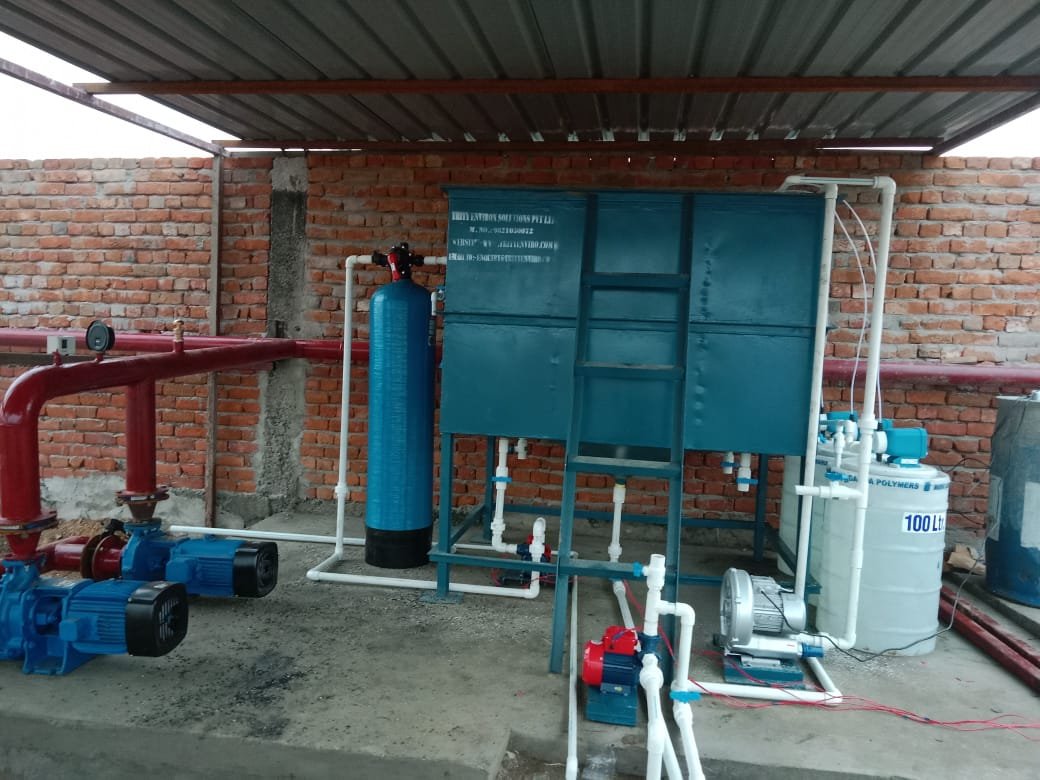
Road dust and construction emissions are, unlike stubble burning, entirely within the city's own control, year-round rather than seasonal. Sites generating washdown water, curing water, and site runoff without a functioning wastewater treatment setup frequently also run with weaker dust discipline overall, since both point to the same underlying gap: environmental compliance treated as an afterthought on site rather than built into how a project operates.
Key Highlights
- Delhi's AQI hit 187 on October 5, 2026, its worst reading in 82 days
- This marks the city's most polluted start to October since 2020
- Mundka recorded the city's highest reading, at 273, among 43 monitoring stations
- PM10 from road dust and construction work was identified as the leading cause