Regulators stopped trusting self-reported fuel logs once Flying Squads kept finding units burning fuel they were never approved to use. The answer is a camera pointed at the tank itself.
What the New Order Requires
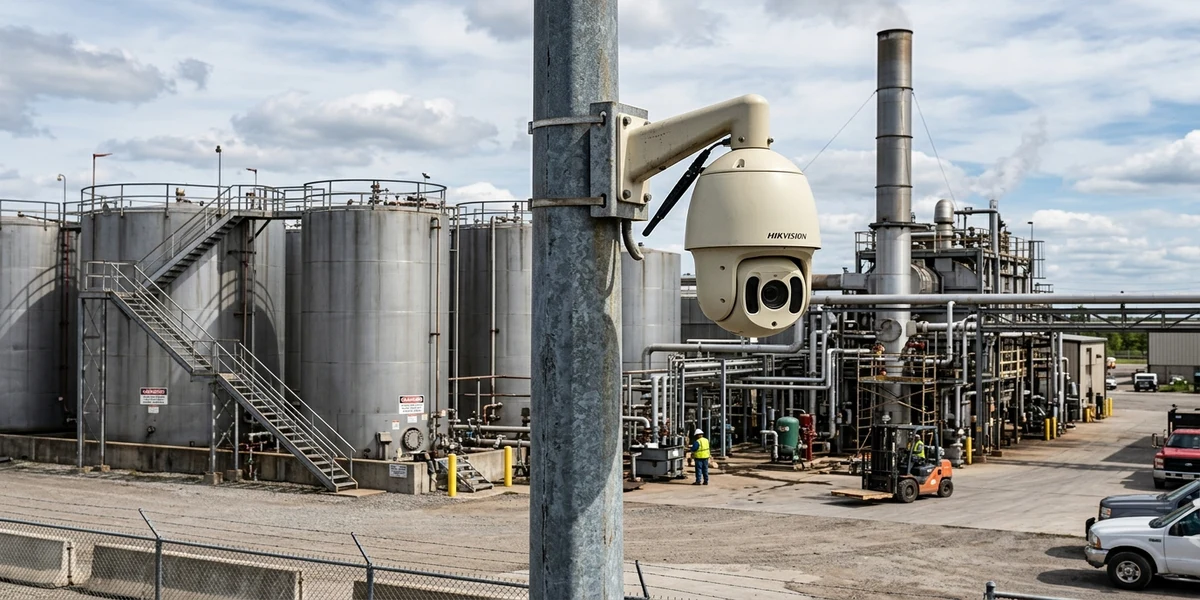
The Commission for Air Quality Management (CAQM) has ordered industries across the National Capital Region to install additional Pan-Tilt-Zoom (PTZ) cameras covering all fuel storage areas and fuel charging points, with gas-based units required to keep the gas gauge or meter itself within camera view. The footage must stream in real time to servers held by the CPCB and the relevant State Pollution Control Board or DPCC, and industries are required to maintain adequate power backup to keep both the cameras and the connectivity running continuously.
Industries have been given until October 31, 2026 to complete installation, with State Pollution Control Boards and DPCC required to report implementation status back to the Commission by November 1.
Why CAQM Is Adding This Layer
The order follows incognito inspections by CAQM's Flying Squads across the NCR, which repeatedly found units burning fuels that were never on the Commission's approved list for industrial use in the region. Fuel-switching to cheaper, unapproved options is one of the harder violations to catch through scheduled inspections alone, since a unit can simply switch back to an approved fuel before an announced visit.
This builds on an earlier CPCB requirement that already mandated PTZ cameras and real-time Online Continuous Emission Monitoring Systems (OCEMS) at specific categories of high-risk units, including textile and food processing units with boilers, where cameras cover the OCEMS port-hole and stack flue gas, and metal units, where coverage extends to fume extraction and furnace feeding areas. The new order widens that camera coverage specifically to the fuel side of the operation, rather than only the emission side.
What This Changes for Industrial Operators
Real-time, continuously streamed footage removes much of the gap that let fuel-switching go undetected between inspections. For a unit that has genuinely switched to an approved fuel and has nothing to hide, installing cameras is a compliance cost rather than a risk. For a unit still relying on cheaper, unapproved fuel to manage costs, this closes that option far faster than waiting for the next physical inspection would have.
Industry bodies such as FISME have flagged the compliance burden this adds for smaller units, who often have less capital available to install monitoring infrastructure on a tight deadline. That tension, between faster enforcement and the cost of compliance for MSMEs, is likely to keep shaping how strictly this order gets enforced in its first few months.
The Broader Pattern
This is the latest in a string of NCR enforcement moves this season, following CAQM's own 197-inspection enforcement sweep in September and Delhi's AI-powered command centre launch at the start of October. Combined with the earlier December 31 deadline for industries to install emission monitors, NCR's industrial sector is now facing monitoring requirements on both what it burns and what it emits, within the same compliance season. Units that pair this camera mandate with properly functioning stack emission monitoring equipment are in a far stronger position heading into winter enforcement than those treating each new order as a separate, one-off compliance task.
Key Highlights
- CAQM has ordered NCR industries to install PTZ cameras covering all fuel storage and charging points
- Footage must stream in real time to CPCB and SPCB/DPCC servers
- Installation is due by October 31, 2026, with status reports due to CAQM by November 1
- The order follows Flying Squad inspections that found unapproved fuels in use across multiple units