What Are the Causes of Sewage?
What actually causes sewage, domestic, commercial, and industrial sources, plus the infiltration and inflow problem most guides skip.

 ISO 9001:2015 & QCI Approved
By the time it leaves Delhi, the Yamuna has zero dissolved oxygen and faecal coliform counts 3,000 times the safe limit. This isn't a mystery, it's the direct, measurable result of specific, identifiable failures.
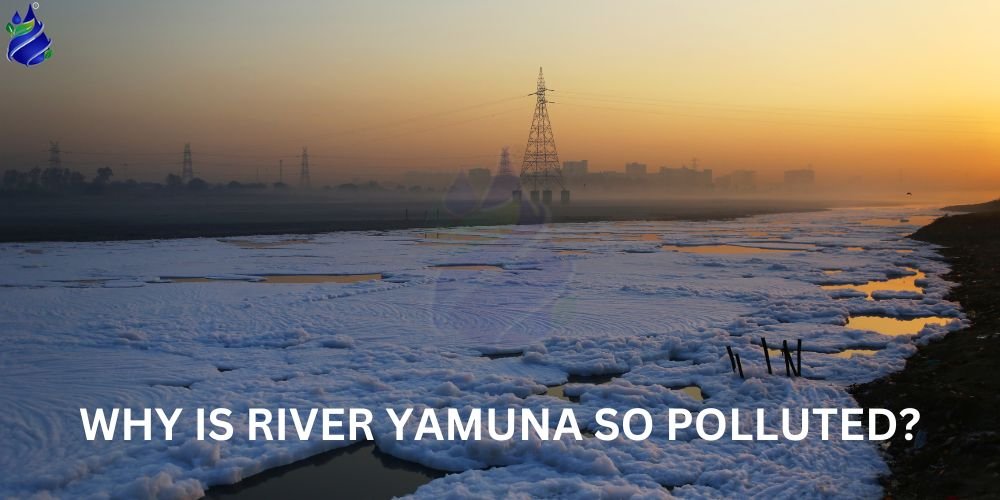
The Yamuna stretches over 1,370 kilometres, but a single 22-kilometre stretch through Delhi accounts for nearly 80% of its total pollution load. By the time the river exits the city, it is effectively "dead."
Consider the numbers:
Domestic sewage is the single largest contributor. A study published in Applied Water Science found that roughly 80% of Yamuna's pollution comes from untreated domestic sewage alone.
This sewage carries:
The scale of the treatment gap compounds year over year, since Delhi's population growth continues to add sewage volume faster than new treatment capacity comes online, meaning the untreated share of the total flow does not shrink on its own without deliberate, sustained infrastructure investment.
A 2020 CPCB study of Delhi's industrial clusters found that all 10 Common Effluent Treatment Plants (CETPs) failed to meet pollution norms. The consequence: heavy metals, dyes, and untreated chemicals reaching the river through the drain network.
Of the 22 major drains entering the Yamuna, 14 were found carrying untreated sewage or industrial waste. Between 2017 and 2022, over crores of rupees were reportedly spent on cleanup and infrastructure efforts targeting this exact problem, yet the underlying CETP compliance failures documented in 2020 have seen little structural improvement since.
The broader Yamuna basin is 53% agricultural land, and pesticide and fertilizer runoff adds a further, diffuse pollution source:
Riverbanks along the Yamuna have become dumping grounds for plastic waste, municipal garbage, and religious offerings left after festivals and rituals. While smaller in volume than sewage or industrial discharge, this waste compounds the river's overall degradation and directly affects its aesthetic and recreational use.
The white foam that periodically covers the Yamuna, especially visible during winter and around festivals like Chhath, is not a mystery. It is a specific chemical reaction:
Sample testing has found phosphate concentrations as high as 0.51 mg/litre in the river, against a normal range of just 0.005-0.05 mg/litre, roughly 10 to 100 times higher than typical background levels. The froth is at its worst specifically during low-flow winter months, when reduced upstream water release leaves less volume available to dilute the same daily pollutant load, concentrating the surfactants exactly when the river's natural flushing capacity is at its weakest.
The Wazirabad-to-Okhla stretch is repeatedly classified as Priority I by CPCB, meaning BOD levels exceeding 30 mg/L. This is the worst pollution category in India's river classification system.
Despite repeated directives to upgrade Delhi's CETPs and penalize non-compliant industries, enforcement has remained inconsistent:
Fixing Yamuna's pollution crisis would require action on multiple fronts simultaneously:
None of these fixes work in isolation. A city can add treatment capacity, but if the plants themselves aren't held to consistent performance standards, the outcome looks much like Delhi's current CETP record, ten plants built, ten plants failing to meet norms. Genuine recovery needs infrastructure investment and enforcement discipline moving together.
Yamuna's crisis is not unique to Delhi. Several other Indian rivers flowing through dense urban and industrial corridors face a similar combination of factors:
Cities and industrial zones watching Yamuna's situation unfold have a genuine opportunity to invest in adequate treatment capacity and enforcement before their own rivers reach a similarly degraded state, rather than treating river restoration as a problem to solve only after the damage becomes undeniable.
| Pollution Source | Contribution | Required Fix |
|---|---|---|
| Domestic sewage | ~80% of pollution load | Expanded, properly functioning STP capacity |
| Industrial CETPs | Heavy metals, chemicals via 14 of 22 drains | Enforcement of existing discharge norms |
| Agricultural runoff | Diffuse ammonia and pesticide load | Watershed-level input management |
| Solid waste dumping | Aesthetic and physical degradation | Riverbank waste management enforcement |
Trity Environ Solutions is an experienced sewage treatment plant manufacturer and effluent treatment plant manufacturer in India, and our engineering team designs systems that genuinely meet discharge norms, including nutrient removal capability that addresses phosphate-driven pollution directly. As a trusted STP and ETP manufacturer and supplier, we help industries and municipalities avoid becoming another statistic in the CETP non-compliance data.
Every installation is backed by pan-India Annual Maintenance Contract and operation and maintenance support, addressing exactly the enforcement and maintenance gap that has left so many CETPs failing. We are ISO 9001:2015 certified, QCI approved, and deliver CPCB-compliant engineering nationwide.
Get in touch with our engineering team for an effluent assessment and compliance review.
What actually causes sewage, domestic, commercial, and industrial sources, plus the infiltration and inflow problem most guides skip.

Wastewater treatment plants help fight antibiotic resistance by filtering out pharmaceutical residues, reducing contamination, and preventing harmful bacteria from spreading.
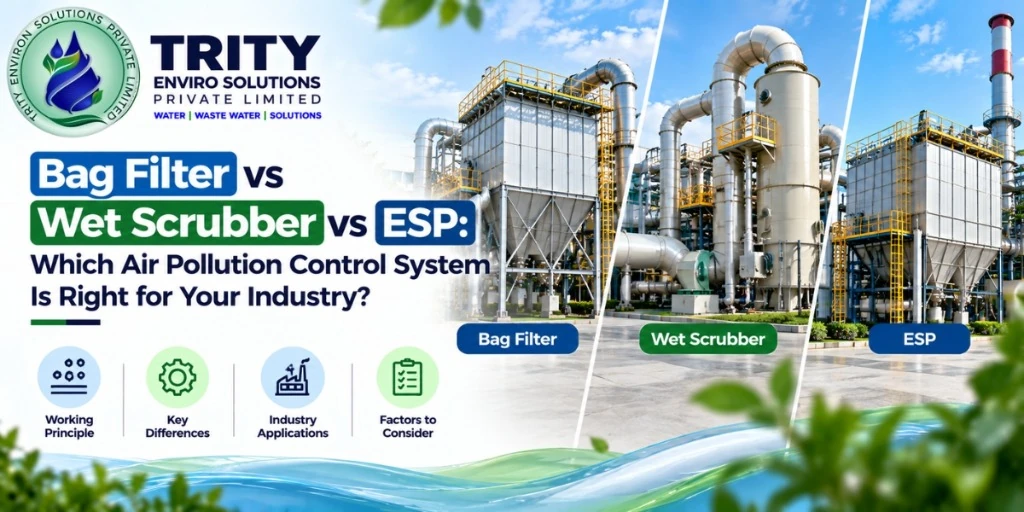
Bag filter vs wet scrubber vs ESP: compare efficiency, gas temperature limits, pressure drop, wastewater and cost to pick the right dust control system.











Discuss your requirements with our engineering team and get practical guidance for your project.

