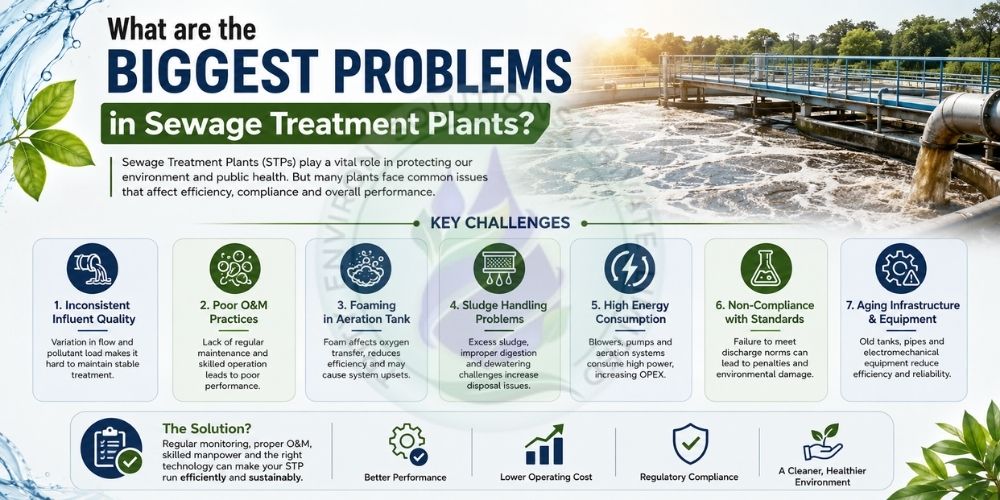
What are the biggest problems in sewage treatment plants?
The real problems that cause STPs to fail, undersizing, power loss, operator neglect, and more, illustrated with actual documented cases from Indian cities, not generic theory.

 ISO 9001:2015 & QCI Approved
Pollution released from a smokestack hundreds of kilometres away can end up acidifying a lake, fuelling an algal bloom, or contaminating fish with mercury. Here's the actual chemistry connecting the two.
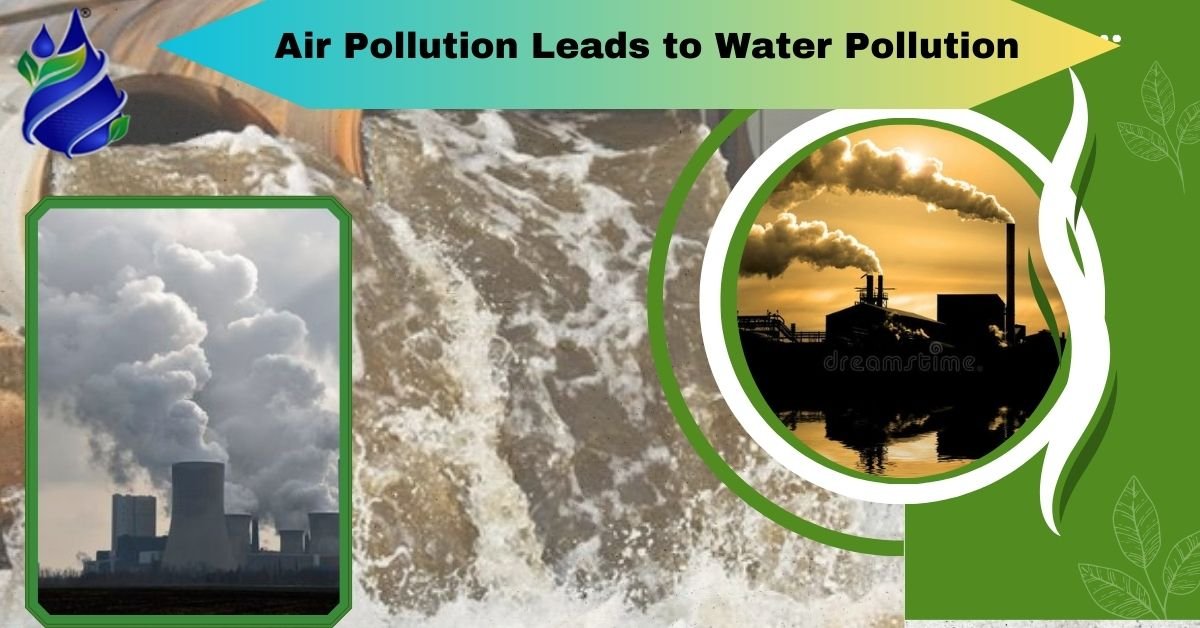
Air pollution and water pollution are often studied and regulated as separate issues, but they're connected through well-understood atmospheric chemistry. Pollutants released into the air don't simply disappear, they get transported, transformed, and eventually deposited, often directly into rivers, lakes, and oceans.
Acid rain isn't a vague concept, it's a specific, well-documented chemical reaction:
Once these acids reach a lake, river, or stream, the effects compound over time rather than appearing instantly:
Beyond acidification, nitrogen compounds in air pollution drive a separate, equally significant water quality problem:
Mercury illustrates just how far the air-to-water pollution pathway can stretch geographically:
Atmospheric pollutants reach water bodies through two distinct physical pathways, both of which matter for understanding the full scope of the problem:
Understanding both pathways matters because addressing only wet deposition, cleaner rain, without addressing dry deposition leaves a meaningful share of the atmospheric pollution transfer unaddressed.
| Pollutant | Transport Mechanism | Water Body Impact |
|---|---|---|
| Sulfur dioxide, nitrogen oxides | Wet deposition (acid rain) | Acidification, aluminium leaching, aquatic life harm |
| Nitrogen compounds | Wet and dry deposition | Eutrophication, algal bloom risk |
| Mercury | Long-range atmospheric transport | Methylmercury accumulation in fish, even far from source |
| Particulate matter | Dry deposition, nucleation in rain | Carries additional adsorbed pollutants into water |
Trity Environ Solutions is an experienced effluent treatment plant manufacturer in India, and our engineering team understands that water quality challenges often originate well beyond a facility's immediate discharge point, including atmospheric sources like acid deposition and mercury that standard treatment design needs to account for. For facilities drawing from a source affected by acidification or metal contamination, our physico-chemical effluent treatment plant solutions and activated carbon filters address exactly this kind of dissolved metal and pH-driven contamination at the pretreatment stage.
As a trusted ETP manufacturer and supplier, every installation is backed by pan-India Annual Maintenance Contract and Operation and Maintenance services. We are ISO 9001:2015 certified, QCI approved, and deliver CPCB-compliant engineering nationwide.
Speak directly with our environmental engineering specialists for water quality analysis, heavy metal pretreatment, or custom ETP design.
Request Free Engineering ConsultationCall: +91-9821030072 | Email: enquiry@trityenviro.com
The real problems that cause STPs to fail, undersizing, power loss, operator neglect, and more, illustrated with actual documented cases from Indian cities, not generic theory.
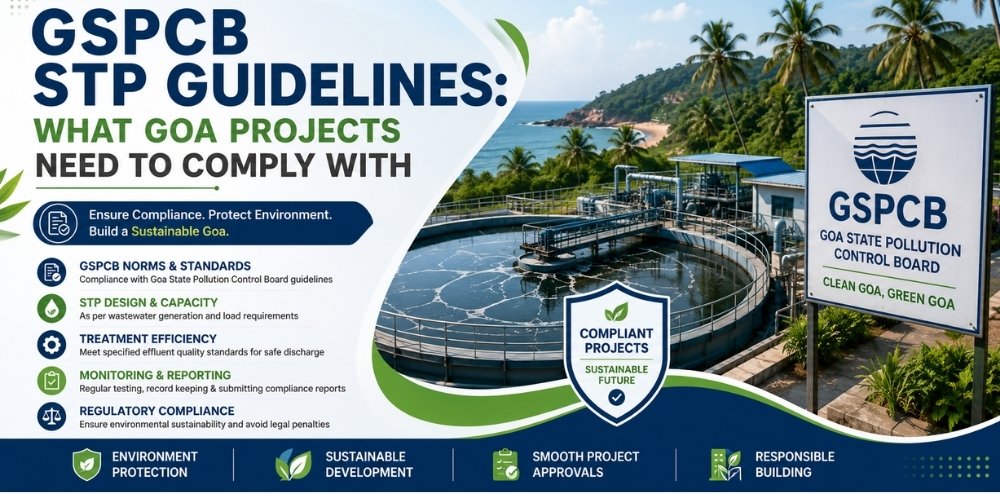
A guide to GSPCB's sewage treatment plant requirements in Goa, covering current discharge norms, CRZ considerations, and compliance steps for coastal projects.
Molar ratio meaning explained simply, how to calculate it from a balanced equation, and why it drives accurate chemical dosing in ETP and STP systems.











Discuss your requirements with our engineering team and get practical guidance for your project.

