Public health advantages
Economic advantages
- Direct cost savings
- Job creation and property value
Resource recovery advantages
- Biogas energy
- Nutrient recovery
Practical advantages for facility owners
The compounding effect of getting every advantage right
Environmental Advantages
Preventing Water Pollution
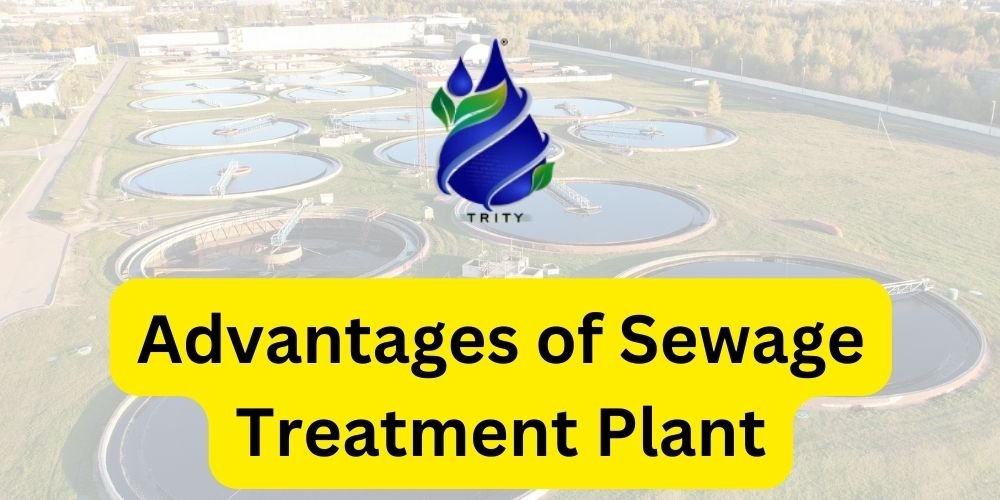
Untreated sewage carries suspended solids, organic matter, nutrients like nitrogen and phosphorus, and pathogens directly into rivers, lakes, or groundwater:
- Direct release causes oxygen depletion, algal blooms, and waterborne disease transmission
- Sewage treatment plants remove these contaminants before discharge, keeping receiving water bodies capable of supporting aquatic life
- This protection compounds over time, since a water body receiving consistently treated discharge avoids the cumulative ecological damage untreated discharge causes over years
The difference between a single well-treated discharge point and years of consistent, reliable treatment is significant. A water body can often recover from occasional pollution events given enough time, but sustained untreated discharge steadily degrades sediment quality, biodiversity, and overall ecosystem resilience in ways that become far harder to reverse the longer they continue.
Conserving Freshwater Through Reuse
Treated wastewater is a genuine alternative water source, not just a discharge that has been made safe:
- Treated effluent can be reused for irrigation, industrial cooling, groundwater recharge, and other non-potable applications
- This directly reduces pressure on freshwater sources in water-stressed regions
- The climate benefit is measurable: using treated wastewater for irrigation alone is estimated to have reduced greenhouse gas emissions by 1.3 million tonnes in 2021, by reducing the energy and resource footprint associated with extracting and transporting fresh water instead
Public Health Advantages
Raw sewage carries bacteria, viruses, and parasites capable of causing serious illness, including cholera, typhoid, and hepatitis:
- Sewage treatment plants remove these pathogens before water re-enters the environment or gets reused
- This directly reduces disease transmission risk in the surrounding community, particularly in densely populated urban areas
- Improved sanitation from consistent treatment also reduces the broader environmental contamination that indirectly drives disease spread
Economic Advantages
Direct Cost Savings
Sewage treatment isn't purely an expense; it generates real, quantifiable savings over time:
- Reusing treated water reduces the need for expensive fresh water procurement, particularly valuable for farms, factories, and municipalities managing tight water budgets
- Avoiding pollution cleanup costs, which are typically far higher than the cost of proper treatment in the first place, represents a genuine long-term saving
- Regulatory compliance avoids the fines and legal costs associated with non-compliant discharge
The cleanup-cost comparison deserves particular attention, since it's easy to underweight when evaluating a treatment investment purely against its upfront price. Remediating a polluted water body, once contamination has been allowed to accumulate over years of inadequate treatment, routinely costs many times more than the treatment infrastructure that would have prevented the damage, a pattern documented across major river cleanup programs where reactive spending has dwarfed what proactive treatment investment would have required.
Job Creation and Property Value
Beyond the plant's core treatment function, a sewage treatment facility has broader local economic effects:
- STPs require a workforce to operate and maintain, creating direct local employment
- Properly managed treatment infrastructure has been associated with increased property values in the surrounding area
- A functioning treatment facility supports local business attractiveness, since inadequate wastewater infrastructure can actively deter new development
Resource Recovery Advantages
Biogas Energy
Sludge, an unavoidable byproduct of sewage treatment, is itself a genuine energy resource:
- Anaerobic digesters stabilize sludge while capturing methane-rich biogas
- This biogas can be converted to electricity or heat, processed into renewable natural gas, or even used to fuel vehicle fleets
- Converting a waste byproduct into usable energy offsets a meaningful share of a plant's own operating cost
Nutrient Recovery
The nitrogen and phosphorus that make untreated sewage harmful to water bodies become valuable inputs once recovered properly:
- Recovered nutrients can be processed into fertilizer for agricultural use
- This reduces dependence on chemical fertilizer production, itself an energy- and resource-intensive process
- Turning a pollutant into an agricultural input is a genuine example of circular economy thinking applied directly to sewage treatment
Practical Advantages for Facility Owners
Beyond the broader environmental and economic case, sewage treatment plants offer practical, day-to-day advantages that matter to whoever operates one:
- Compact footprint: Modern STPs, particularly those using MBBR or MBR technology, occupy meaningfully less space than older designs, making them viable even on constrained sites
- Straightforward installation: STPs generally don't require an unusually complex civil structure, and many modern packaged systems install with minimal on-site construction
- Reliable, well-proven technology: Sewage treatment technology has decades of operational history behind it, offering predictable, reliable performance when properly designed and maintained
These practical factors matter more than they might initially appear, since they directly affect how quickly a facility owner sees the plant delivering value. A system that's straightforward to install and reliable to operate reaches its full environmental, health, and economic potential within its first year, while a poorly chosen or badly installed system can spend years underperforming before those advantages materialize, if they ever fully do.
The Compounding Effect of Getting Every Advantage Right
What separates a genuinely well-designed sewage treatment investment from a merely compliant one is that these advantages reinforce each other rather than operating in isolation. A plant that reliably prevents water pollution also protects public health downstream. A plant that recovers biogas and nutrients directly improves its own economic case, offsetting operating cost with resource value rather than treating every input as a pure expense. Facility owners and municipalities evaluating a new STP investment get the strongest return by designing for all four advantage categories together from the outset, rather than treating environmental compliance, public health protection, economic return, and resource recovery as separate, competing priorities to trade off against each other.
Industry Applications / Use Cases
| Advantage Category |
Direct Benefit |
Who Benefits Most |
| Environmental |
Pollution prevention, water reuse |
Municipalities, industries near sensitive water bodies |
| Public health |
Reduced waterborne disease risk |
Dense urban populations, communities near water sources |
| Economic |
Cost savings, job creation, property value |
Municipalities, facility owners, local economies |
| Resource recovery |
Biogas energy, nutrient/fertilizer recovery |
Large facilities with significant sludge volume |
Why Choose Trity Enviro
Trity Environ Solutions is an experienced sewage treatment plant manufacturer in India, and our engineering team designs STPs that deliver on all four advantage categories, environmental, public health, economic, and resource recovery, rather than a system built only to meet minimum discharge compliance. As a trusted STP manufacturer and supplier, we help clients understand the full return their treatment investment can genuinely deliver.
Every installation is backed by pan-India Annual Maintenance Contract and operation and maintenance support. We are ISO 9001:2015 certified, QCI approved, and deliver CPCB-compliant engineering nationwide.