Delhi has spent years reacting to bad air after the fact. Its newest tool is built to catch problems while they are still happening.
What the Command Centre Does
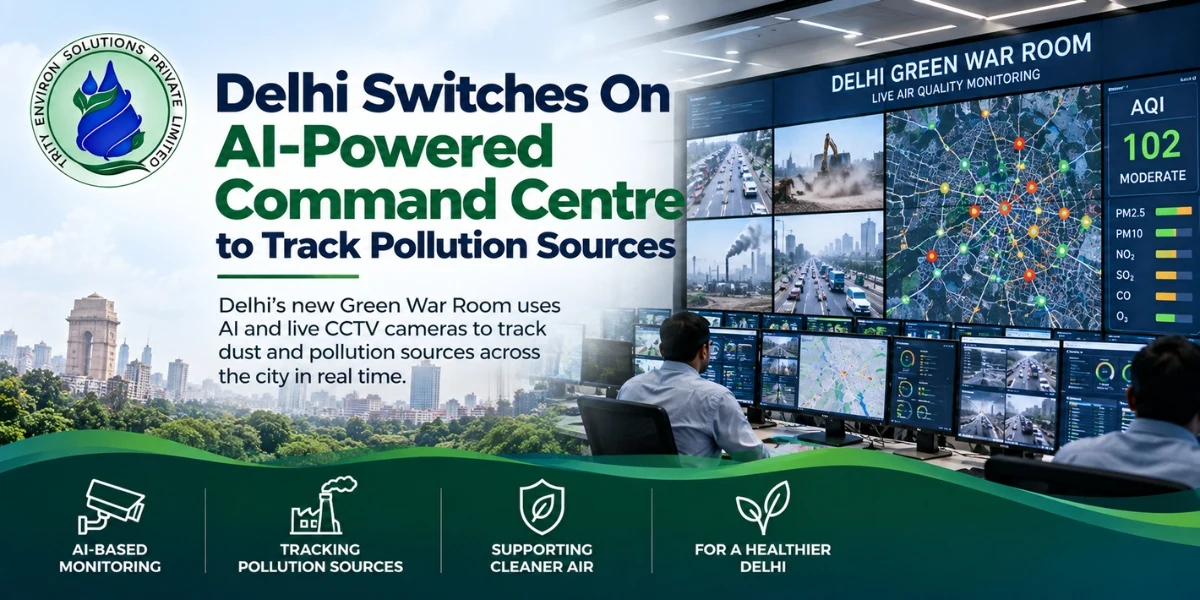
Delhi Chief Minister Rekha Gupta has inaugurated an Integrated Command and Control Centre, run by the Delhi Pollution Control Committee (DPCC), that uses AI-based monitoring and live camera feeds to track more than 700 construction and pollution-sensitive sites across the city on a 24x7 basis. The centre is designed to flag violations such as uncovered construction material, open burning, and dust generation as they happen, rather than relying solely on scheduled physical inspections.
The launch comes just as GRAP Stage I measures took effect across Delhi-NCR from October 1, 2026, the seasonal trigger point when the Commission for Air Quality Management (CAQM) begins tightening restrictions on construction, industry, and vehicles ahead of the winter smog months.
Why Real-Time Monitoring Matters Here
Delhi's enforcement problem has rarely been a lack of rules. It has been the gap between a violation happening and anyone finding out about it. A single inspector covering a large ward cannot be at every construction site every hour, which has historically let dust and burning violations go unflagged until air quality had already deteriorated.
An AI system watching hundreds of sites simultaneously changes that math, at least for the categories of violation a camera can actually see, such as uncovered debris piles, unscreened excavation, or visible burning. It does not, on its own, solve the industrial and vehicular emission side of Delhi's pollution problem, which still depends on stack-level monitoring and enforcement.
A Broader Enforcement Push
This launch sits alongside other recent moves by Delhi's pollution authorities, including a dust mitigation portal rolled out earlier this year and the Commission for Air Quality Management's own enforcement task force, which conducted nearly 200 inspections across the wider NCR region in the weeks leading into this command centre's launch. Industrial units across Delhi-NCR have also been told to install emission monitors by year-end or face closure, a deadline that runs on a separate but parallel enforcement track to the construction-site monitoring this new centre focuses on.
What This Means for Builders and Industry
For construction sites and industries operating inside Delhi, the message from this rollout is straightforward: dust and burning violations that once might have gone unnoticed for days are now visible to a monitoring system almost immediately. For industrial units still without proper stack-level emission monitoring equipment, the parallel December 31 compliance deadline adds pressure from the other direction, covering pollutants a construction-site camera network was never built to see.
Key Highlights
- Delhi's new AI-based Integrated Command and Control Centre monitors 700+ sites 24x7
- Launch coincides with GRAP Stage I taking effect across Delhi-NCR from October 1, 2026
- The centre targets dust, open burning and construction violations using live camera feeds
- Industrial units face a separate December 31 deadline to install emission monitors