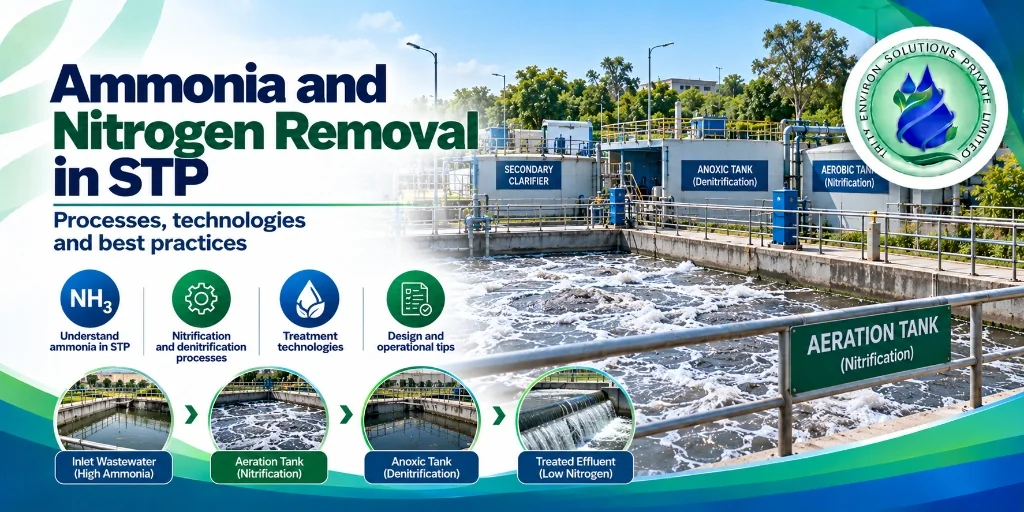
Ammonia and Nitrogen Removal in STP
Trity Enviro explains ammonia and nitrogen removal in STP: nitrification, denitrification, NGT norms, design numbers and a worked example for a 200 KLD plant.

 ISO 9001:2015 & QCI Approved
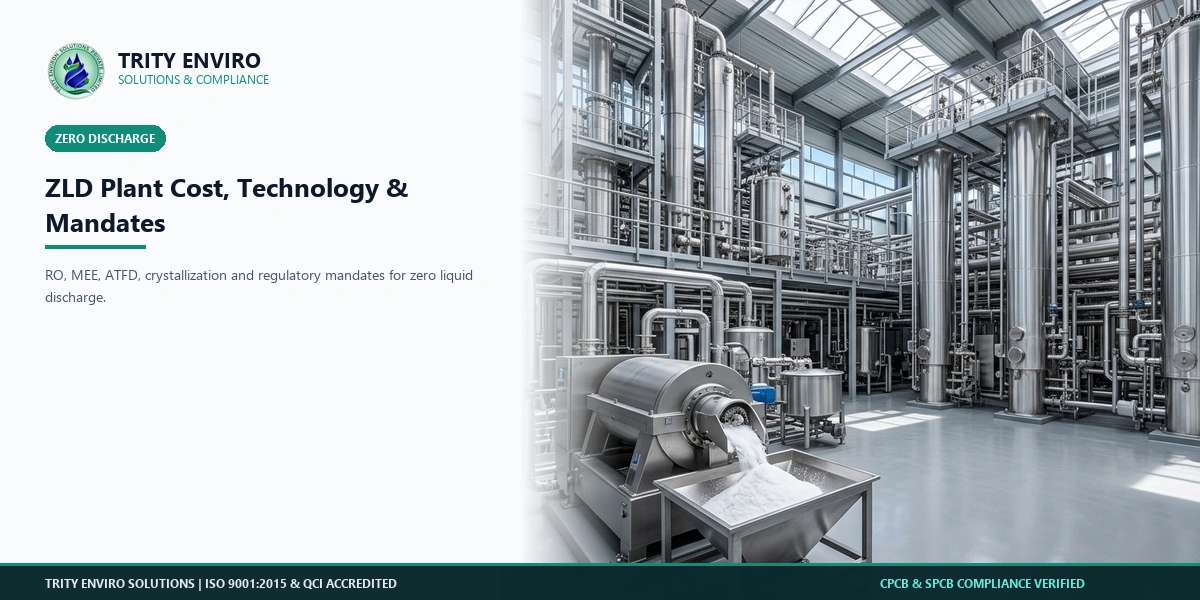
Before you budget for ZLD, find out if you need it and what it really involves. A worked mass balance shows how much water and salt move through each stage.
Speak directly with our senior environmental engineers for technical guidance, sizing calculations, or a tailored project proposal.
Call +91-9821030072 or email enquiry@trityenviro.com
Trity Enviro explains ammonia and nitrogen removal in STP: nitrification, denitrification, NGT norms, design numbers and a worked example for a 200 KLD plant.
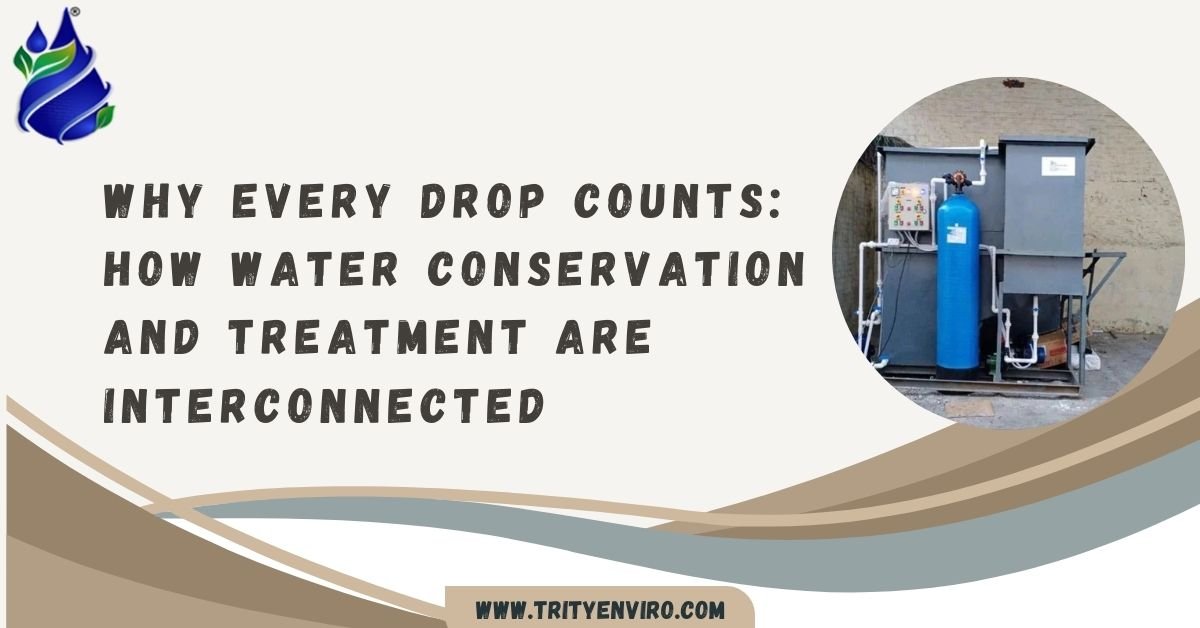
Water conservation and treatment go hand in hand to ensure a sustainable future. Learn how responsible practices help secure clean water for generations to come.
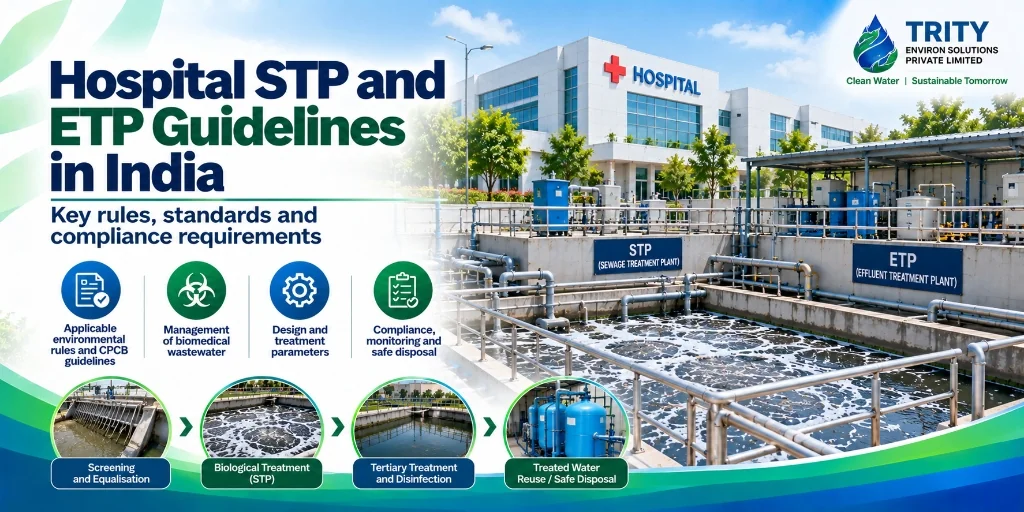
Trity Enviro explains hospital STP and ETP guidelines in India: BMW Rules standards, design per bed, treatment train, disinfection and records.











Discuss your requirements with our engineering team and get practical guidance for your project.

