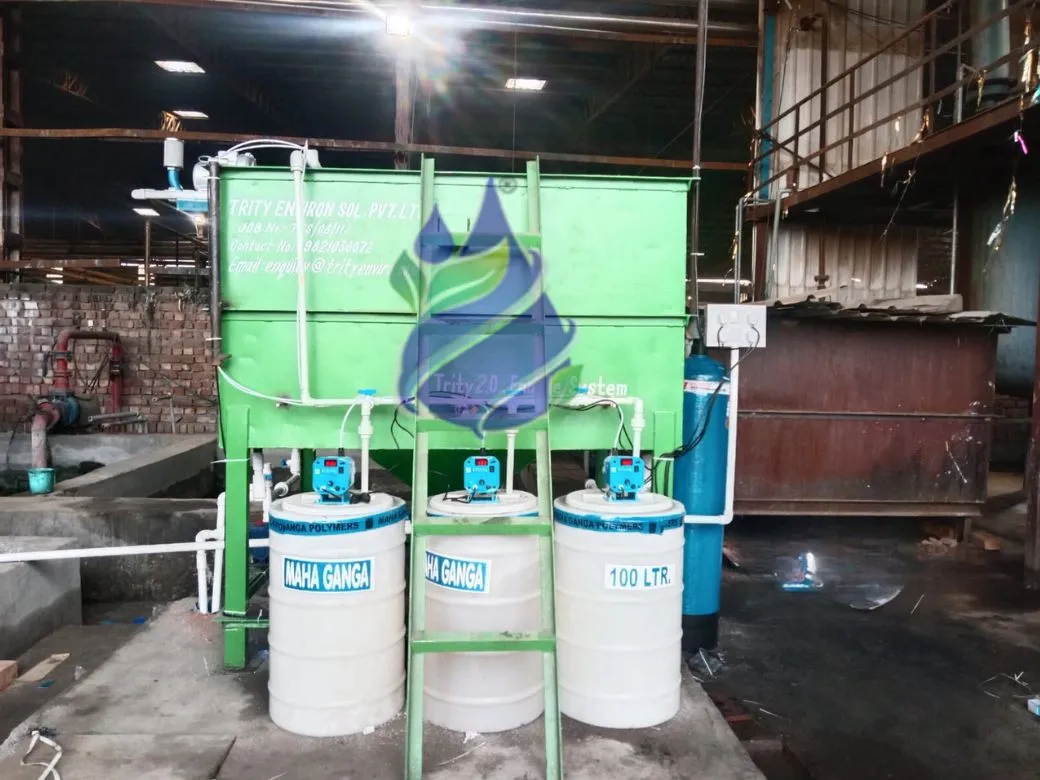
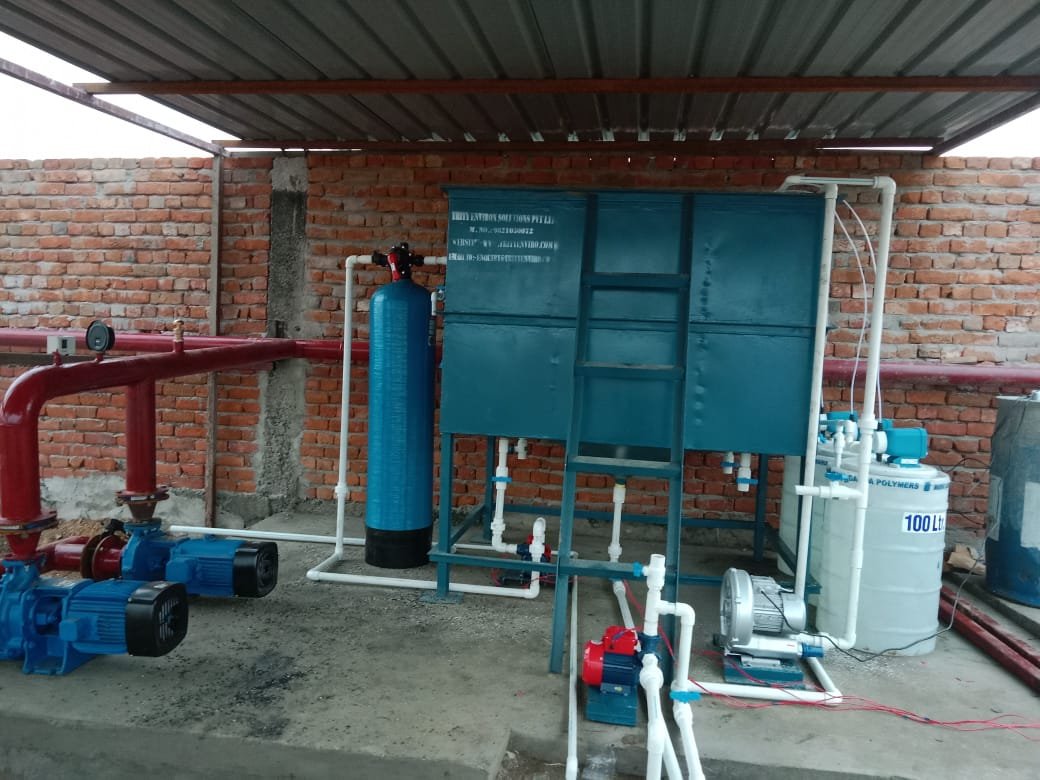
Key Takeaways
- STP plant price in India ranges from approximately Rs 8 lakh for a 50 KLD unit to Rs 2.5 crore or more for a 500 KLD plant, depending on technology and civil scope.
- Cost per KLD decreases significantly as plant capacity increases — larger plants offer better economy of scale.
- Technology selection (MBBR, SBR, MBR) is the single biggest variable in STP pricing.
- Hidden costs such as AMC, power consumption, sludge handling, and chemicals can add 15 to 25 percent to the total project cost over 3 to 5 years.
- Buying the cheapest STP often results in higher long-term costs due to compliance failures, breakdowns, and inefficiency.
Introduction
"STP plant price" is one of the most searched queries among builders, housing society committees, hotel developers, and industrial project managers across India. And yet, getting a straight answer is surprisingly difficult.
The reason is simple: there is no standard price for a sewage treatment plant.
A 100 KLD STP for a gated residential community in Gurugram and a 100 KLD STP inside a pharmaceutical plant in Baddi are both 100 KLD plants. But their designs, materials, automation requirements, treated water quality targets, and ultimately their prices can differ by 40 to 60 percent.
This guide cuts through that complexity. It gives you realistic, market-based STP plant price ranges for 2026, explains every factor that drives cost up or down, and shows you exactly what to ask your vendor before signing any quotation.
Whether you are planning a 50 KLD STP for a small housing complex or a 1000 KLD municipal-grade plant for a township project, the information below will help you plan your budget accurately.
What Determines STP Plant Price in India?
No two STP projects cost the same. Before looking at any price table, understand the six primary factors that drive the final number.
1. Capacity in KLD
KLD stands for Kilolitres Per Day. It is the single most important sizing parameter. A 50 KLD plant treats 50,000 litres of sewage daily. As capacity increases, cost rises, but not linearly. The per-KLD cost typically drops as you move from 50 KLD to 500 KLD because fixed overheads get distributed across a larger treatment volume.
2. Technology Selection
This is the biggest variable in STP plant pricing. The five main biological treatment technologies used in India are:
- MBBR (Moving Bed Biofilm Reactor): Compact footprint, moderate capital cost, excellent for space-constrained projects. Widely used in residential and commercial STPs. Learn more about MBBR technology.
- SBR (Sequential Batch Reactor): Flexible and efficient, lower sludge generation, slightly higher automation requirements.
- MBR (Membrane Bioreactor): Produces the highest quality treated water, ideal for reuse applications. Higher capital and operating cost due to membrane replacement.
- FAB (Fixed Activated Biofilm): Cost-effective for smaller capacities, less common for large projects.
- ASP (Activated Sludge Process): Oldest technology, lower capital cost, larger footprint, higher operator skill requirement.
3. Civil Construction Scope
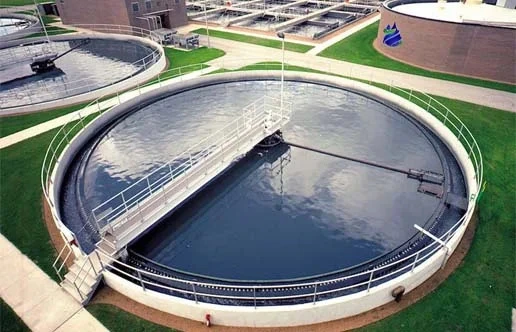
A containerized or packaged STP skips major civil work and costs less upfront. A conventional civil STP involves RCC tanks, underground structures, and significant civil investment, but it typically has a longer lifespan and lower ongoing mechanical costs.
4. Automation Level
A basic STP with manual operation costs less initially. A fully automated plant with SCADA, remote monitoring, alarm systems, and auto-dosing will carry a 15 to 25 percent premium, but reduces operator dependency and improves compliance consistency.
5. Treated Water Quality Requirements
If the project requires treated water only for gardening or flushing, standard secondary treatment is sufficient. If the treated water must meet reuse standards for cooling towers, process water, or near-potable quality, tertiary treatment stages (sand filtration, activated carbon, UV, RO) add cost.
6. Location and Site Conditions
Projects in remote or hilly terrain involve higher transportation, installation, and civil cost. Projects in metro cities may face space constraints that require compact, vertical designs at a premium.
STP Plant Cost Per KLD Explained
Cost per KLD is a useful benchmark when comparing proposals from different vendors. It tells you how much you are paying for each kilolitre of daily treatment capacity.
However, cost per KLD must be read carefully. A vendor quoting Rs 40,000 per KLD for a 50 KLD plant is not directly comparable to another quoting Rs 28,000 per KLD for a 250 KLD plant. The smaller plant carries higher per-unit cost because fixed engineering, electrical, and commissioning costs are spread over fewer kilolitres.
| Capacity Range |
Approx Cost Per KLD |
Typical Application |
| 10 to 50 KLD |
Rs 18,000 to Rs 30,000 |
Small housing societies, restaurants, clinics |
| 50 to 150 KLD |
Rs 14,000 to Rs 22,000 |
Mid-size apartments, hotels, schools |
| 150 to 500 KLD |
Rs 10,000 to Rs 16,000 |
Large residential projects, hospitals, industrial campuses |
| 500 to 1000 KLD |
Rs 7,000 to Rs 12,000 |
Townships, government projects, large industries |
| Above 1000 KLD |
Rs 5,000 to Rs 9,000 |
Municipal projects, SEZs, large EPC contracts |
Note: Prices are indicative and based on market averages for civil STP with MBBR technology in 2026. Prices vary based on technology, specifications, site conditions, and project location.
STP Plant Price in India: Capacity-Wise Breakdown
The table below gives you a practical reference for sewage treatment plant cost in India across the most commonly requested capacity ranges.
| Capacity |
Technology |
Approx Price Range |
Typical Application |
Approx Space Required |
| 50 KLD |
MBBR |
Rs 8 lakh to Rs 15 lakh |
Small apartments, guesthouses, clinics |
30 to 50 sq m |
| 100 KLD |
MBBR / SBR |
Rs 15 lakh to Rs 28 lakh |
Mid-size housing societies, hotels |
50 to 80 sq m |
| 150 KLD |
MBBR / SBR |
Rs 22 lakh to Rs 38 lakh |
Large apartments, commercial buildings |
70 to 110 sq m |
| 250 KLD |
MBBR / SBR |
Rs 35 lakh to Rs 60 lakh |
Large residential townships, hospitals |
100 to 160 sq m |
| 500 KLD |
MBBR / SBR / MBR |
Rs 65 lakh to Rs 1.2 crore |
Large townships, industrial parks, government projects |
180 to 300 sq m |
| 1000 KLD |
SBR / MBR / ASP |
Rs 1.2 crore to Rs 2.5 crore |
Municipal projects, SEZs, mega townships |
350 to 600 sq m |
Disclaimer: All prices are indicative market ranges for 2026 and may vary depending on technology selection, civil scope, automation level, equipment brand, project location, and site conditions. Contact Trity Environ Solutions for a project-specific quotation.
50 KLD STP Plant Cost
A 50 KLD STP is the most common entry-level plant for small to mid-size applications. It treats 50,000 litres of sewage per day, suitable for residential buildings with 150 to 250 apartments (depending on per-capita water consumption norms).
Suitable for:
- Small gated communities and builder floors
- Guesthouses and boutique hotels
- Schools and colleges
- Small industrial facilities
Expected price range: Rs 8 lakh to Rs 15 lakh (MBBR-based civil STP, fully installed)
Major components:
- Inlet screen and grit chamber
- Equalization tank
- MBBR reactor with bio-media
- Secondary clarifier or tube settler
- Sludge holding tank
- Blower and motor unit
- Chlorination system
- Control panel
Installation typically takes 45 to 75 days depending on civil readiness.
100 KLD STP Plant Price
The 100 KLD STP is one of the most frequently quoted capacities in India. It covers a wide range of mid-size applications and represents a practical balance between cost and compliance capability.
Suitable for:
- Housing societies with 300 to 500 flats
- 3-star and 4-star hotels with 80 to 150 rooms
- Commercial office complexes
- Hospitals with 100 to 200 beds
Expected price range: Rs 15 lakh to Rs 28 lakh (MBBR/SBR, civil construction)
ROI consideration: Many housing societies report savings of Rs 50,000 to Rs 1.5 lakh per month by reusing treated STP water for landscaping and flushing, making the plant investment recoverable within 3 to 5 years in water-stressed cities.
250 KLD STP Plant Cost
At 250 KLD, you are typically looking at large residential projects, industrial campuses, or multi-building commercial developments.
Suitable for:
- Large residential townships (500 to 1,000 units)
- Multi-specialty hospitals
- Industrial manufacturing facilities
- Large hotel and resort developments
Expected price range: Rs 35 lakh to Rs 60 lakh
At this capacity, technology selection becomes more critical. MBBR remains the most popular choice for cost-efficiency. SBR is preferred when sludge minimization is a priority. If treated water reuse for process applications is required, MBR may be recommended despite the higher capital cost.
500 KLD STP Plant Price
A 500 KLD sewage treatment plant is a large infrastructure asset. Projects at this scale are typically driven by RERA compliance requirements for large real estate developments, government mandates, or industrial effluent reuse requirements.
Suitable for:
- Integrated townships and plotted developments
- Government-funded housing projects
- Large hospitals and medical campuses
- Industrial estates and SEZs
Expected price range: Rs 65 lakh to Rs 1.2 crore
At 500 KLD, buyers should evaluate the total cost of ownership over 10 to 15 years, not just the installation cost. A plant using quality blowers, robust bio-media, and reliable automation will typically cost 20 to 30 percent more upfront but deliver significantly lower operating and maintenance costs over its lifespan.
Equipment Cost vs Civil Work Cost
Understanding how the total STP project cost is distributed helps you evaluate vendor proposals more accurately.
| Cost Component |
Approx Percentage of Total Cost |
| Mechanical Equipment (tanks, blowers, clarifiers) |
25 to 35% |
| Electrical Panels and Cabling |
8 to 12% |
| Piping and Valves |
6 to 10% |
| Instrumentation and Automation |
4 to 8% |
| Civil Construction (RCC tanks, structure) |
25 to 35% |
| Installation and Commissioning |
5 to 8% |
| Transportation and Logistics |
2 to 4% |
| GST and Taxes |
18% on supply; varies on services |
The civil cost percentage is higher for underground or semi-underground plants and lower for above-ground containerized systems. Automation cost increases sharply if SCADA or remote monitoring is included.
Hidden Costs Buyers Often Miss
The STP plant price quoted by a vendor covers supply, installation, and commissioning. What it usually does not cover are the ongoing costs that accumulate over the plant's operational life.
Operating costs to budget for:
- Annual Maintenance Contract (AMC): Typically 8 to 12 percent of the plant supply cost per year. A Rs 20 lakh plant will likely need Rs 1.6 to 2.4 lakh per year in AMC. Learn about Trity's O&M services.
- Power consumption: An STP consumes 0.5 to 1.5 kWh per KLD treated, depending on technology and aeration requirements. A 100 KLD MBBR plant may consume 50 to 150 units daily.
- Chemical costs: Chlorination, pH correction, coagulants, and defoamers contribute to monthly operating cost.
- Sludge handling and disposal: Sludge must be dewatered and disposed of as per PCB norms. Dewatering equipment (filter press, centrifuge) and disposal logistics add cost.
- Operator salary: A dedicated operator or operator-cum-technician is required for compliance. Monthly cost ranges from Rs 15,000 to Rs 30,000 depending on location and qualification.
- Laboratory testing: PCB compliance often requires periodic effluent testing at approved labs. Budget Rs 3,000 to Rs 8,000 per test.
- Spare parts: Blower parts, media replacement (for MBR plants), pump impellers, and sensor replacements add to annual cost.
Buyer warning: Always ask vendors for a 5-year total cost of ownership estimate, not just the installation price. A plant that costs Rs 18 lakh to install but requires Rs 4 lakh per year to run is more expensive long-term than a Rs 24 lakh plant that costs Rs 2.5 lakh annually.
STP Technology Comparison and Cost Impact
| Parameter |
MBBR |
SBR |
MBR |
FAB |
ASP |
| Initial Capital Cost |
Medium |
Medium-High |
High |
Low-Medium |
Low |
| Operating Cost |
Low-Medium |
Low |
High |
Low |
Medium |
| Footprint Required |
Compact |
Moderate |
Very Compact |
Moderate |
Large |
| Automation Level |
Medium |
High |
High |
Low |
Low-Medium |
| Treated Water Quality |
Good |
Good |
Excellent |
Moderate |
Good |
| Sludge Generation |
Low |
Low |
Very Low |
Medium |
High |
| Maintenance Complexity |
Low |
Medium |
High |
Low |
Medium |
| Best For |
Most applications |
Space & sludge management |
Reuse applications |
Small, budget plants |
Large municipal projects |
For most residential and commercial projects in India, MBBR remains the most cost-effective and operationally practical choice. MBR is recommended only when treated water quality requirements are very high or space is extremely limited.
How to Get an Accurate STP Plant Quotation
The accuracy of any STP quotation depends entirely on the quality of information provided to the vendor. A vague enquiry gets a vague price. A detailed enquiry gets a price you can actually use for budget planning.
Provide these details when requesting a quotation:
- Required treatment capacity (KLD)
- Application type (residential, hotel, hospital, industrial)
- Available space and location
- Influent characteristics (if known: BOD, COD, TSS, flow pattern)
- Desired outlet water quality and intended reuse
- Project location (city, state, terrain)
- Civil scope preference (contractor-supplied or vendor-supplied)
- Automation and monitoring requirements
- Timeline and project milestones
- PCB or RERA compliance requirements applicable to your project
With this information, a competent STP vendor can provide a detailed, itemized STP plant quotation within 3 to 5 working days.
Why Cheapest STP Plants Often Cost More Later
This is the most important section in this article, and also the most overlooked by first-time buyers.
India's STP market has a significant segment of low-cost suppliers offering prices 30 to 50 percent below market average. These plants often use:
- Undersized blowers that fail within 18 to 24 months
- Inferior MBBR media with low specific surface area, reducing biological efficiency
- Basic manual panels instead of automated controls
- Thin-walled FRP tanks prone to cracking under soil pressure
- No commissioning support or post-installation service
The consequences are predictable: inconsistent treated water quality, PCB compliance failures, shutdown notices, and expensive retrofitting. Many housing society committees and hotel developers have spent more fixing a cheap STP than they saved by choosing it.
When evaluating proposals, ask vendors for:
- MBBR media specifications (specific surface area in m2/m3)
- Blower brand and warranty terms
- Reference site visits
- Post-commissioning support terms
A price difference of Rs 2 to 5 lakh on a Rs 20 lakh project is worth scrutinizing. A price difference of Rs 8 to 10 lakh should prompt serious questions about what has been compromised.
Why Choose Trity Environ Solutions for STP Projects
Trity Environ Solutions is a Ghaziabad-based manufacturer and EPC contractor specializing in sewage treatment plants, effluent treatment plants, and industrial water treatment systems, with a PAN India project portfolio.
What Trity offers:
- In-house design engineering for capacity-specific plant configurations
- Manufacturing of key components at its own facility
- Turnkey project execution covering civil, mechanical, electrical, and instrumentation
- Commissioning and operator training
- Annual Maintenance Contracts with defined SLA parameters
- Environmental compliance and PCB documentation support
- ETP and RO plant integration for industrial clients requiring combined treatment
- STP operation and maintenance services for existing plant owners
Trity's project portfolio covers residential societies, hotels, hospitals, pharmaceutical plants, food processing units, and government infrastructure projects across multiple states.
Frequently Asked Questions
1. What is the cost of a 100 KLD STP plant in India?
A 100 KLD STP plant costs approximately Rs 15 lakh to Rs 28 lakh depending on technology (MBBR or SBR), civil scope, and location. Final cost depends on site-specific requirements.
2. What is STP plant cost per KLD?
Cost per KLD ranges from Rs 7,000 to Rs 30,000 depending on plant capacity. Smaller plants have higher per-KLD cost. A 50 KLD plant may cost Rs 18,000 to Rs 30,000 per KLD while a 500 KLD plant may cost Rs 10,000 to Rs 16,000 per KLD.
3. How much space is required for an STP?
A 100 KLD MBBR STP typically requires 50 to 80 square metres. Space requirements vary by technology and plant configuration.
4. Which STP technology is cheapest?
ASP (Activated Sludge Process) and FAB have lower capital costs but require more space and operating skill. MBBR offers the best balance of capital cost, footprint, and operational ease for most projects.
5. What is the AMC cost for an STP plant?
Annual Maintenance Contract typically costs 8 to 12 percent of the plant supply cost per year. A Rs 20 lakh plant will typically require Rs 1.6 to 2.4 lakh per year for AMC.
6. How long does STP installation take?
Installation timelines range from 45 days for small packaged units to 4 to 6 months for large civil STPs above 250 KLD, depending on civil readiness and project complexity.
7. What is the cost of a 500 KLD STP plant?
A 500 KLD STP plant costs approximately Rs 65 lakh to Rs 1.2 crore depending on technology, civil scope, and automation level.
8. Can STP treated water be reused?
Yes. Treated STP water meeting PCB discharge standards can typically be reused for gardening, flushing, and cooling towers. MBR-treated water can meet higher reuse quality standards for process applications.
9. What is the lifespan of an STP plant?
A well-maintained civil STP has a design life of 15 to 25 years. Mechanical components like blowers and pumps require periodic replacement every 5 to 10 years depending on usage.
10. Is MBBR or SBR better for housing societies?
Both are widely used. MBBR is generally preferred for its simpler operation and lower maintenance skill requirement. SBR is preferred when sludge management is a priority.
11. What permits are required to operate an STP?
Projects above defined thresholds require Consent to Establish (CTE) and Consent to Operate (CTO) from the State Pollution Control Board. RERA-registered residential projects must comply with state-specific STP installation norms.
12. Does Trity Environ Solutions provide STP plants across India?
Yes. Trity provides design, manufacturing, installation, and maintenance services across PAN India, including metro cities, tier 2 cities, and industrial zones.
13. What information should I share to get an STP quotation?
Share the required capacity in KLD, application type, available space, project location, outlet water quality requirement, and civil scope preference. This helps vendors provide accurate project-specific pricing.
14. What happens if an STP plant fails PCB compliance tests?
Non-compliant STPs can attract show-cause notices, fines, and in serious cases, operational shutdown orders from the State Pollution Control Board. Regular testing and proper AMC coverage are essential to avoid compliance failures.
15. How much does STP operation cost per month?
For a 100 KLD plant, monthly operating costs typically range from Rs 20,000 to Rs 50,000, covering power, chemicals, operator salary, and routine maintenance. Costs vary by location and plant type.
Request a Free STP Plant Quotation
Planning an STP for a residential project, hotel, hospital, industrial facility, or government infrastructure development?
Getting an accurate project cost starts with a conversation with the right technical team.
Trity Environ Solutions offers:
- Free technical consultation to help you determine the right capacity and technology
- Detailed project cost estimation based on your specific requirements
- Site assessment support to evaluate space, inlet characteristics, and reuse potential
- Customized quotation with complete scope of work, equipment list, and installation timeline
- Compliance guidance for PCB, RERA, and other regulatory requirements
Whether you need a 50 KLD STP for a small apartment complex or a 1000 KLD plant for a township development, our engineering team will design a solution that balances performance, cost, and long-term reliability.
Contact Trity Environ Solutions today
Phone: +91-9821030072
Email: enquiry@trityenviro.com
Website: trityenviro.com
This article was written based on market conditions, vendor interactions, and project data available as of 2026. All pricing figures are indicative ranges and should not be treated as fixed quotes. Final project costs depend on specific design requirements, site conditions, and scope of work.