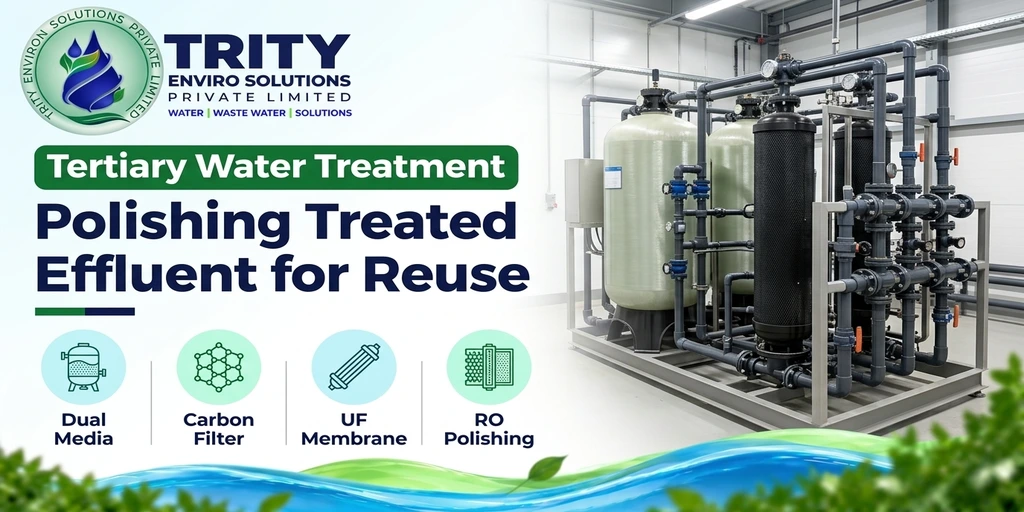
Tertiary Water Treatment for Industrial Reuse: When Filtration Alone Is Not Enough
Is filtration enough to reuse treated wastewater? Learn when you need UF, RO, softening or disinfection, and how to match tertiary treatment to each reuse.

 ISO 9001:2015 & QCI Approved
Pulp and paper manufacturing generates high-volume effluent loaded with cellulose fines, black liquor lignin, and chlorinated organics requiring specialized fiber recovery, coagulant decolourization, and secondary biological digestion.
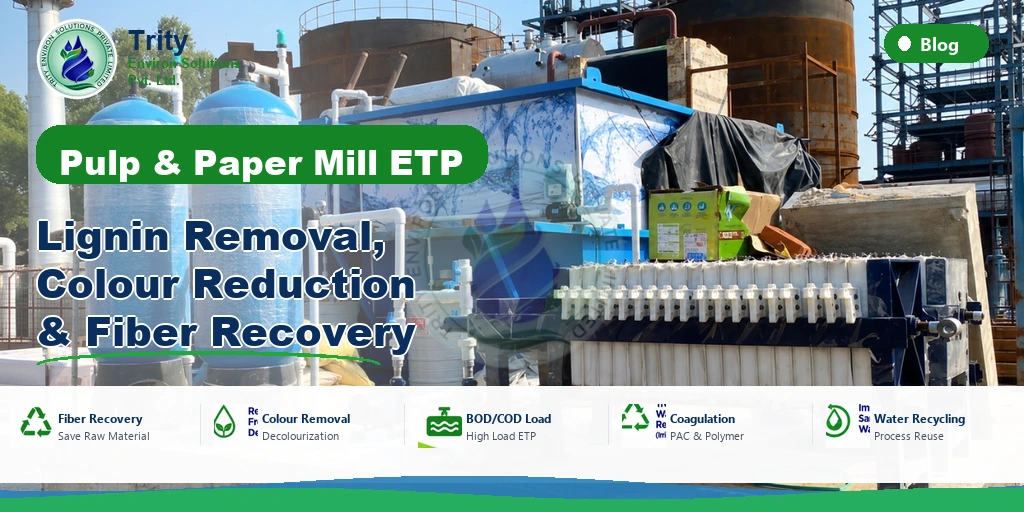
Pulp and paper manufacturing is classified among the most water-intensive and polluting industrial sectors in India, categorized under the Central Pollution Control Board Red Category 17-sector list. A typical integrated pulp and paper mill utilizes between 25 and 65 cubic meters of fresh water per metric ton of paper produced, depending heavily on the furnish used (virgin wood, agro-residues like bagasse and wheat straw, or recycled waste paper).
The manufacturing process generates several segregated wastewater streams, each presenting distinct physico-chemical challenges:
Fiber recovery is the highest return-on-investment unit operation in paper mill wastewater management. Recovered cellulose pulp can be reintroduced directly into the pulping machine chest or board stock, transforming an environmental hazard into substantial recurring profit.
Modern primary treatment utilizes a multi-barrier mechanical separation architecture:
Lignin is an intricate three-dimensional aromatic polymer linked by stable ether and carbon-carbon bonds, rendering it resistant to conventional aerobic bacterial decomposition. Without specialized chemical precipitation or advanced oxidation, lignin passes unhindered through standard biological aeration basins, causing dark reddish-brown effluent discharge that results in immediate regulatory closure notices.
Trity Environ Solutions implements a two-stage chemical coagulation and acid-cracking protocol:
Following primary fiber removal and chemical precipitation, clarified effluent undergoes high-rate biological degradation:
Upflow Anaerobic Sludge Blanket (UASB) Reactor:
Because paper mill effluent contains high concentrations of dissolved, easily fermentable wood sugars and organic acids, anaerobic digestion provides superior economic efficiency compared to energy-hungry aerobic tanks:
Aerobic MBBR and Secondary Clarification:
The anaerobic overflow passes into a two-stage Moving Bed Biofilm Reactor (MBBR) filled with virgin HDPE bio-media (specific surface area 800 m2/m3). Aerobic heterotrophic bacteria oxidize residual volatile fatty acids, while autotrophic nitrifiers eliminate ammoniacal nitrogen, bringing final biological effluent COD below 150 mg/L and BOD5 below 20 mg/L.
The table below provides engineering design parameters for a complete 1,000 KLD turnkey effluent treatment plant for a medium-scale kraft and duplex paper manufacturing mill:
| ETP Unit Operation | Design Capacity / Sizing | Operating Detention Time | Equipment Specification & MOC |
|---|---|---|---|
| Rotary Screen & Fiber Sump | 1,000 m3/day (42 m3/hr) | Continuous Screening | Wedge wire drum, 60 micron, SS304 screen with continuous backwash spray |
| High-Rate DAF Clarifier | 45 m3/hr forward flow | 25 to 35 minutes | Epoxy-lined mild steel tank, regenerative multiphase saturation pump (7.5 kW, 6.0 bar) |
| Equalization & Cooling Basin | 500 m3 volume | 12.0 hours HRT | RCC M30 tank with coarse bubble air grid mixing (2 * 11 kW twin lobe blowers) |
| UASB Anaerobic Bioreactor | 600 m3 volume | 14.4 hours HRT | RCC tank with internal 3-phase separator hood, biogas flare stack, and flame arrestor |
| Aerobic MBBR Tank | 350 m3 volume | 8.4 hours HRT | HDPE carrier media (50% fill volume), EPDM fine bubble disc diffusers, 2 * 18.5 kW blowers |
| Secondary Tube Settler | 28 m2 plan area | SOR = 1.5 m3/m2/hr | 60-degree PVC chevron tube modules, telescopic sludge draw-off valves |
| Sludge Dewatering Unit | 3.5 tons dry solids/day | 8 hours batch cycle | Twin belt filter press (1.5 m belt width, SS304 frame) producing 32% dry solids cake |
To guarantee consistent compliance and prevent process upsets, operating technicians must follow this rigorous daily protocol:
The matrix below outlines field diagnostics and corrective remedies for common operational failures encountered in paper industry ETPs:
| Problem Observed | Root Cause | Verification Test | Field Corrective Action |
|---|---|---|---|
| Effluent color turns dark brown exceeding 250 Hazen units | Inadequate coagulant dosing or black liquor spill from pulp washing section | Measure raw influent color and run on-site jar test with PAC and decolorizing resin | Increase PAC dose by 50 ppm; verify decolorizing resin pump stroke; divert black liquor spill to emergency dump pit. |
| DAF unit produces cloudy water with rising pin flocs | Air saturation pump failure, low pressure (< 4.0 bar), or polymer over-dosing | Inspect saturation pump pressure gauge and check dissolved air injector nozzle for clogging | Clean air aspiration strainer; adjust pump delivery valve to restore 5.5 bar pressure; throttle polymer dosing rate. |
| UASB reactor pH drops below 6.5; biogas output plummets | Reactor acidification (souring) caused by sudden organic shock load or lack of alkalinity | Measure effluent VFA (exceeding 800 mg/L) and alkalinity (dropped below 1,500 mg/L) | Stop raw feed pumping immediately. Dose sodium bicarbonate or caustic soda to restore pH to 7.2. Recirculate treated water until VFA drops below 300 mg/L. |
| Secondary clarifier experiences heavy white foam | Starch overload and low dissolved oxygen (< 1.0 mg/L) in MBBR aeration tank | Measure DO across MBBR aeration grid; test effluent for residual unassimilated starch | Start standby air blower to raise DO above 2.5 mg/L; dose silicone-based food-grade antifoam agent into aeration basin. |
Under the Central Pollution Control Board charter for water recycling and pollution reduction in pulp and paper industries, mills must strictly comply with the following treated discharge standards:
Water Recycling Economics and Financial Return:
By coupling secondary biological clarifier overflow with tertiary sand filtration, ultrafiltration, and reverse osmosis, paper mills can recover 85% of treated effluent (TDS < 80 ppm, zero TSS). For a 1,000 KLD mill, recycling 850 m3 of water daily eliminates freshwater purchase costs (averaging Rs. 35/m3), saving Rs. 29,750 per day (over Rs. 1.08 Crore annually) while ensuring zero risk of factory shutdown by environmental regulators.
Ensuring continuous compliance with State Pollution Control Board (SPCB) and Central Pollution Control Board (CPCB) consent conditions requires a rigorous preventive maintenance architecture across all primary, secondary, and tertiary units in a pulp and paper mill ETP:
By enforcing this systematic preventive maintenance.
Recover valuable pulp fiber, achieve 90%+ true colour reduction, and comply with CPCB charter norms with Trity Environ Solutions specialized paper mill wastewater systems.
Get Expert Consultation Call: +91 98188 14787Explore our detailed engineering manuals and turnkey industrial plant solutions:
For turnkey plant sizing, technical audits, or statutory pollution control board compliance, contact our senior process specialists for on-site environmental engineering consultation.
Is filtration enough to reuse treated wastewater? Learn when you need UF, RO, softening or disinfection, and how to match tertiary treatment to each reuse.
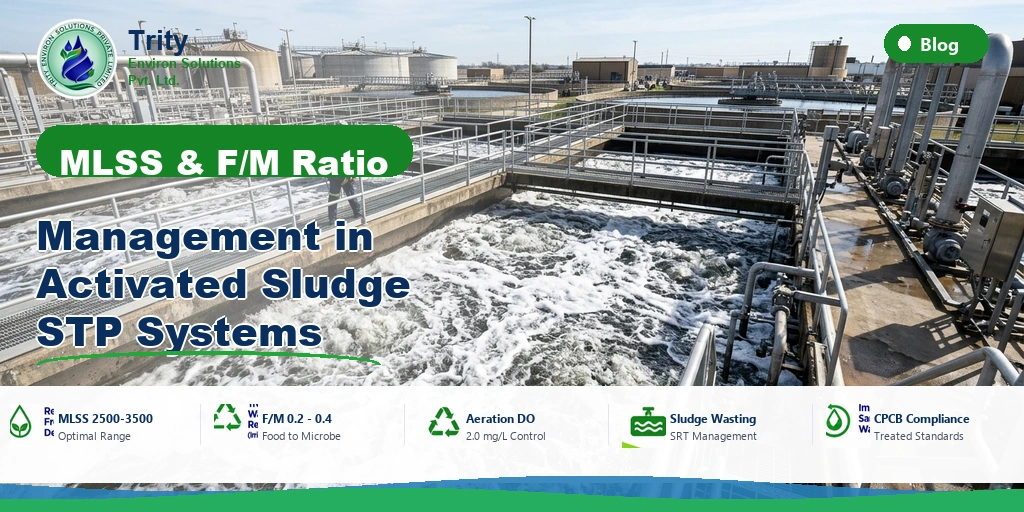
Engineering operating manual for Mixed Liquor Suspended Solids (MLSS) and Food-to-Microorganism (F/M) ratio calculations in activated sludge sewage treatment plants.
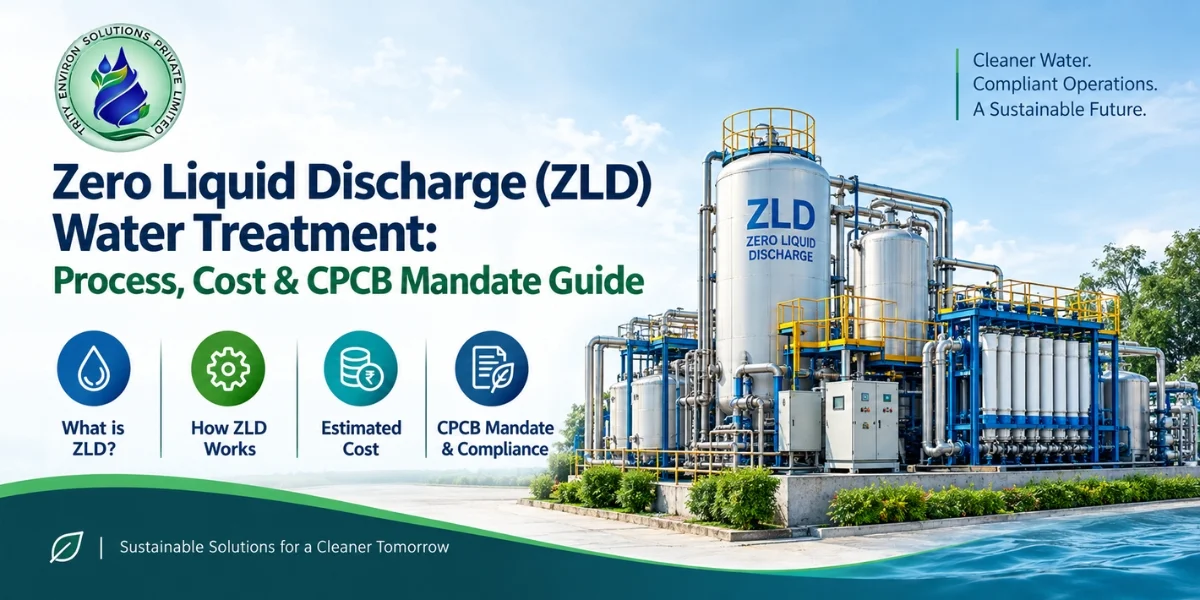
A complete guide to Zero Liquid Discharge (ZLD) technology, who needs it under CPCB rules, how it works, real costs, and choosing a ZLD manufacturer.











Discuss your requirements with our engineering team and get practical guidance for your project.

