When a court tells a state not to wait for a survey before sealing a pipe, it is signalling that it no longer trusts the normal pace of enforcement.
What the Supreme Court Ordered
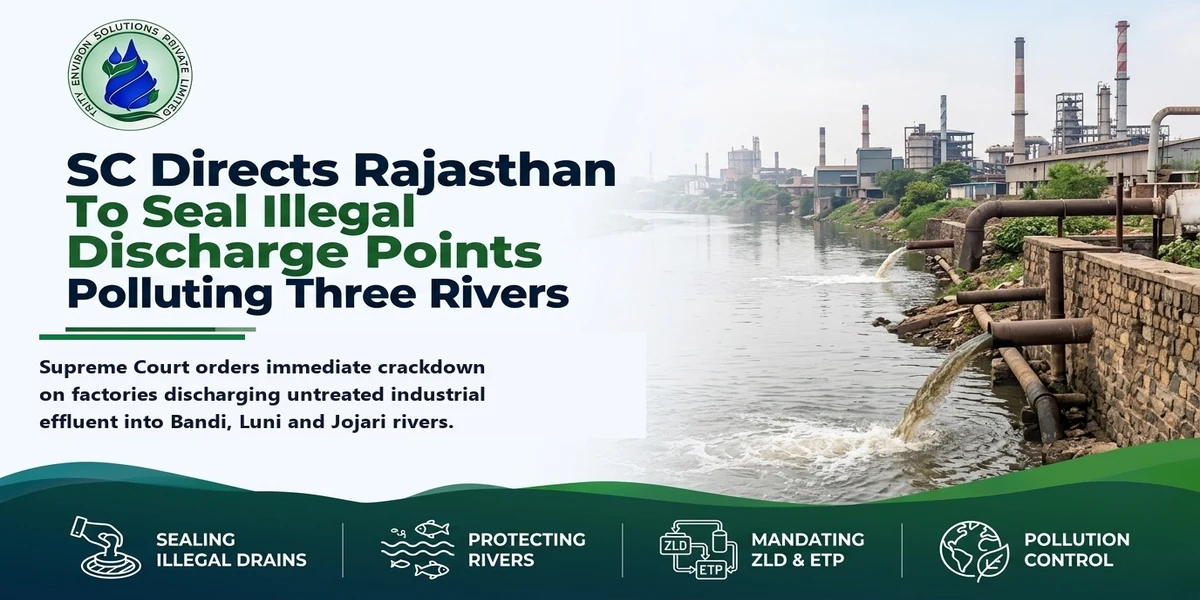
A Supreme Court bench of Justices Vikram Nath and Sandeep Mehta has directed the Rajasthan government to act against industrial units polluting the Bandi, Luni and Jojari rivers, including removing factories found operating illegally on residential and agricultural land. The court specifically ordered authorities to immediately seal or remove illegal discharge points, bypass arrangements, manholes, chambers, pipelines and drains already cleared for removal, stating that "authorities must not wait for the completion of a detailed survey."
The bench went further than ordering closures. It directed an investigation into the wider network behind these units, including financial transactions, job-work arrangements, raw material supply, transport networks and the beneficiaries of the pollution, not just the factories themselves.
The Structural Fix the Court Wants
Beyond immediate sealing, the court ordered a permanent monitoring mechanism in every affected district, bringing together the Rajasthan State Pollution Control Board (RSPCB), district administrations, police, revenue and transport departments, and local bodies, with regular inspections and designated nodal officers responsible for follow-through. The RSPCB has also been directed to determine and recover environmental compensation from the units and individuals responsible, and to report back on what has been assessed, recovered, and still outstanding.
Authorities have been given a strict reporting rhythm: an Action Taken Report every 15 days, and mining-related information to a High-Powered Ecosystem Oversight Committee by October 15, since the order also covers illegal gravel and sand mining damaging the riverbeds and disrupting natural water flow.
Why Treatment Infrastructure Is Central to the Order
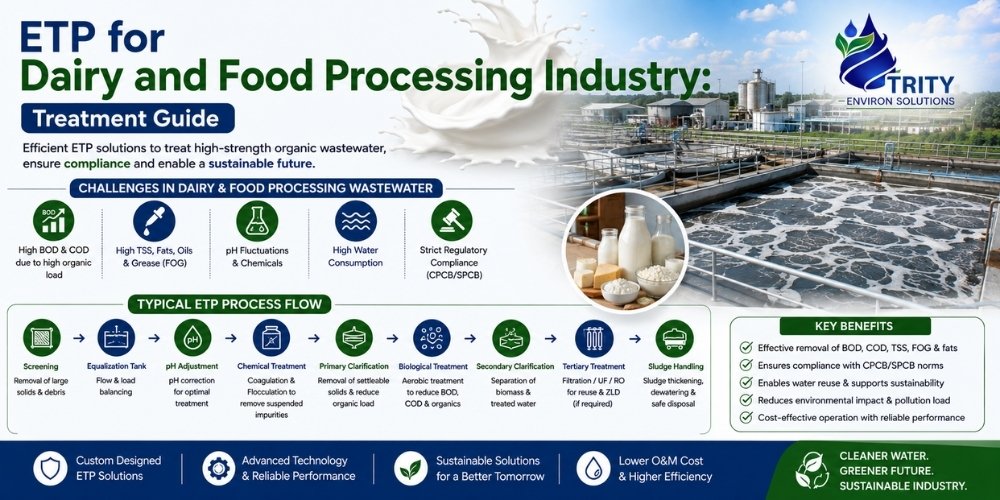
Perhaps the most consequential part of the ruling for industry is the direction to make time-bound decisions on expanding Common Effluent Treatment Plants (CETPs), building new ones, and upgrading industrial Effluent Treatment Plants to Zero Liquid Discharge systems. This reframes the problem the court is trying to solve: closures alone remove today's pollution source but do nothing for units that resume operating once attention moves elsewhere, whereas mandated ZLD capacity removes the discharge pathway permanently, whatever a unit's compliance history looks like afterward.
The court's own framing, that the crisis stems from inadequate effluent treatment capacity combined with illegal operations and weak monitoring, points to treatment infrastructure as the durable fix rather than closures and compensation orders, which tend to address only the units caught in a given enforcement sweep.
What This Means for Industry in the Region
For legitimate units operating in this belt, the direction toward expanded CETP capacity and mandatory ZLD upgrades is likely to become a compliance requirement rather than a voluntary upgrade path, especially given the court's insistence on a permanent, multi-agency monitoring structure rather than a one-time inspection drive. Units that move early on ZLD retrofits are better positioned than those waiting to see how strictly the order gets enforced, given the scale of judicial attention now on this specific river system.
Key Highlights
- The Supreme Court has ordered Rajasthan to seal illegal industrial discharge points into the Bandi, Luni and Jojari rivers without waiting for a survey
- A permanent, multi-agency district-level monitoring mechanism has been ordered, with 15-day Action Taken Reports
- RSPCB must determine and recover environmental compensation from responsible units
- The court directed time-bound decisions on CETP expansion and upgrading ETPs to Zero Liquid Discharge systems