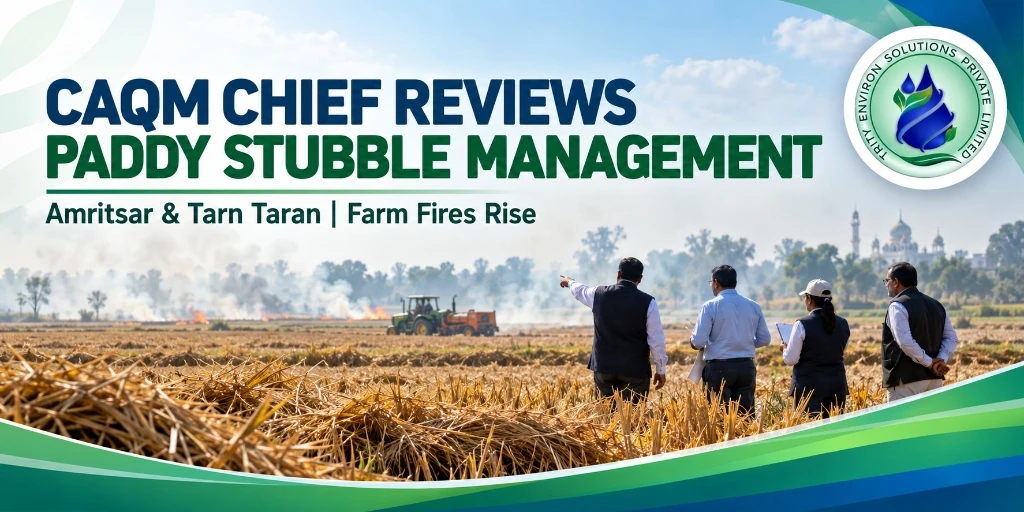
A high-level team led by Rajesh Verma, chairperson of the Commission for Air Quality Management (CAQM), met district officials in Amritsar and Tarn Taran on Saturday, October 24, to review how paddy stubble is being managed. The two districts are among Punjab's worst farm-fire hotspots.
The commission expressed concern about the rise in incidents and warned that laxity would invite strict action and accountability.
The Numbers Behind the Review
Official figures cited in the reports cover September 15 to October 23, 2026.
- Punjab: 542 farm fire incidents
- Tarn Taran: 257 incidents, nearly half of the state total
- Amritsar: 142 incidents
- Both districts combined: 399 incidents, about three-quarters of Punjab's total (our arithmetic, which matches the "nearly three-quarters" description in one report)
The counts show how concentrated the problem is. Two districts out of the state's many account for most of the fires, which is why the commission chose them for a field review.
Who Met Whom
The team met deputy commissioners and other officers from both districts. The aim, as stated, is to reduce and eventually eliminate stubble burning.
The review covered:
- In-situ methods, which manage straw in the field itself using machinery
- Ex-situ methods, which remove straw from the field for other uses
- Facilities and infrastructure available in each district
What the Commission Directed
Use the straw as fuel
- Maximise use of paddy stubble as fuel in thermal power plants, brick kilns and suitable industries
- Appoint sector-specific nodal officers to make sure straw is actually used
- Monitor use regularly and report compliance
Go to the farmers
- Officers should visit villages and farmers regularly
- Confirm that farmers know about the stubble facilities available to them
- Make sure machinery reaches farmers promptly
One report noted that awareness campaigns alone are not enough without machinery and practical help.
Coordinate the supply chain
- Improve coordination among farmers, Custom Hiring Centres, machinery providers and other stakeholders
- Prioritise the issue in Tarn Taran, where the deputy commissioner was told to step up field efforts
A Field Visit to an Industrial Boiler
In Amritsar, the team inspected an industrial boiler at an industrial complex that burns paddy stubble pellets. The visit was meant to assess how processed residue can be used in practice and whether such models can be scaled up.
This matters because ex-situ use depends on a buyer. Farmers will bale or sell straw only if an industry is ready to take it at a workable price and place.
The Earlier Review on October 9 and 10
This was not the commission's first visit. On October 9 and 10, a CAQM team chaired by Dr S D Attri, Member (Technical), reviewed the same two districts. The Ministry of Environment, Forest and Climate Change has identified both as paddy stubble burning hotspots.
What that review found and directed
- Balers from Amritsar, Tarn Taran and nearby districts were operating to collect and manage straw
- Amritsar has a supply chain linking industries with boilers, farmers and aggregators for straw bales
- Amritsar set up a control room and help desk at the District Administrative Complex and circulated a helpline for reporting fires
- Tarn Taran reported it had "substantially achieved its targets" on crop residue management machinery
- Flying squads were deployed in 18 Punjab districts from October 1 to November 30
- Officers were told to maintain continuous field surveillance, using low-cost sensors, and to enforce rules "without any lapse"
The October 10 report gave no fire counts. The October 24 review came with counts and a sharper tone, which suggests the commission is not satisfied with progress.
Reading the District Gap
The reports do not explain why Tarn Taran has so many more fires than Amritsar, and the explanation should not be guessed. The commission's own directions hint at where the gaps may lie.
- Whether machinery reaches farmers on time
- Whether farmers know which facilities exist near them
- Whether district officers are visiting villages or relying on awareness campaigns
- Whether there is a buyer for straw close enough to make removal worthwhile
The Tarn Taran deputy commissioner was singled out for a warning, which suggests the commission sees a field-level gap there. That is an inference from the directions, not a finding stated in the reports.
The timing squeeze
This is general background. After paddy is harvested, farmers have a short window to prepare the field for the next crop. Straw that is not removed or mixed into the soil quickly is often burned because it is the fastest option. This is why the commission keeps pressing for machinery to be available at the right time, and not just in total numbers.
Why Punjab's Fires Matter for Delhi
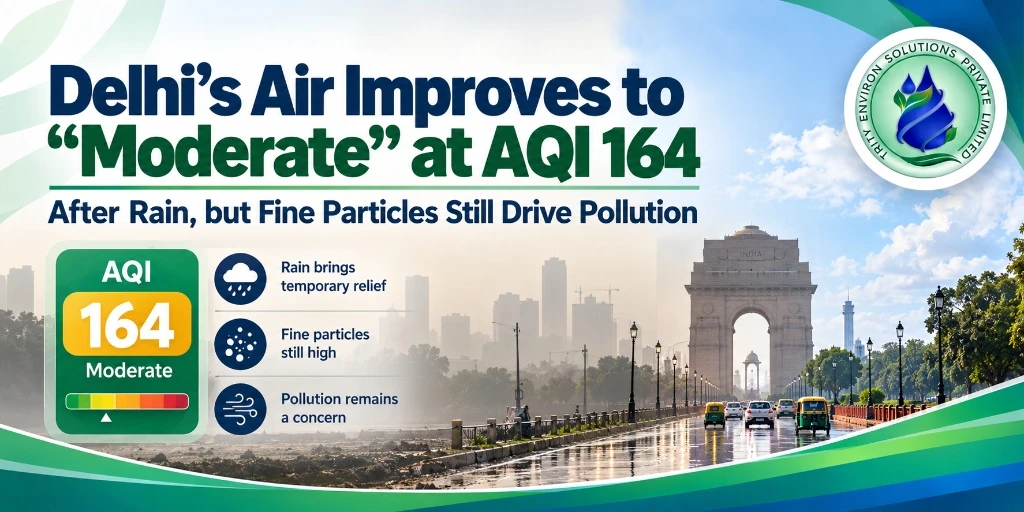
Smoke from farm fires travels with north-westerly winds. During the week of October 21 to 24, Delhi's air quality bulletins noted the following.
- Stubble burning's estimated share of Delhi's PM2.5 was 3.9% on October 21 and 5.1% on October 23 in two separate reports
- A Decision Support System forecast cited on October 22 put the share at 7.4% for Thursday, 15.9% for Friday and 4.1% for Saturday
Estimates and forecasts differ, so they should not be compared directly. They show that the share moves sharply from day to day with wind and fire counts. Delhi's GRAP Stage I restrictions took effect on October 21.
What Industry Can Do
The commission's push on ex-situ use points to a gap that businesses can fill.
- Industries with boilers can check whether paddy straw pellets or briquettes are a workable fuel and what emission controls they would need
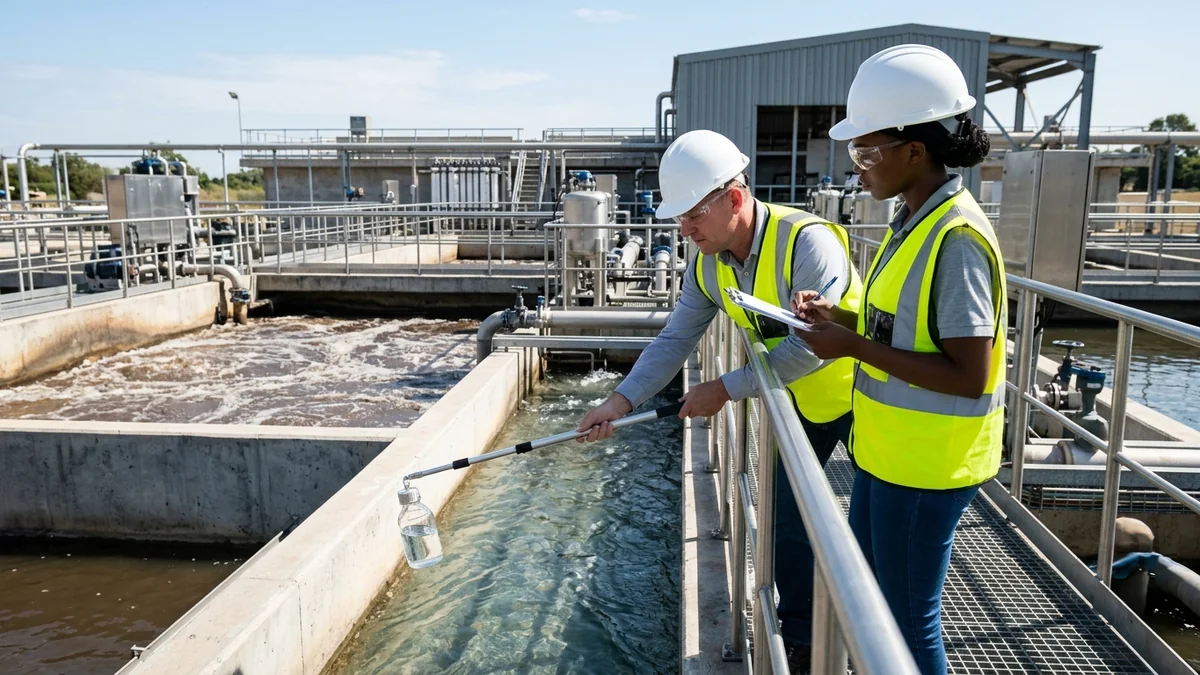
- Any fuel change should be matched with stack monitoring, because burning biomass can change the emission profile. Calibrated SOx NOx gas analysers help a plant confirm it stays within consent limits after switching fuels
- Records of fuel source and use will matter if the nodal officers ask for compliance reports
This is general guidance, not a requirement stated in the CAQM directions.
What to Watch Next
- Whether the farm-fire count in Tarn Taran slows after the warning to its deputy commissioner
- Whether nodal officers are named and begin reporting on industrial use of straw
- Daily stubble-burning share estimates for Delhi through the end of October
- Any CAQM action against officers or districts for lapses
The harvest season runs into November, so the pressure on both districts is unlikely to ease soon.