TRITY ENVIRO
WATER • WASTEWATER • RECYCLING

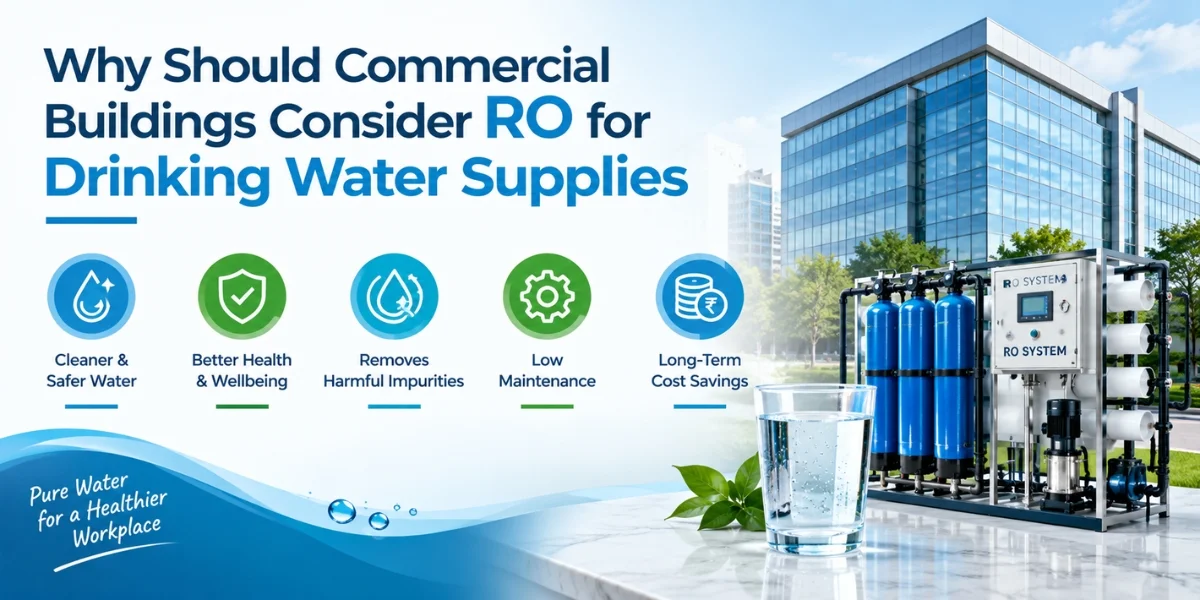
Why Should Commercial Buildings Consider RO for Drinking Water Supplies

Municipal water reaching a commercial building may look and taste fine, yet still carry dissolved solids, chlorine byproducts, and hardness that quietly affect health, equipment, and guest experience. This guide covers exactly why RO has become the standard fix.
Why Should Commercial Buildings Consider RO for Drinking Water Supplies

Why This Decision Matters More Than It Looks

Engineering Consultation

Looking to Sizing or Upgrading Your Treatment Plant?

Speak directly with our senior environmental engineers for technical guidance, sizing calculations, or a tailored project proposal.
Call +91-9821030072 or email enquiry@trityenviro.com

Request Free Engineering Consultation
Request a Free Site Assessment
Previous Article Next Article
TECHNICAL QUESTIONS

Frequently Asked Questions

Municipal water is generally treated to a safe baseline, but it can still carry dissolved solids, chlorine, hardness, and trace contaminants that affect taste, health, and the performance of equipment like coffee machines and boilers, which is why many commercial buildings add RO treatment on top of the municipal supply.
It is not recommended. Domestic RO systems are built for intermittent, low-volume household use and are not designed for the continuous, high-volume demand of a commercial building, typically leading to premature membrane failure and inconsistent output during peak hours.
Commercial RO systems are sized in Litres Per Hour (LPH) based on actual daily consumption and peak-hour demand, not building size alone. Small offices or cafes may need only 25-100 LPH, while hotels and hospitals typically require significantly higher capacity with adequate storage for peak periods.
Yes. Untreated water's dissolved minerals cause scale buildup that is a leading cause of equipment failure in coffee machines, ice makers, and boilers. Feeding this equipment RO-purified water extends its working life and reduces repair frequency.
Commercial RO systems need relatively minimal but regular maintenance, primarily sediment and carbon pre-filter replacement every 3-6 months depending on usage, to protect the membrane and maintain consistent output quality.
KEEP READING

Related Technical Articles

View All Articles →
PROVEN EXPERIENCE

Featured Turnkey Installations

Need Expert Support for Your Water Treatment Project?

Discuss your requirements with our engineering team and get practical guidance for your project.


QCI Approved
seller
whatsapp-image