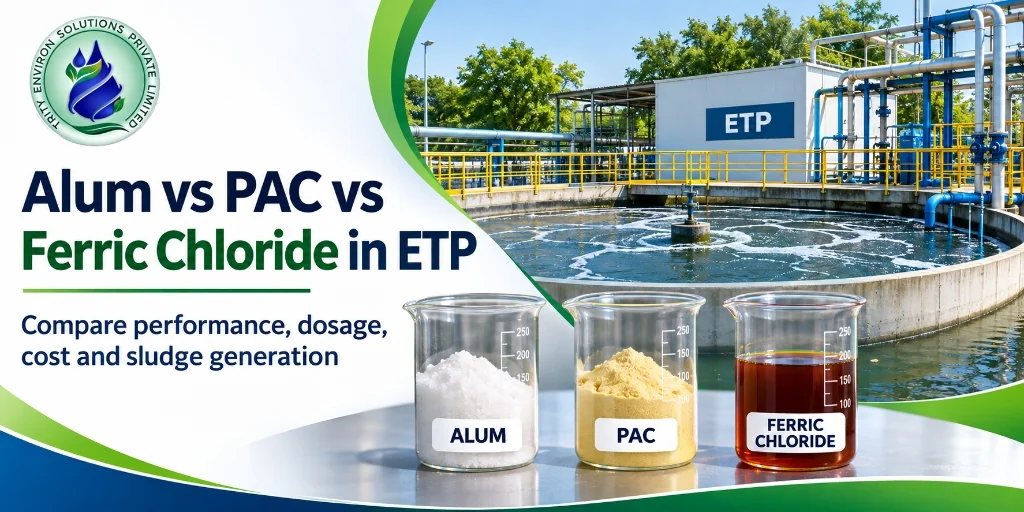
Alum vs PAC vs Ferric Chloride in ETP
Trity Enviro compares alum, PAC and ferric chloride for ETP and STP: pH range, alkalinity use, sludge, cost, polymer choice and how to run a jar test.

 ISO 9001:2015 & QCI Approved
Manual sampling and reactive maintenance used to be the norm at most treatment plants. In 2026, sensor networks feeding AI-driven analytics are becoming the default, and the results, in both compliance and cost, are measurable.
Speak directly with our senior environmental engineers for technical guidance, sizing calculations, or a tailored project proposal.
Call +91-9821030072 or email enquiry@trityenviro.com
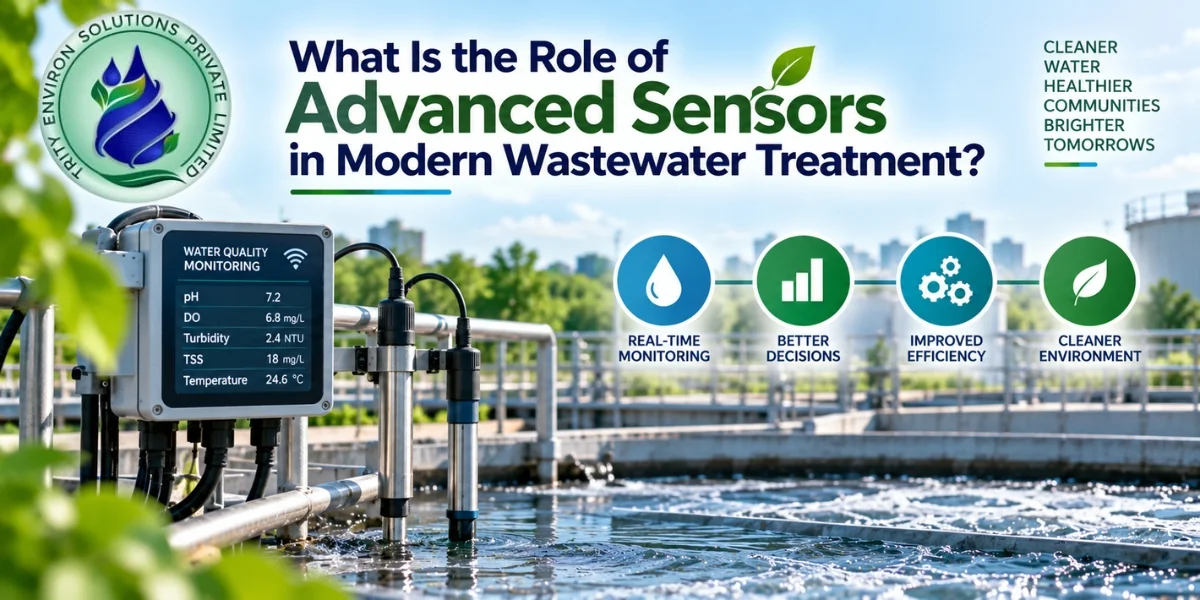
Common parameters include pH, dissolved oxygen, turbidity, conductivity, temperature, COD, BOD, and TSS, with industrial plants often adding oil and grease, TDS, TOC, and nutrient measurements depending on their specific wastewater composition.
Standard sensors generally cannot, but emerging technology combining laser-induced Raman and fluorescence spectroscopy with AI analysis has shown promise for real-time micropollutant detection, addressing a genuine gap in conventional monitoring capability.
Yes. An IoT-driven monitoring system field-tested at four industrial plants in Maharashtra demonstrated effective real-time contamination prevention, and a pharmaceutical plant project in Gujarat combining AI monitoring with Zero Liquid Discharge achieved a 96% reduction in discharge and 20% lower operating costs.
Documented industrial deployments using vibration and power-signature sensors for predictive maintenance have reported 30-35% fewer unplanned shutdowns, with broader industry analysis finding a 34% reduction in unplanned downtime overall.
A digital twin is a virtual, data-fed replica of a physical treatment plant that lets operators test process changes, simulate equipment failures, or model capacity upgrades without disrupting actual plant operations, reducing the risk involved in planning changes.
Trity Enviro compares alum, PAC and ferric chloride for ETP and STP: pH range, alkalinity use, sludge, cost, polymer choice and how to run a jar test.
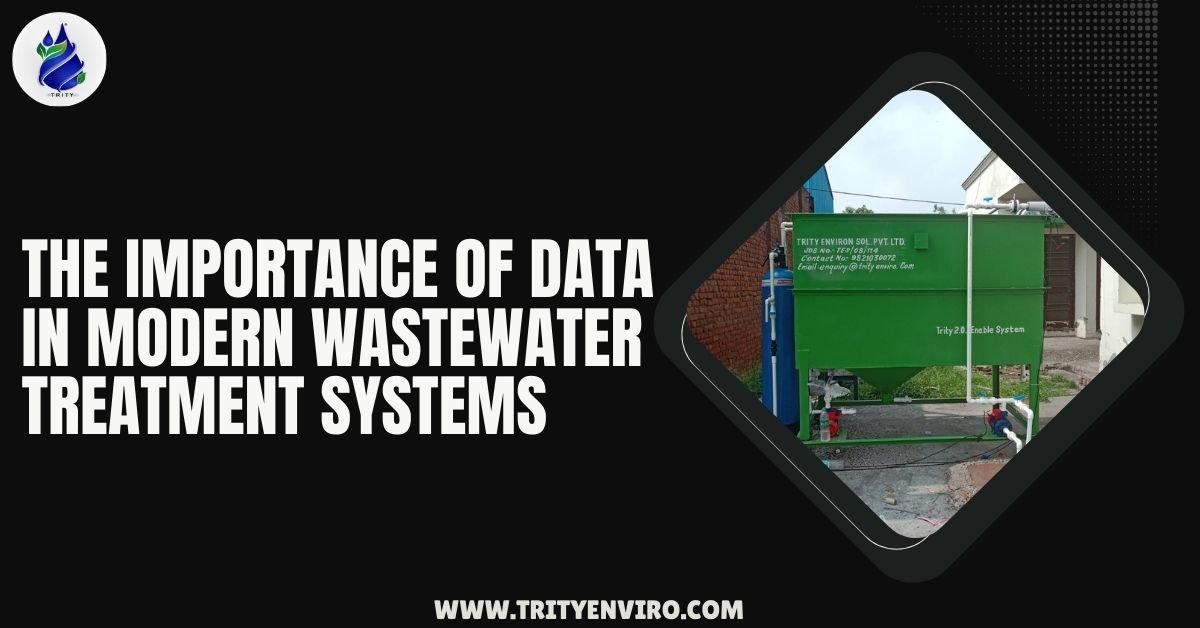
Explore how data-driven technologies improve operational efficiency, predictive maintenance, sustainability, and regulatory compliance in modern wastewater treatment systems.
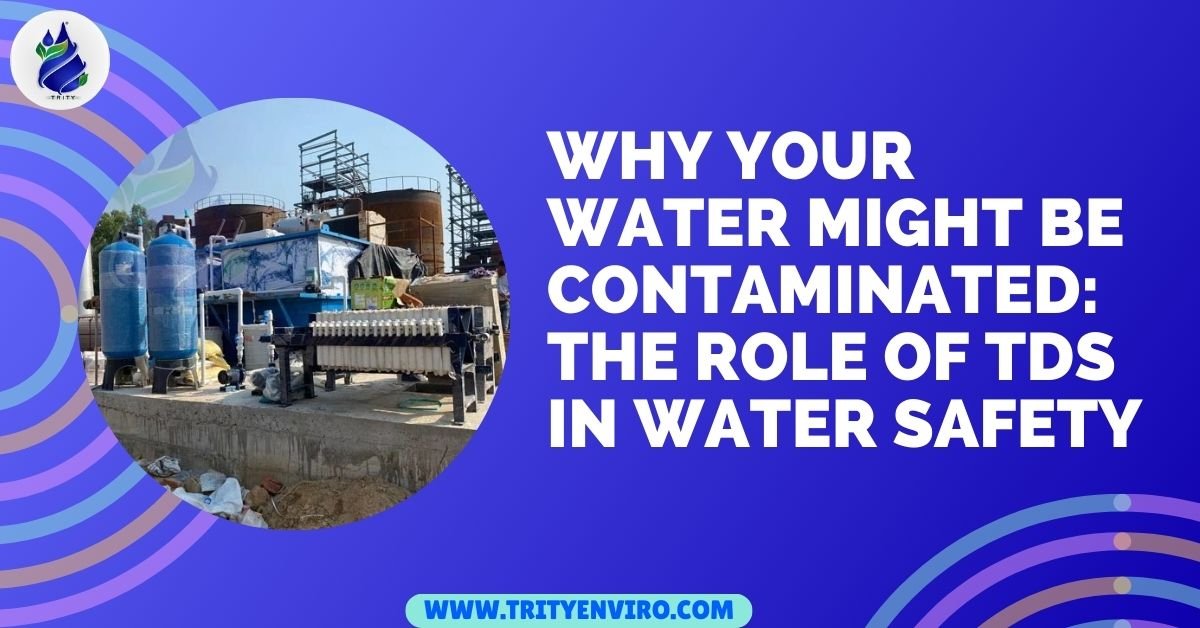
Learn how Total Dissolved Solids (TDS) affect water quality and safety. Understand TDS levels, risks, testing, and methods to ensure clean, safe water for your home.











Discuss your requirements with our engineering team and get practical guidance for your project.

