
ETPs and STPs: Bridging Water Scarcity With Sustainable Solutions
How ETPs and STPs address India's water scarcity crisis through reuse, biogas, and nutrient recovery, backed by real CPCB and NITI Aayog data.

 ISO 9001:2015 & QCI Approved
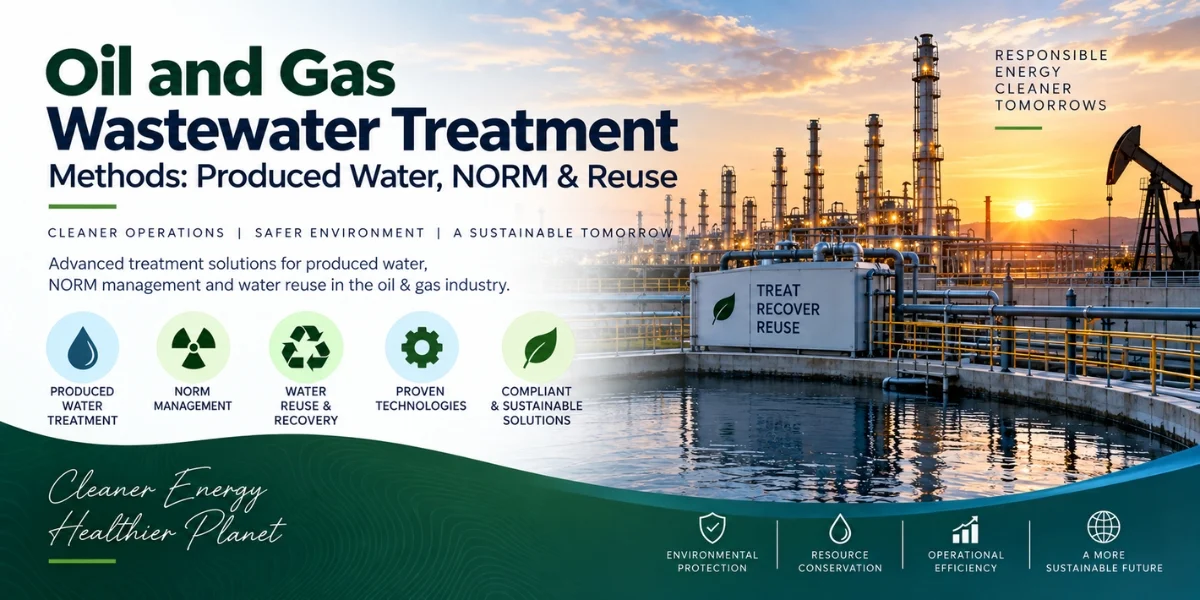
Produced water is the largest waste stream generated by the oil and gas industry, and treating it properly involves far more than standard biological treatment. This guide covers what makes oil and gas wastewater treatment genuinely different, and the specific methods used at each stage.
Speak directly with our senior environmental engineers for technical guidance, sizing calculations, or a tailored project proposal.
Call +91-9821030072 or email enquiry@trityenviro.com
Ans: Produced water is the water that comes to the surface alongside oil and gas during extraction, combining natural formation water with any water injected to aid recovery. It is the largest waste stream generated across the entire oil and gas industry and carries a distinct contaminant profile including hydrocarbons, high salinity, and sometimes naturally occurring radioactive materials.
Ans: Oil exists in produced water in three distinct forms, free, emulsified, and dissolved, each requiring a different removal approach. Free oil separates under gravity, emulsified oil needs coalescing media or flotation, and dissolved oil requires advanced methods like air stripping or activated carbon adsorption.
Ans: NORM stands for Naturally Occurring Radioactive Materials, which can be present in formation water from certain geological zones. Where present, NORM requires specialized handling and disposal protocols governed by radiological safety regulations, distinct from standard chemical or biological wastewater treatment.
Ans: Yes, and this is an increasing industry trend. With adequate treatment, including desalination through membrane filtration, produced water can be redirected toward agricultural irrigation or industrial reuse, particularly valuable in water-stressed oil-producing regions, rather than being injected into disposal wells as historically practiced.
Ans: Produced water frequently carries very high salinity from formation brine trapped in the reservoir. Reverse osmosis and other membrane filtration methods are commonly used to bring salinity down to a level suitable for safe discharge or beneficial reuse.
How ETPs and STPs address India's water scarcity crisis through reuse, biogas, and nutrient recovery, backed by real CPCB and NITI Aayog data.

How to cut ETP and STP energy costs with VFDs, DO optimization, and energy audits, real savings data showing up to 50% reduction potential.

Megacities face growing wastewater challenges. Innovative tech, strong policy, and public awareness are key to sustainable urban infrastructure solutions.











Discuss your requirements with our engineering team and get practical guidance for your project.

