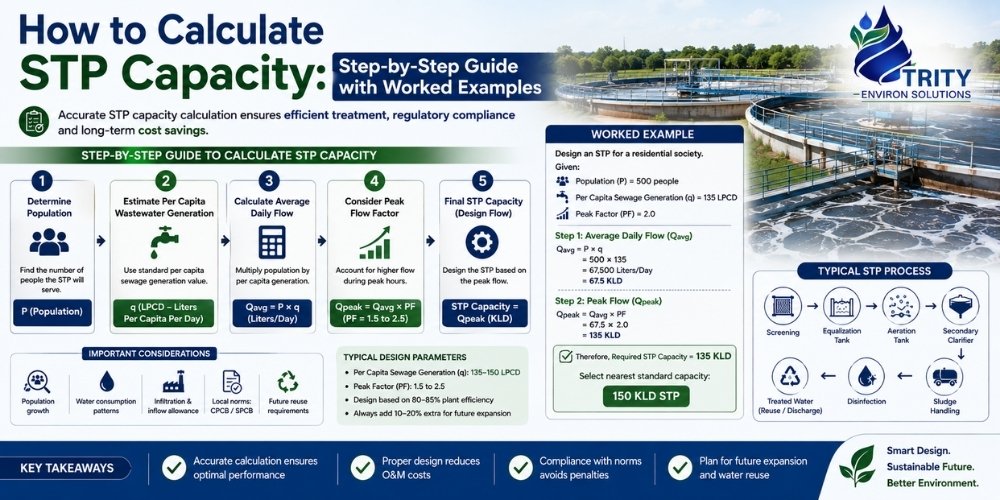
How to Calculate STP Capacity: Step-by-Step Guide with Worked Examples
Calculate STP capacity correctly with worked examples for residential, hotel, hospital, and industrial projects. CPHEEO-based formulas, peak factors, and tank sizing explained.

 ISO 9001:2015 & QCI Approved
RO technology has come a long way from a simple pressurized membrane. In 2026, the innovations actually moving the needle are happening at the membrane material level, in system automation, and in how RO integrates with the broader treatment train.

Speak directly with our senior environmental engineers for technical guidance, sizing calculations, or a tailored project proposal.
Call +91-9821030072 or email enquiry@trityenviro.com
Graphene oxide-based nanocomposite membranes are among the most significant current innovations, with research including work at India's Bhabha Atomic Research Centre showing over 30% higher water flux alongside improved salt rejection compared to conventional membranes.
Ultra-low-pressure RO uses advanced nanocomposite membranes that achieve strong salt rejection at operating pressures as low as 1-8 bar, far below conventional RO pressure requirements, directly reducing the pumping energy that drives much of RO's operating cost.
AI layered on top of IoT sensor data is used for predictive maintenance, catching early signs of fouling or equipment wear, and for real-time process optimization, automatically adjusting dosing and flow parameters to maintain consistent output quality and energy efficiency.
These are newer RO system configurations designed to achieve higher water recovery from challenging, high-salinity, or scaling-prone feed water than conventional single-pass RO, by cycling feed water through the membrane in a more controlled, staged process.
Improved high-recovery membrane staging allows RO to recover more water before the remaining concentrate moves to the evaporation and crystallization stages of a ZLD system, reducing the energy and cost burden of those downstream stages.
Calculate STP capacity correctly with worked examples for residential, hotel, hospital, and industrial projects. CPHEEO-based formulas, peak factors, and tank sizing explained.
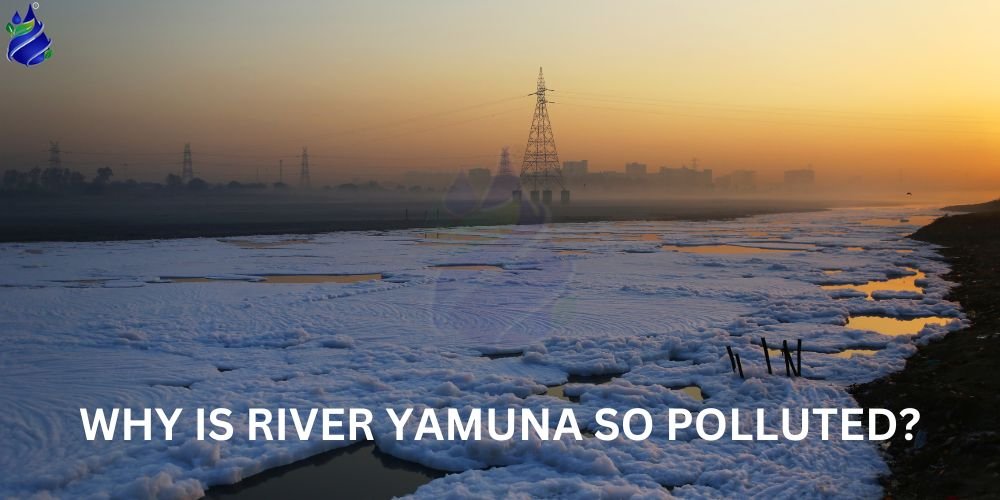
Why the Yamuna is so polluted: real CPCB data on sewage, industrial discharge, toxic froth, and why Delhi's 22 km stretch causes 80% of it.
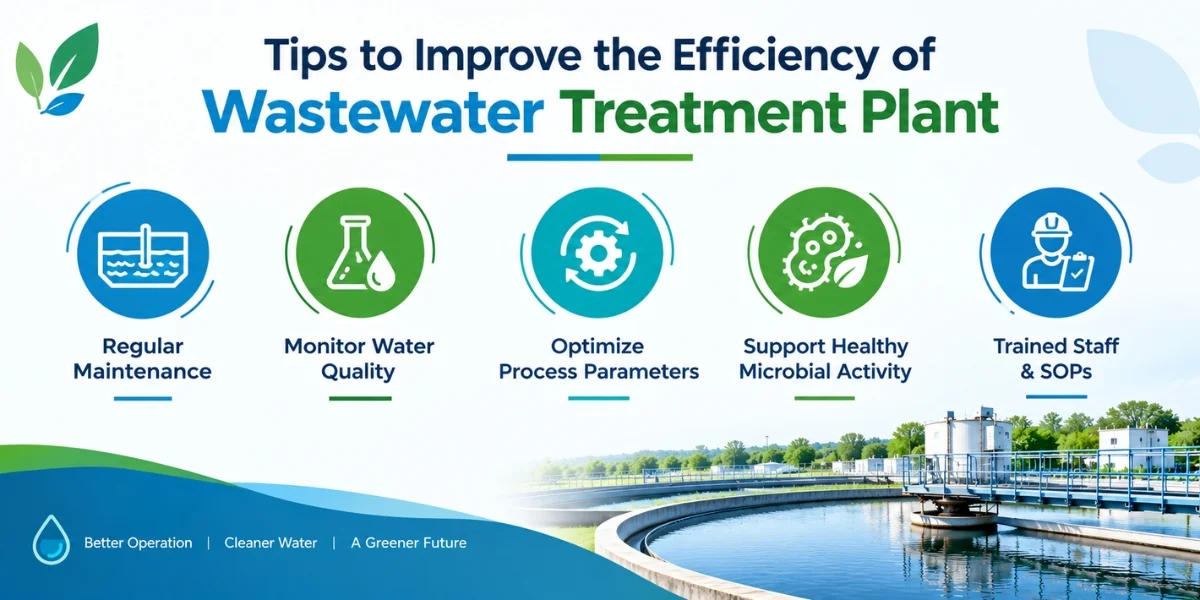
Practical tips to improve wastewater treatment plant efficiency, from energy audits to sludge and process control, from an experienced STP manufacturer.











Discuss your requirements with our engineering team and get practical guidance for your project.

