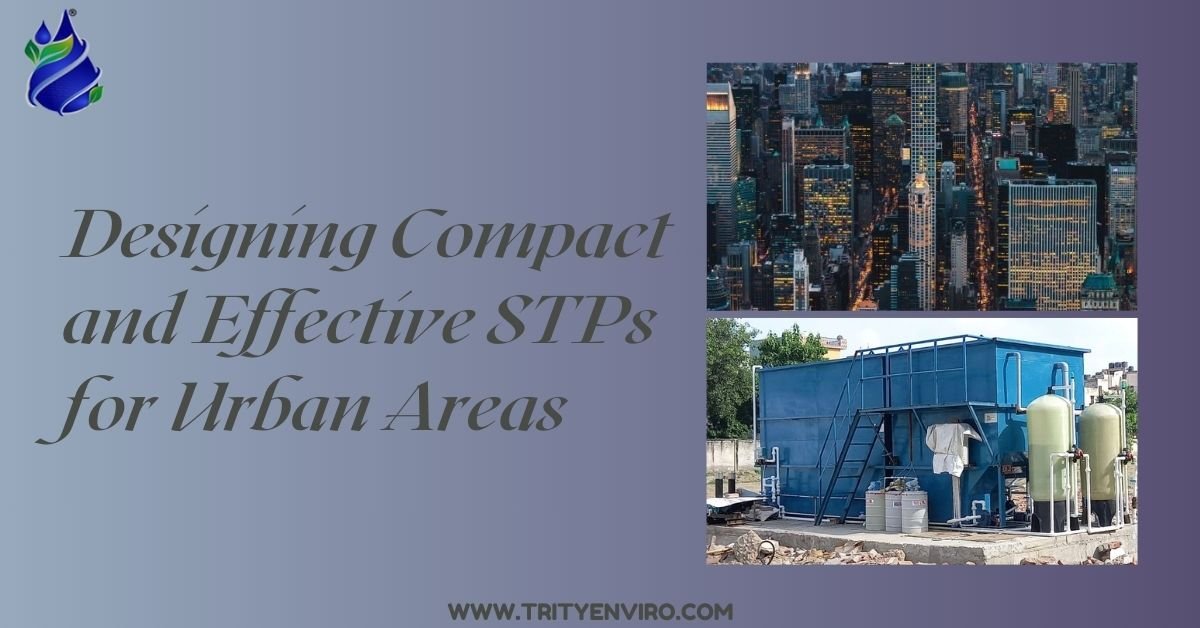
Compact STP Design Strategies That Actually Work in Dense Urban Sites
Compact STP design strategies for urban areas with real space-saving data: MBBR, MBR technology, basement integration, and odour control.

 ISO 9001:2015 & QCI Approved
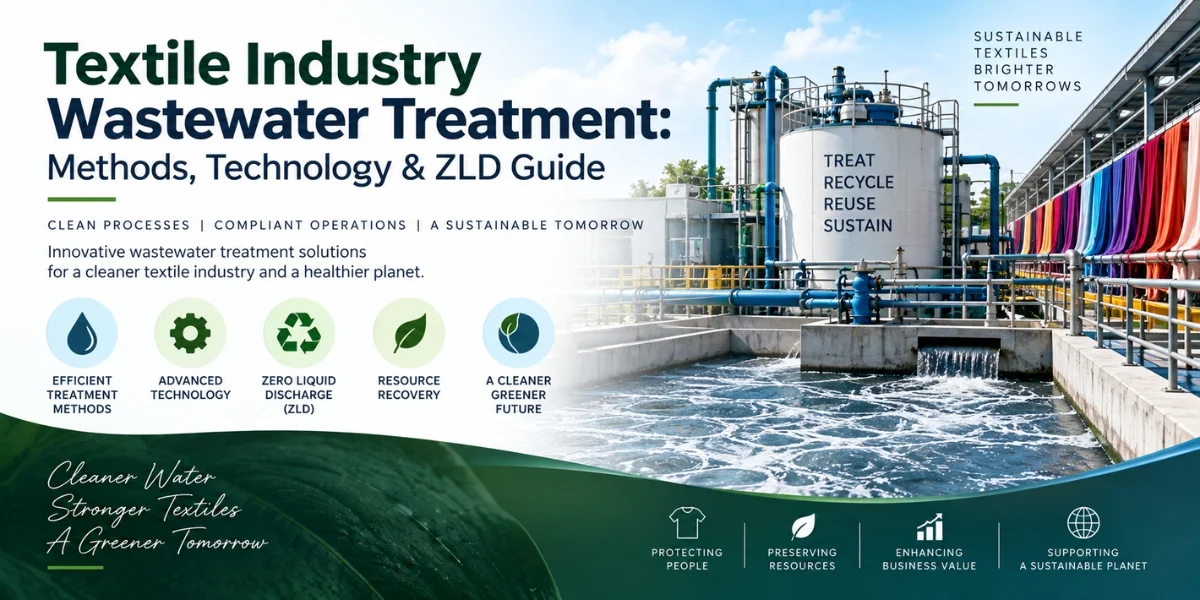
The textile industry is responsible for roughly a fifth of global clean water pollution, driven mainly by dye-heavy, chemically loaded wastewater from dyeing and finishing operations. This guide covers every major textile wastewater treatment method available today, and how to choose the right combination for your specific process.
Speak directly with our senior environmental engineers for technical guidance, sizing calculations, or a tailored project proposal.
Call +91-9821030072 or email enquiry@trityenviro.com
Ans: Textile effluent combines high organic load (BOD typically 700-2,000 mg/L), suspended solids, residual dye, and in some cases heavy metals, all within the same wastewater stream, and its exact composition varies significantly by fabric type and process, making a single generic treatment method insufficient on its own.
Ans: Electrocoagulation and Advanced Oxidation Processes (AOP), such as ozonation and Fenton's process, are among the most effective methods for breaking down stable, complex dye molecules that resist conventional biological treatment, particularly for modern aromatic and heterocyclic dyes.
Ans: ZLD combines multiple treatment methods to recover and reuse nearly all wastewater, minimizing liquid discharge. It is increasingly mandated for textile clusters in water-stressed regions, though it carries meaningfully higher capital and energy cost than standard treatment.
Ans: Yes. In a typical dyeing unit, only around 10% of effluent volume (the dye bath) carries high TDS and colour load, while the remaining 90% is lower-TDS wash water. Segregating these streams and treating each appropriately, rather than running everything through the same full treatment train, can meaningfully reduce both cost and advanced treatment infrastructure size.
Ans: Most large Indian textile clusters rely on Common Effluent Treatment Plants (CETPs) that treat combined effluent from multiple units, frequently paired with Zero Liquid Discharge systems to meet strict regional discharge norms in these water-stressed textile hubs.
Compact STP design strategies for urban areas with real space-saving data: MBBR, MBR technology, basement integration, and odour control.
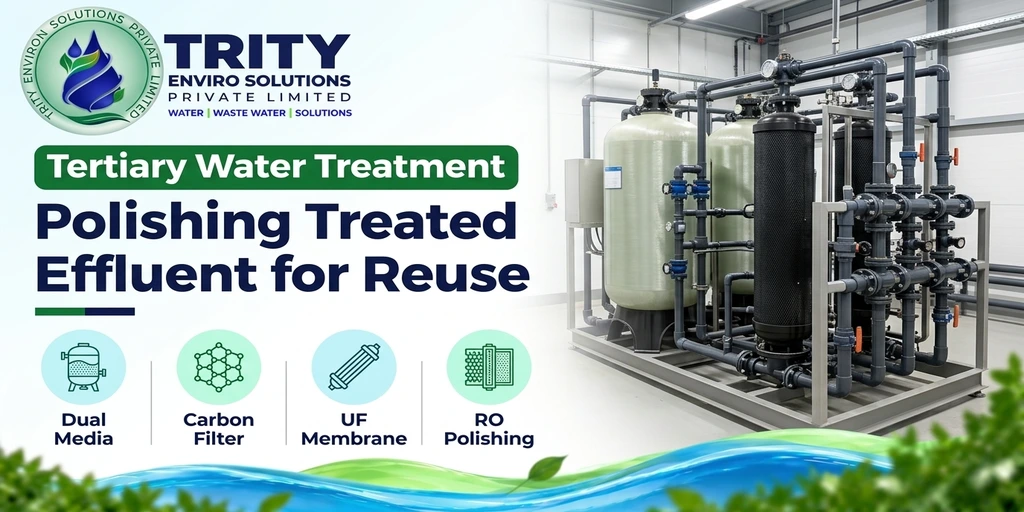
Is filtration enough to reuse treated wastewater? Learn when you need UF, RO, softening or disinfection, and how to match tertiary treatment to each reuse.
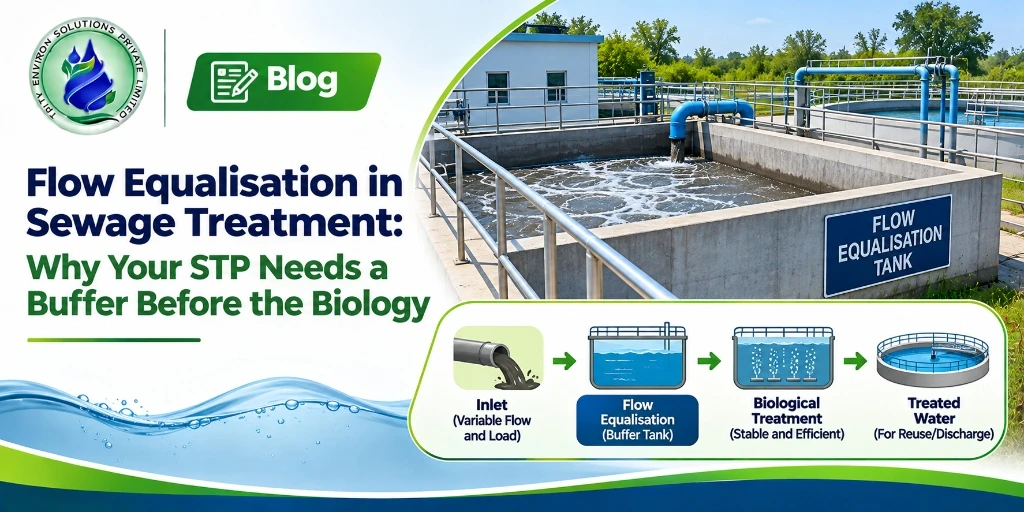
Why flow equalisation matters in sewage treatment: peak factor, 4-12 hour tank sizing, mixing, in-line vs off-line design and the shock loads it prevents.











Discuss your requirements with our engineering team and get practical guidance for your project.

