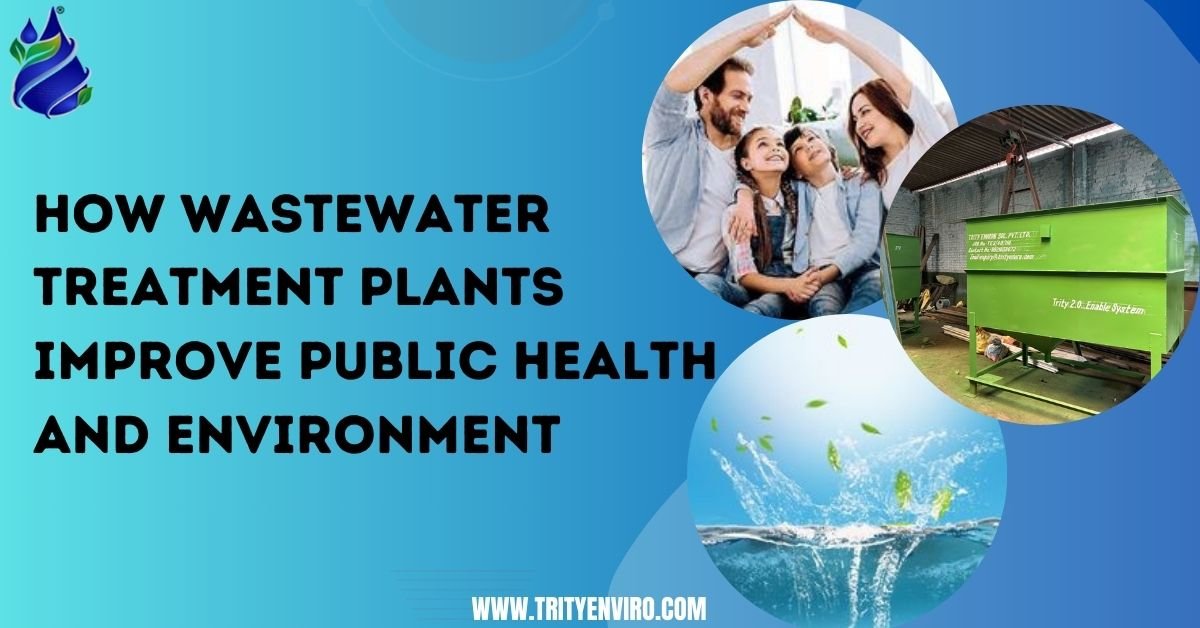
How Wastewater Treatment Plants Improve Public Health and Environment
Learn how wastewater treatment plants safeguard public health, protect ecosystems, and ensure cleaner water through innovative processes and advanced technology.

 ISO 9001:2015 & QCI Approved
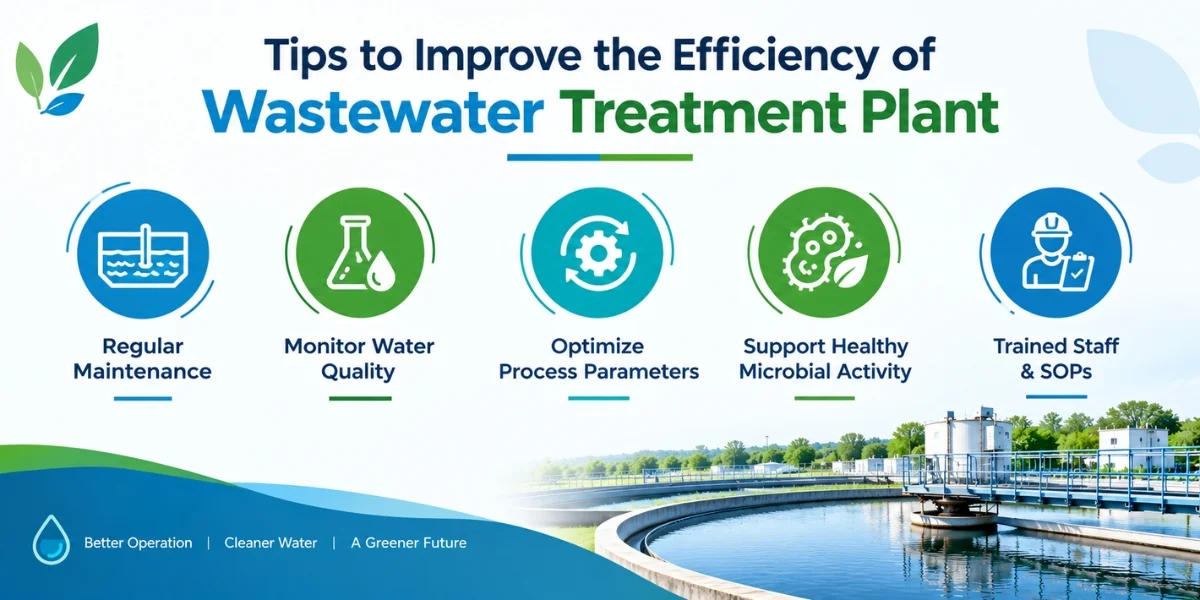
Most wastewater treatment plant efficiency problems are not visible until they show up as a higher power bill, a compliance flag, or a plant that just cannot keep up with demand anymore. This guide covers the practical, engineering-backed steps that actually improve efficiency, not just generic advice to "maintain your equipment."
Speak directly with our senior environmental engineers for technical guidance, sizing calculations, or a tailored project proposal.
Call +91-9821030072 or email enquiry@trityenviro.com
Ans: A comprehensive efficiency audit should always come first. It identifies specific inefficiencies, whether in pumping, sludge handling, or biological treatment, so improvement efforts target the actual bottleneck rather than following generic advice.
Ans: Variable frequency drives (VFDs) on pumps and blowers, high-efficiency motors, and fine bubble aeration diffusers are among the most effective energy efficiency upgrades, since aeration and pumping typically account for the largest share of a plant's total energy use.
Ans: Yes, adding bio-carrier media to an existing activated sludge tank, the principle behind MBBR technology, increases biological treatment capacity within the same tank footprint, avoiding the cost and disruption of a complete civil rebuild.
Ans: Conventional sludge thickening often produces sludge at only 0.5-3% solids, while upgraded high-density thickening technology can achieve 6% or higher. Since disposal cost is tied to sludge volume, this difference can meaningfully reduce ongoing disposal expense.
Ans: A well-trained operator directly influences treatment consistency, energy usage, and how quickly small process deviations are caught and corrected, often having as much impact on overall plant efficiency as the equipment itself.
Ans: Look for an experienced STP and ETP manufacturer that offers both new plant design and retrofit expertise, such as MBBR bio-carrier upgrades and sludge dewatering improvements, backed by ongoing AMC and O&M support. Trity Environ Solutions is an ISO 9001:2015 certified manufacturer offering exactly this combination pan-India.
Learn how wastewater treatment plants safeguard public health, protect ecosystems, and ensure cleaner water through innovative processes and advanced technology.
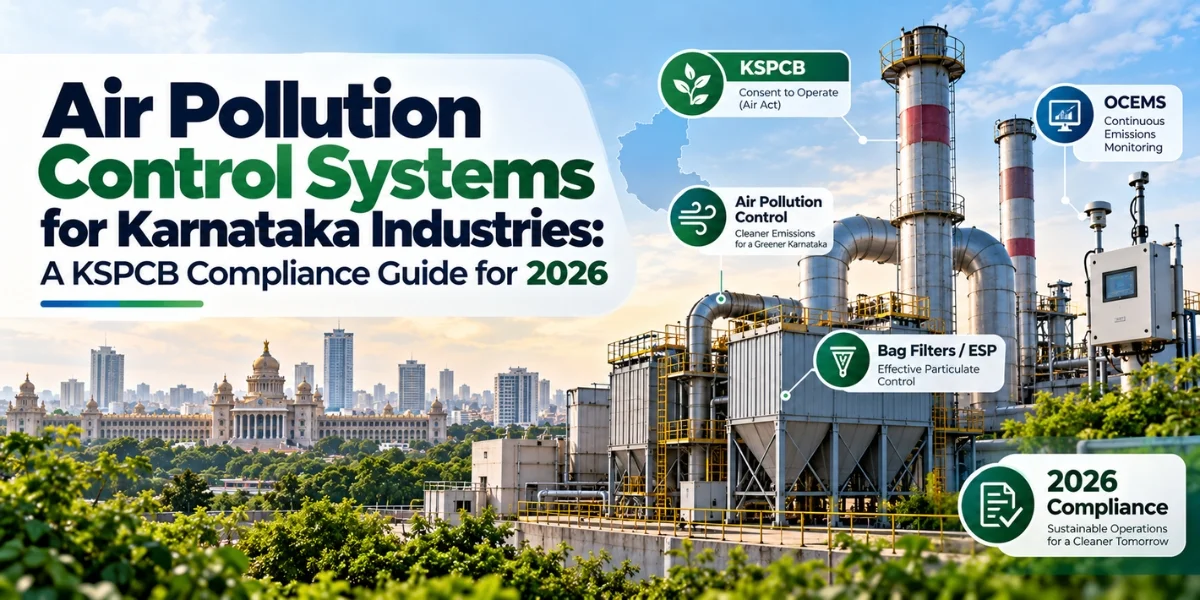
Plan air pollution control for your Karnataka unit: KSPCB consent limits, DG set retrofits, bag filters, scrubbers, monitoring and upgrade costs explained.

What Total Suspended Solids (TSS) actually measures, how it's tested, why it matters for aquatic life, and standard reference levels.











Discuss your requirements with our engineering team and get practical guidance for your project.

