
Fate of Pharmaceuticals in ETPs: Degradation vs. Persistence
Explore pharmaceutical degradation in ETPs. Learn how persistent drugs, treatment tech, and microbial activity impact wastewater treatment efficiency.

 ISO 9001:2015 & QCI Approved
An authoritative engineering guide on hospital STP design, addressing infectious waste segregation, biological secondary treatment, terminal dual-stage disinfection, and regulatory compliance in India.
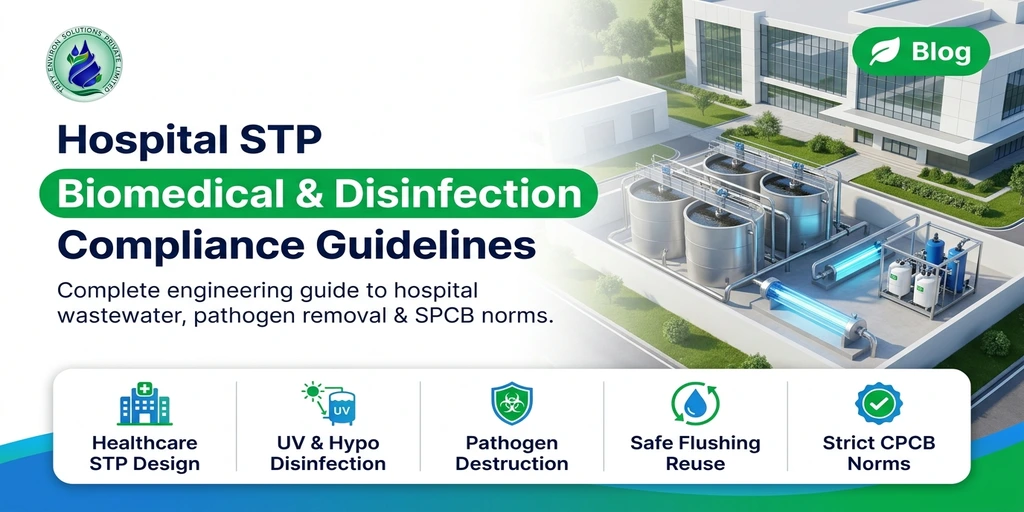
Wastewater generated by healthcare establishments—including multi-specialty hospitals, research institutes, diagnostic laboratories, and nursing homes—differs significantly from standard domestic sewage. While domestic sewage consists primarily of fecal matter and wash water, hospital wastewater carries pathogenic microorganisms, pharmaceutical residues (antibiotics, hormones, and analgesics), radioactive isotopes, chemical disinfectants, and heavy metals.
Discharging untreated or poorly disinfected hospital sewage into municipal sewer networks spreads multi-drug resistant (MDR) superbugs and contaminates ground and surface water tables. Recognizing these risks, the Central Pollution Control Board (CPCB) and State Pollution Control Boards (SPCBs) under the Bio-Medical Waste Management Rules, 2016 mandate that healthcare facilities must treat and disinfect all liquid waste on-site before disposal or secondary reuse.
A dedicated Hospital Sewage Treatment Plant (STP) incorporates primary segregation, robust biological oxidation (MBBR or MBR), and multi-barrier tertiary disinfection to neutralize biological and chemical hazards.
The most crucial step in hospital wastewater engineering is preventing hazardous chemical and radioactive wastes from reaching the general STP: * Nuclear Medicine Wastes: Liquid effluents containing radioisotopes (e.g., Iodine-131, Technetium-99m) must be routed into specialized lead-shielded delay-and-decay holding tanks until radiation drops below clearance levels. * Microbiology and Pathological Labs: Highly infectious specimens, blood samples, and culture media must undergo chemical pre-treatment (1% to 2% sodium hypochlorite for 30 minutes) or thermal autoclaving at the laboratory source before entering the general drain. * General Wards, Pantries, and Toilets: Standard non-infectious greywater and blackwater route directly into the hospital STP equalisation tank.
Hospitals use extensive volumes of biocides, quaternary ammonium compounds (QACs), phenol derivatives, and bleach for floor cleaning and equipment sterilization. If dumped in large slug batches, these disinfectants severely shock and kill the nitrifying bacteria in biological aeration tanks. Properly sized equalisation tanks (minimum 8 to 12 hours hydraulic retention time) with continuous air mixing are vital to dilute biocide spikes.
MBBR is widely favoured for mid-to-large hospitals due to its operational stability. High-surface-area virgin polypropylene carriers (500 to 1200 m2/m3) remain in suspension in the aeration tank, supporting a dense, multi-layer biofilm. * Key Benefit: The attached biofilm protects slow-growing nitrifying bacteria from biocide shocks and load variations, ensuring consistent BOD, COD, and ammoniacal nitrogen removal even during disinfectant washing hours.
MBR combines activated sludge aeration with submerged microfiltration/ultrafiltration membranes (pore size 0.04 to 0.1 microns), replacing secondary clarifiers entirely. * Key Benefit: MBR provides a physical barrier against all suspended solids, bacteria, and large viruses, yielding ultra-clean permeate water directly suitable for HVAC cooling tower makeup and toilet flushing in land-constrained city hospitals.
Terminal disinfection is the defining feature of a hospital STP. Standard chlorination alone is often inadequate against spore-forming pathogens and cysts. Modern hospital STPs employ a dual-stage disinfection system:
| Parameter | Untreated Hospital Sewage | Treated Effluent (Trity STP) | CPCB Discharge Norms |
|---|---|---|---|
| pH | 6.0 - 8.5 | 7.0 - 8.0 | 6.5 - 9.0 |
| Biochemical Oxygen Demand (BOD5) | 200 - 450 mg/L | < 10 mg/L | 30 mg/L (or 10 mg/L for reuse) |
| Chemical Oxygen Demand (COD) | 450 - 900 mg/L | < 50 mg/L | 250 mg/L (or 50 mg/L for reuse) |
| Total Suspended Solids (TSS) | 150 - 400 mg/L | < 5 mg/L (MBR) / < 10 (MBBR) | 20 mg/L |
| Oil & Grease | 20 - 60 mg/L | < 2 mg/L | 10 mg/L |
| Bio-assay Test | Failed (Toxic) | 90% survival of fish after 96 hrs | 90% survival after 96 hrs |
| Fecal Coliform | 10^6 - 10^8 MPN/100ml | < 100 MPN/100ml | < 1,000 MPN/100ml |
Trity Environ Solutions has engineered and commissioned specialized hospital STPs for government medical colleges, private hospital chains, and cancer institutes across India.
Speak directly with our senior environmental engineers for technical guidance, sizing calculations, or a tailored project proposal.
Call +91-9821030072 or email enquiry@trityenviro.com
Explore pharmaceutical degradation in ETPs. Learn how persistent drugs, treatment tech, and microbial activity impact wastewater treatment efficiency.
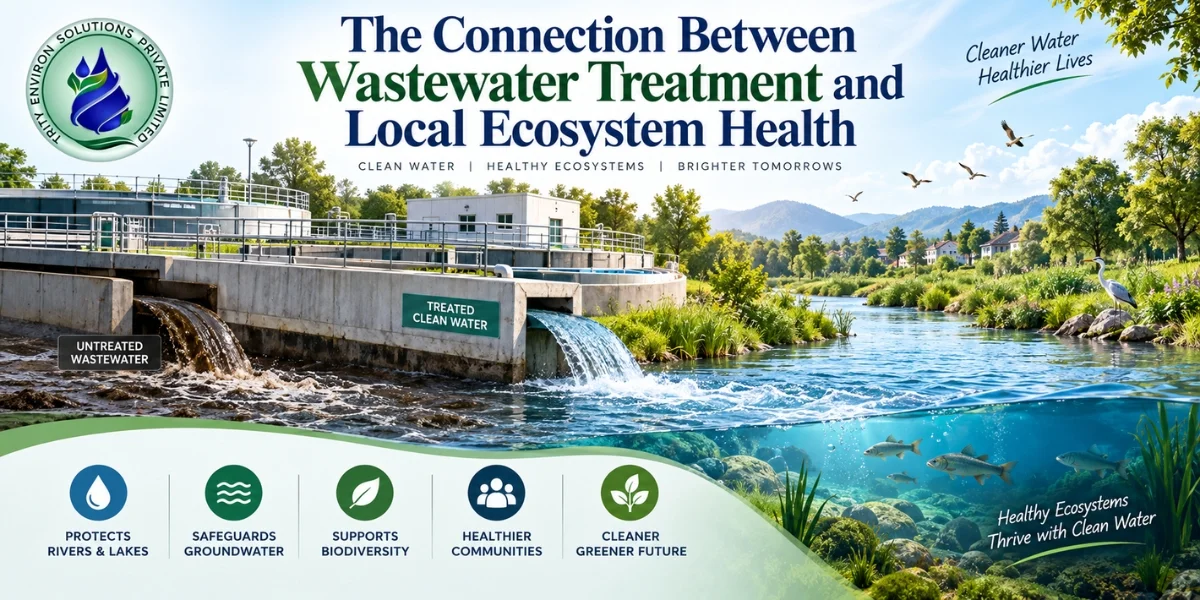
How untreated wastewater damages local ecosystems through eutrophication, and how proper treatment from a trusted STP manufacturer restores water quality.
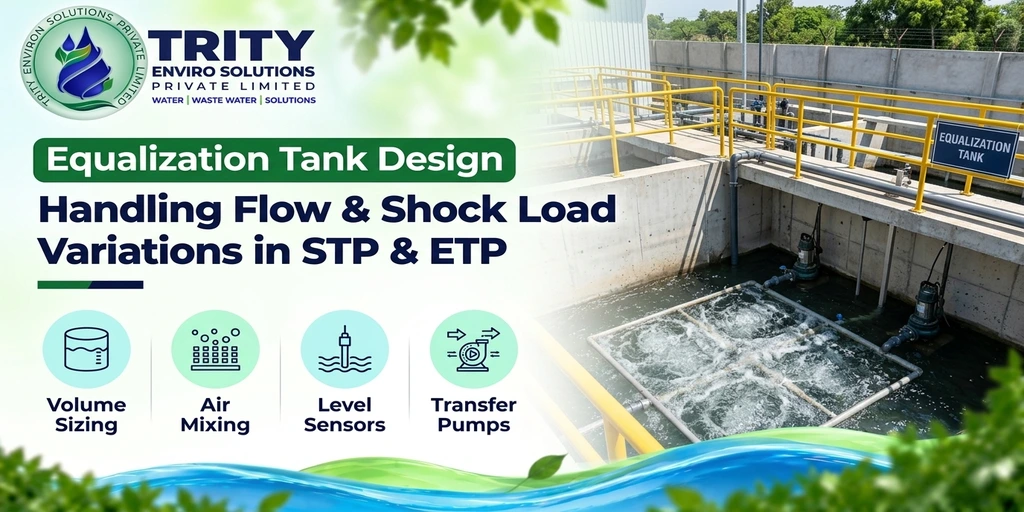
Design an equalization tank for your STP or ETP: size volume from flow variation, plan mixing and aeration, pH control and layout, with a worked example.











Discuss your requirements with our engineering team and get practical guidance for your project.

