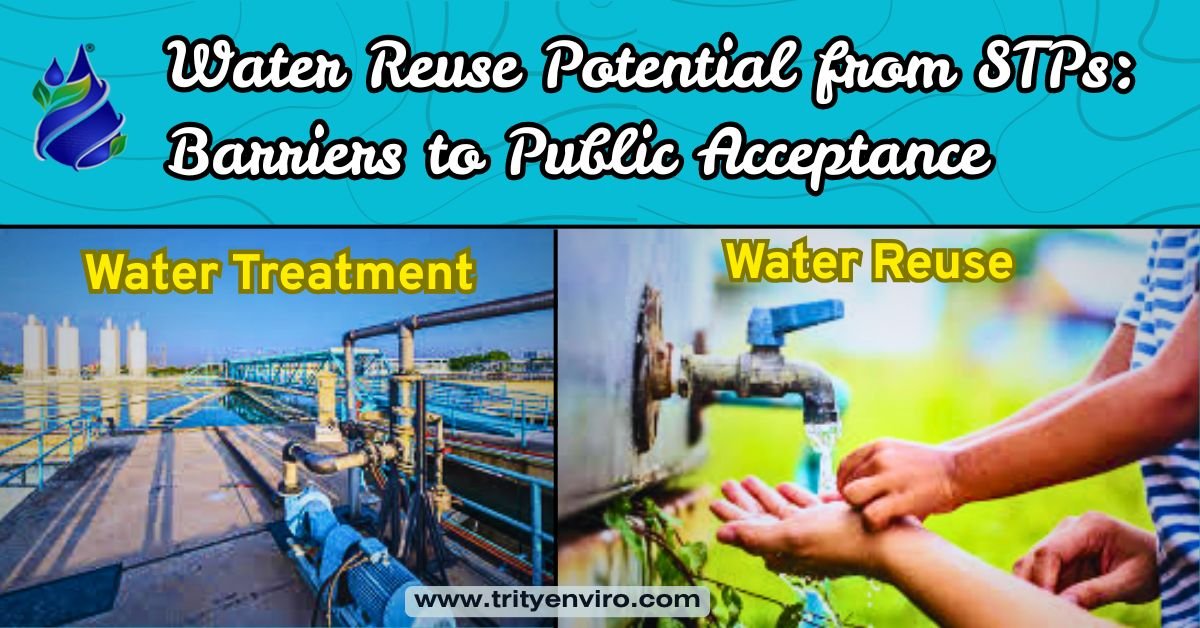
Water Reuse Potential from STPs: Barriers to Public Acceptance
Explore water reuse from sewage treatment plants (STPs), its benefits, and why public acceptance remains a key barrier to widespread adoption.

 ISO 9001:2015 & QCI Approved
Discover how to choose the best water softener in India. Learn about types, features, benefits, and expert tips to ensure soft, clean water for your home or business.
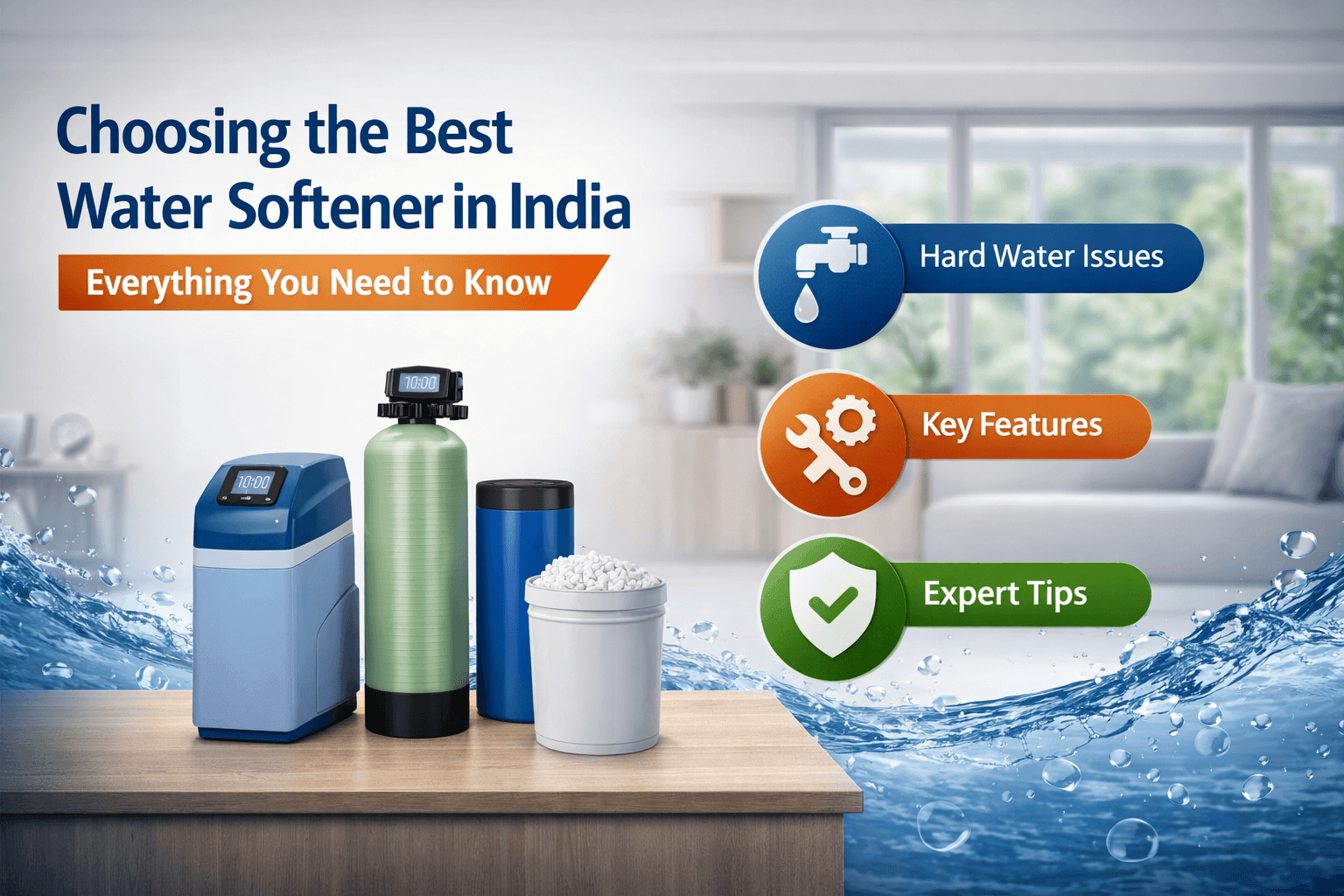
Hard water is a common problem in many parts of India, affecting households and industries alike. From reducing the efficiency of appliances to leaving white scale deposits on utensils, hard water can be more than just an inconvenience—it can lead to long-term damage and higher maintenance costs. Choosing the right water softener is the key to solving this problem and ensuring clean, soft, and safe water for everyday use. In this guide, we’ll explore everything you need to know about water softeners in India, from types and benefits to key features and buying tips.
Hard water contains high levels of minerals, mainly calcium and magnesium. While these minerals are not harmful to health, they can create several issues: scale buildup in pipes, water heaters, and appliances; reduced efficiency of washing machines and dishwashers; poor lathering of soaps and detergents; white stains on dishes and bathroom fittings. Softening water helps remove these minerals, protecting your plumbing system and appliances while improving water taste.
A water softener is a device that removes or reduces calcium and magnesium from water. It works through a process called ion exchange, where hard water ions are replaced with sodium or potassium ions. This results in softer water that is gentler on appliances, skin, and hair.
Choosing the right type depends on your water hardness level, usage, and budget. Here are the most common types:
1. Salt-Based Ion Exchange Softeners – Most widely used in India, uses resin beads to remove hardness minerals, needs periodic salt refill, highly effective for domestic use.
2. Salt-Free Water Softeners – Uses potassium or template-assisted crystallization (TAC), does not remove minerals completely but prevents scale buildup, low maintenance, ideal for people concerned about sodium intake.
3. Reverse Osmosis (RO) with Softening – Primarily used for drinking water purification, removes hardness and other impurities, often combined with UV filtration for safe drinking water, suitable for areas with very high TDS levels.
When selecting a water softener, keep the following points in mind: water hardness level (test your water to know the hardness in ppm), capacity (match the softener’s capacity with your daily water usage), regeneration type (manual, semi-automatic, or fully automatic), maintenance (ease of salt refill and cleaning requirements), and warranty and support (choose brands with good service networks in India).
Protects plumbing and water-using appliances from scale damage, improves soap lathering and detergent efficiency, reduces skin dryness and hair damage, enhances taste and quality of drinking water, and saves energy by improving water heater efficiency.
Check water reports to know hardness, TDS, and iron content, compare brands and reviews for trusted service, consider space and installation, think long-term as a slightly higher upfront cost may save money later, and ask about regeneration options (fully automatic systems save time and effort).
Installing the right water softener can transform your daily life, protect appliances, and improve the quality of water in your home or business. By understanding your water needs and considering the type, capacity, and features of available water softeners, you can make an informed choice. Soft water isn’t just a luxury—it’s an investment in convenience, health, and long-term savings. Choose wisely, and enjoy the benefits of clean, soft water every day.
Explore water reuse from sewage treatment plants (STPs), its benefits, and why public acceptance remains a key barrier to widespread adoption.
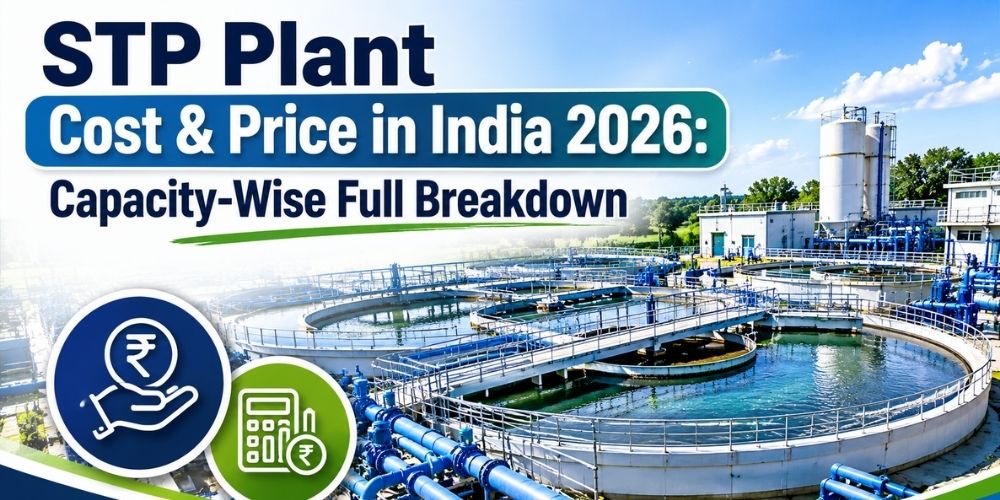
Get realistic STP plant price in India 2026. Capacity-wise cost breakdown from 50 KLD to 1000 KLD, technology comparison, hidden costs & free quotation.
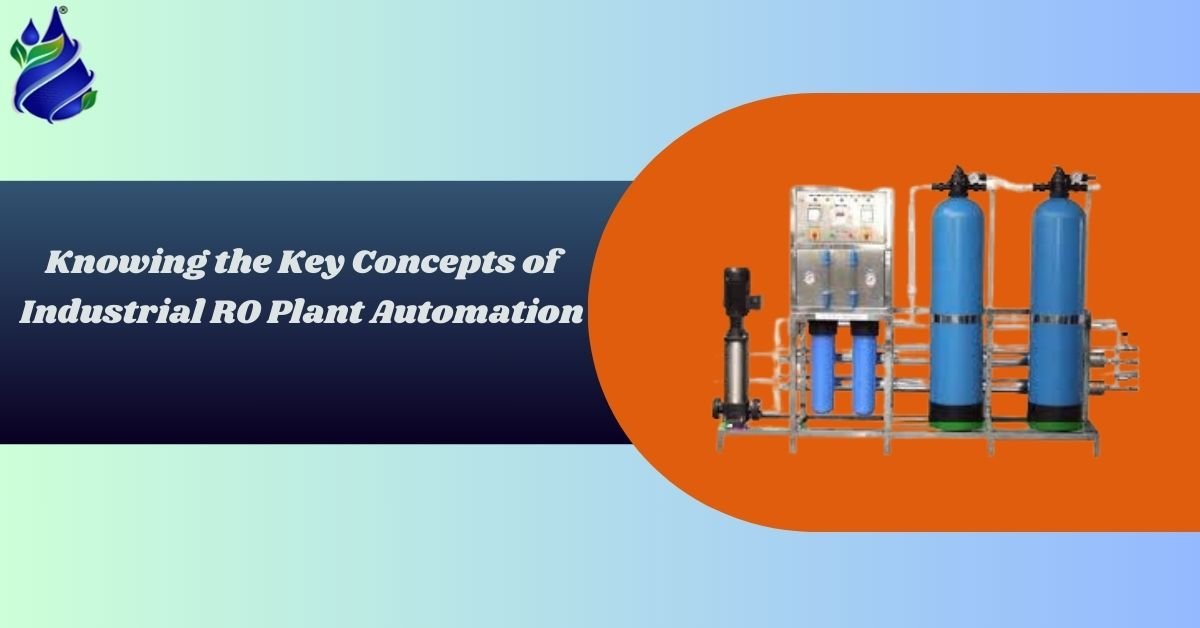
Explore the key concepts of industrial RO plant automation, including PLCs and sensors. Learn how automation enhances water purification efficiency and reduces errors.




Discuss your requirements with our engineering team and get practical guidance for your project.