How STPs and ETPs Help in Mitigating Climate Change
Explore how STPs and ETPs help scale wastewater treatment systems to address challenges of urbanization, funding, space, and regulations in growing cities.

 ISO 9001:2015 & QCI Approved
A complete engineering design guide for automobile service station ETPs, detailing oil-water separation, grit removal, pressure filtration, and closed-loop water reuse for SPCB compliance.
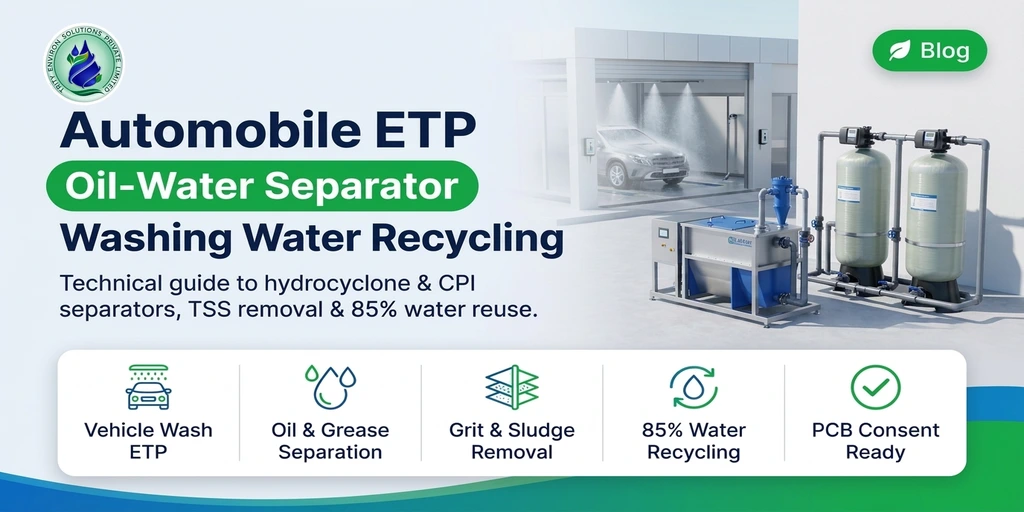
Automobile service centers, authorized dealership workshops, commercial truck wash stations, and bus depots consume vast amounts of fresh water—ranging from 150 to 300 liters per passenger vehicle wash. The resulting effluent is heavily contaminated with free and emulsified motor oil, diesel fuel, engine degreasers, clay mud, abrasive road grit, and heavy metals from brake pads.
Under State Pollution Control Board (SPCB) guidelines, discharging untreated vehicle wash water into storm drains or soak pits is strictly illegal. Mineral oil forms an impervious sheen over water bodies, blocking oxygen transfer, while suspended grit chokes drainage pipes. Furthermore, rising municipal water tariffs and groundwater extraction restrictions make high-recovery washing water recycling systems an economic necessity.
A modern Automobile Service Station ETP integrates gravity grit settling, high-efficiency Oil-Water Separation (OWS/CPI), chemical flocculation, and tertiary multi-media filtration, enabling service centers to recycle up to 80% to 90% of wash water continuously.
Washing bays channel runoff into an open multi-compartment sedimentation pit: * Grit Chamber: Coarse gravel, mud, and sand settle by gravity under laminar flow conditions ($<0.3\text{ m/s}$ velocity), preventing abrasive damage to downstream pumps. * Coarse Oil Skimmer: Free floating oil accumulates on the surface and is continuously removed using a motorized belt or disc oil skimmer into a waste oil drum.
Fine oil droplets (<150 microns) do not separate quickly in simple pits. An engineered Corrugated Plate Interceptor (CPI) or coalescing media pack accelerates separation: * Wastewater flows through inclined oleophilic polypropylene plate packs angled at 45° to 60°. * Rising oil droplets coalesce along the underside of plates, rapidly migrating upward to form a floating oil layer, while solids slide downward into the sludge hopper. * Efficiency: Reduces free oil & grease from >300 mg/L down to <15 mg/L.
Engine shampoos and surfactants emulsify oil into stable micro-droplets that resist physical separation. * Dosing Poly-Aluminium Chloride (PAC) or Alum neutralizes surface charges and breaks surfactant emulsions. * Dosing an organic polyelectrolyte agglomerates colloidal particles and emulsified oil into dense flocs, which are separated in a high-rate tube settler clarifier.
To reuse treated water for high-pressure underbody and exterior vehicle washing, effluent must be crystal clear and free of abrasive particles that could scratch car paintwork:
| Parameter | Raw Car Wash Effluent | After CPI Separator | After Full Recycling ETP | SPCB Discharge Norms |
|---|---|---|---|---|
| pH | 6.0 - 9.5 | 6.8 - 7.8 | 7.0 - 7.5 | 6.5 - 8.5 |
| Total Suspended Solids (TSS) | 500 - 2,500 mg/L | 100 - 250 mg/L | < 10 mg/L | 100 mg/L |
| Oil and Grease (FOG) | 100 - 600 mg/L | < 15 mg/L | < 2 mg/L | 10 mg/L |
| Chemical Oxygen Demand (COD) | 400 - 1,200 mg/L | 150 - 350 mg/L | < 50 mg/L | 250 mg/L |
| Biochemical Oxygen Demand (BOD5) | 100 - 350 mg/L | 50 - 120 mg/L | < 15 mg/L | 30 mg/L |
| Recycle Suitability | Unusable | Coarse Wash only | 100% Washing Reuse | N/A |
Trity Environ Solutions manufactures compact, automated, skid-mounted vehicle wash water recycling plants operating across authorized automotive service centers in India.
Speak directly with our senior environmental engineers for technical guidance, sizing calculations, or a tailored project proposal.
Call +91-9821030072 or email enquiry@trityenviro.com
Explore how STPs and ETPs help scale wastewater treatment systems to address challenges of urbanization, funding, space, and regulations in growing cities.
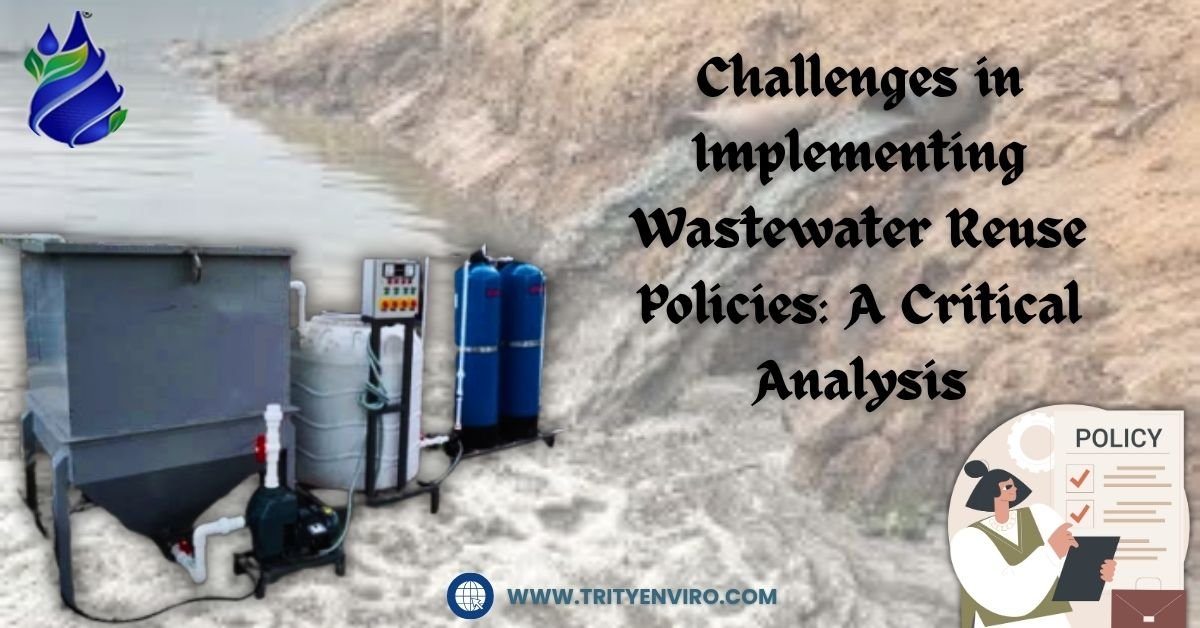
Explore the key challenges in implementing wastewater reuse policies, including regulatory hurdles, infrastructure limitations, and public awareness issues, and discover strategies for effective policy adoption.
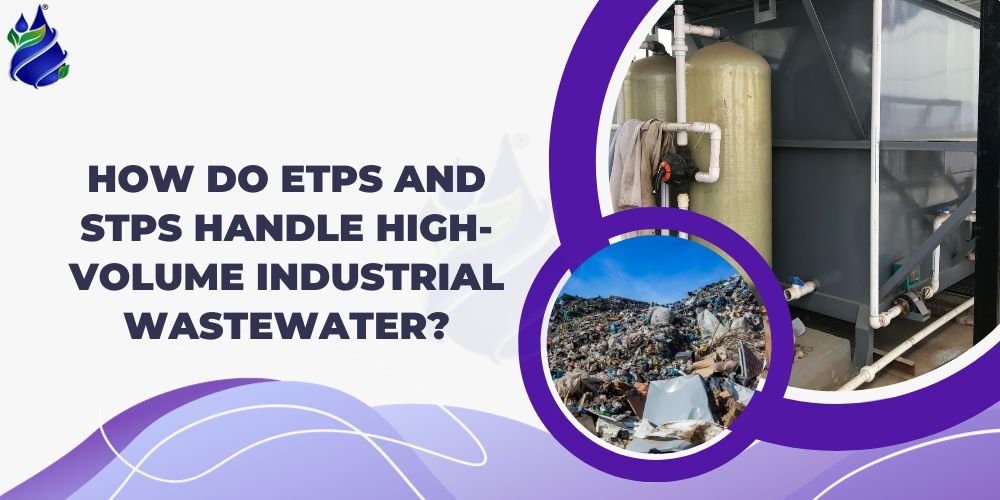
How ETPs and STPs manage extreme-volume industrial wastewater: equalization, advanced primary treatment, MBR, and modular scaling design.











Discuss your requirements with our engineering team and get practical guidance for your project.

