The Scale of India's Biomedical Waste Problem
Biomedical waste is any waste generated during the diagnosis, treatment, immunisation, or research activities involving humans or animals, including needles, syringes, contaminated dressings, expired medicines, and body fluids.
The scale, and the gap, is significant:
- India generates approximately 700 tonnes per day of biomedical waste
- Only around 640 tonnes per day gets treated, despite a combined national treatment capacity of 1,590 tonnes per day
- During COVID-19, peak generation reached 250 tonnes per day of pandemic-specific waste alone, on top of the roughly 1,000 tonnes per day of total waste India generates
- India's biomedical waste market is projected to grow at 7-8% annually, meaning this gap will widen further without deliberate intervention
The gap between installed capacity and actual treatment volume is worth sitting with for a moment, since it mirrors a pattern seen across other Indian environmental infrastructure sectors: the country has, on paper, built enough treatment capacity to handle its biomedical waste generation with meaningful headroom to spare. What's missing is consistent utilization of that capacity, largely because waste isn't reliably collected, segregated, and routed to the facilities equipped to handle it, rather than any fundamental shortage of treatment infrastructure itself.
What happens when segregation fails
The regulatory framework
- Biomedical Waste Management Rules 2016
- Common Biomedical Waste Treatment Facilities
The lesson from COVID-19
The Four-Category Classification System
Yellow, Red, White, and Blue Categories
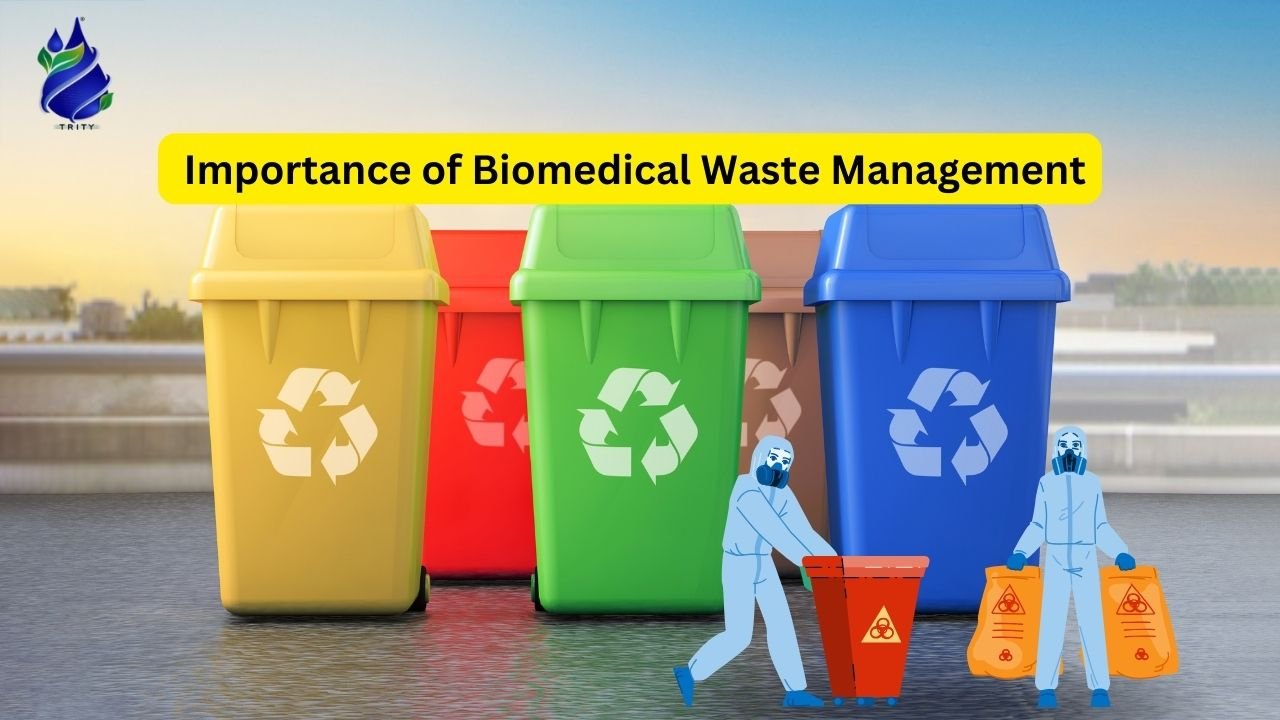
The Biomedical Waste Management Rules, 2016, sort healthcare waste into four categories, each with its own colour code and handling protocol:
- Yellow: Human and animal anatomical waste, soiled waste (dressings, bedding), expired medicines, and chemical waste
- Red: Contaminated recyclable, non-chlorinated plastics, tubing, bottles, catheters, and IV sets
- White: Sharps, including needles, scalpels, and metal waste
- Blue: Glass waste and metallic body implants
This is a deliberate simplification from an earlier, more complicated 10-category system, specifically implemented to make correct segregation easier and more consistent across healthcare facilities of every size.
What Happens When Segregation Fails
Improper segregation isn't a minor procedural lapse, it has direct, documented consequences:
- Mixing with municipal solid waste: When biomedical waste gets combined with general waste, the entire waste stream becomes contaminated and harder to manage safely
- Health risks to waste handlers: Workers exposed to improperly segregated waste face genuine occupational health risks, often compounded by inadequate training
- Secondary infection risk: During COVID-19, improperly segregated waste from quarantine facilities and home isolation contributed to documented secondary infection concerns
- Environmental contamination: Mishandled biomedical waste can contaminate groundwater and release harmful substances into the air
Many healthcare facilities implementing the rules still dispose of waste inappropriately due to negligence, inadequate training, or simple oversight, according to reviews of India's biomedical waste practices, which is precisely why the gap between rules on paper and actual practice remains a genuine ongoing concern.
The Regulatory Framework
Biomedical Waste Management Rules 2016
India's biomedical waste governance is anchored by rules notified by the Ministry of Environment, Forest & Climate Change:
- The rules define "healthcare facility" broadly, expanding coverage beyond just hospitals and clinics to include vaccination camps, blood donation camps, and surgical camps
- Every facility generating biomedical waste carries direct responsibility for proper segregation at the point of generation
- India has also ratified the Basel Convention on the Control of Transboundary Movements of Hazardous Wastes, aligning domestic biomedical waste governance with international hazardous waste standards
Common Biomedical Waste Treatment Facilities
Most Indian healthcare facilities don't operate their own treatment infrastructure; they rely on shared, centralized processing:
- Roughly 198 Common Biomedical Waste Treatment Facilities (CBWTFs) operate across India, treating waste collected from member healthcare facilities
- Treated recyclable waste ultimately goes to secured landfill disposal or approved recycling channels
- This centralized model depends entirely on correct segregation and labelling at the originating facility, since a CBWTF cannot properly treat waste that arrives already mixed or mislabeled
The Lesson From COVID-19
The pandemic exposed both the system's capability and its real vulnerabilities simultaneously:
- CPCB developed a dedicated tracking application, COVID19BWM, specifically to monitor and account for pandemic-related biomedical waste
- Peak monthly generation data showed clear state-level disparities, with Kerala, Gujarat, Maharashtra, and Delhi accounting for the highest volumes
- The surge in residential biomedical waste, generated by home-isolating patients rather than hospitals, revealed a genuine gap in existing collection infrastructure, which was built primarily around institutional healthcare facilities
- This experience has directly informed updated CPCB guidance on handling waste generated outside traditional healthcare settings, a lesson relevant well beyond pandemic conditions
The pandemic essentially served as a real-world stress test of India's entire biomedical waste governance system, and the gaps it exposed weren't primarily about the four-category classification framework itself, which held up reasonably well even under sudden volume pressure. The gaps were about collection logistics reaching non-institutional generators, a structural weakness that any future public health emergency involving home-based care would likely surface again unless collection infrastructure is deliberately expanded to cover this scenario proactively rather than reactively.
Industry Applications / Use Cases
| Facility Type |
Primary Biomedical Waste Risk |
Key Requirement |
| Hospitals and clinics |
High-volume, mixed category generation |
Proper 4-category segregation at source |
| Diagnostic and pathology labs |
Sharps, chemical, and cultured waste |
Careful handling of White and Yellow categories |
| Vaccination and blood donation camps |
Sharps and contaminated consumables |
Compliance despite non-permanent facility status |
| Home-based patient care |
Residential biomedical waste |
Awareness of proper collection channels |
Why Choose Trity Enviro
Trity Environ Solutions works across the broader environmental compliance landscape that biomedical waste management is part of, and our engineering team understands how proper waste segregation practices connect to the wider water and wastewater infrastructure many healthcare facilities also depend on. As an experienced effluent treatment plant manufacturer and sewage treatment plant manufacturer, we help hospitals and healthcare campuses design complete environmental compliance systems, not just isolated pieces addressed one at a time.
Every installation is backed by pan-India Annual Maintenance Contract and operation and maintenance support. We are ISO 9001:2015 certified, QCI approved, and deliver CPCB-compliant engineering nationwide.