TRITY ENVIRO
WATER • WASTEWATER • RECYCLING

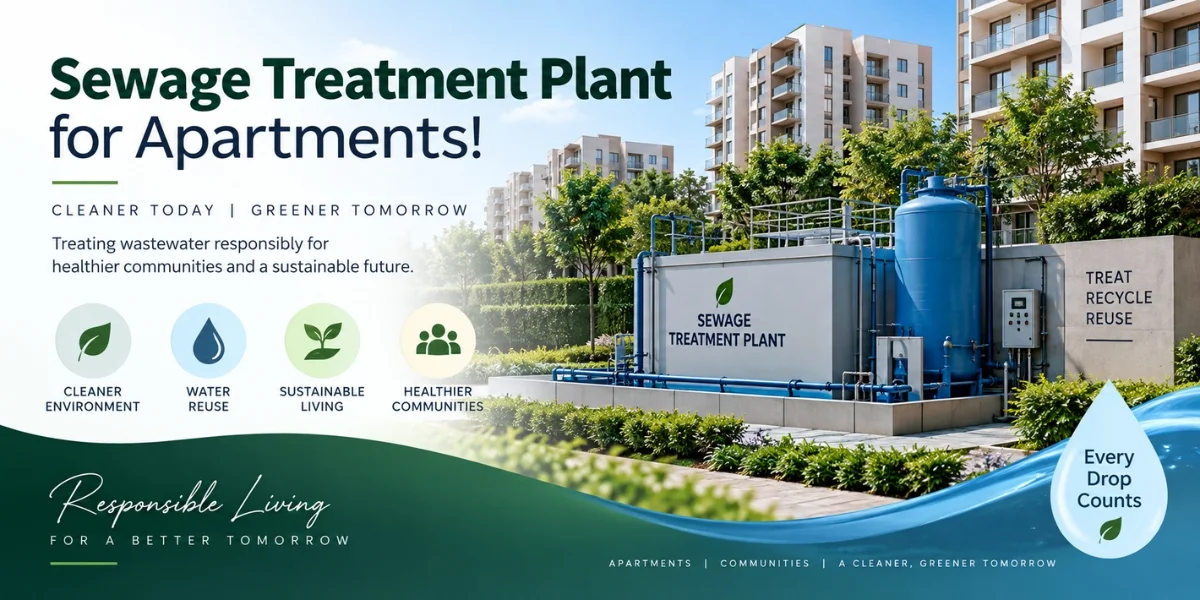
Sewage Treatment Plant for Apartments: Rules, Sizing, Cost & Technology Guide

For most Indian apartment complexes, an on-site sewage treatment plant is not optional anymore, it is a legal requirement tied directly to your building's size. This guide covers exactly when an STP becomes mandatory, how it is sized and costed, and which technology actually fits a housing society's space and budget.

Sewage Treatment Plant for Apartments: Rules, Sizing, Cost & Technology Guide
Engineering Consultation

Looking to Sizing or Upgrading Your Treatment Plant?

Speak directly with our senior environmental engineers for technical guidance, sizing calculations, or a tailored project proposal.
Call +91-9821030072 or email enquiry@trityenviro.com

Request Free Engineering Consultation
Request a Free Site Assessment & Quotation

Frequently Asked Questions (FAQs)

Q1: Is an STP mandatory for all apartment complexes in India?

Ans: In most major Indian cities, yes, typically triggered once a housing project's built-up area exceeds 20,000 square metres or wastewater generation exceeds 10 KLD, though the exact threshold varies by state and city. Confirming the specific rule with your local municipal authority or State Pollution Control Board is essential before planning.

Q2: How is STP capacity calculated for a housing society?

Ans: Capacity is typically estimated from expected water consumption per resident (around 135-150 LPCD), with roughly 80% of that volume returning as sewage. A common rule of thumb is approximately 0.5 KLD of sewage generation per flat, adjusted for the society's actual average occupancy per unit.

Q3: How much does an STP for a housing society typically cost?

Ans: Cost varies by capacity and technology, but as an indicative reference, a 150-200 KLD plant for around 400 flats often falls in the Rs 70-80 lakh range, while larger plants of 450-500 KLD for around 1,000 flats can range from Rs 90-110 lakh. These figures vary based on site conditions and technology chosen, so a formal site-specific quotation is recommended.

Q4: Which STP technology is best for a space-constrained housing society?

Ans: MBBR and SBR technologies typically need 30-50% less space than conventional extended aeration plants for the same capacity, making them well suited to societies with basement or limited plot space. MBR is a stronger choice where extensive treated water reuse is the priority, despite a higher upfront cost.

Q5: Can treated sewage water from an apartment STP really be reused safely?

Ans: Yes, water passing through proper tertiary treatment, filtration, chemical treatment, or UV disinfection, is safe for non-potable reuse such as gardening, car washing, construction activity, and toilet flushing, directly reducing a society's freshwater consumption and water bill.

Previous Article Next Article
KEEP READING

Related Technical Articles

View All Articles →
PROVEN EXPERIENCE

Featured Turnkey Installations

Need Expert Support for Your Water Treatment Project?

Discuss your requirements with our engineering team and get practical guidance for your project.

QCI Approved
seller
whatsapp-image